Wüsthof · Non-Stick Kitchen Gadgets
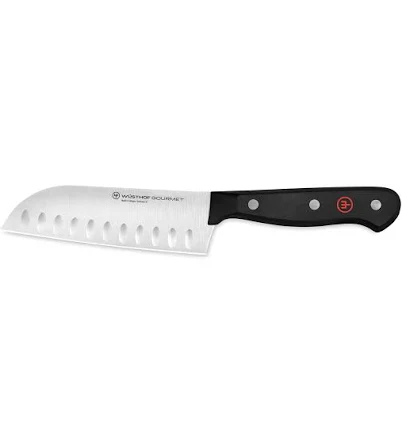
Wüsthof Wusthof Gourmet Hollow Edge Santoku Knife, Is It Non-Toxic?
Bare stainless steel knife, lower PFAS concern, no nonstick coating.
Wüsthof's Gourmet Santoku has a traditional stainless steel blade with no nonstick or Teflon-family coating. Metal blades don't require PFAS disclosure.
The better-graded swap
Our Place
Our Place Essential Utensil Set
90/100 safety
Same rubric that flunked this product. The swap earned Excellent.
Still want this one anyway? Check the price on Amazon. We’d swap it.
Material
stainless steel blade, no nonstick coating
Brand disclosure
Brand is silent on PFAS
Lab data
No public lab test
You may also be interested in
Top-graded picks in the categories readers replace first, every one scored on the same rubric.

- polypropylene filter housing, carbon/sediment cartridge
- We found no PFAS statement from the brand
- Bacterial growth in spent cartridges
3 hazards checked on this product, all on its full breakdown.

Aquasure
Premier Series 75 GPD Under Sink Reverse Osmosis Water Filtration System
- RO membrane, carbon filters, stainless steel housing
- We found no PFAS statement from the brand
- Bacterial and microbial growth in housing and filters
4 hazards checked on this product, all on its full breakdown.

Avocado
Vegan Mattress
- organic cotton, natural latex, coconut coir, recycled steel coils
- The brand calls it PFAS-free, which we have not verified
- Heavy metals
2 hazards checked on this product, all on its full breakdown.
Is Wüsthof Wusthof Gourmet Santoku Knife non-toxic? What it is made of
This knife features a stainless steel blade (typically 12-14% chromium, low carbon) with no applied nonstick or ceramic coating. Stainless steel in cutlery is chemically stable during normal cooking use and does not leach metals into food under standard conditions. The hollow edge design reduces the blade's contact surface but does not alter material safety. No Teflon-type coating (Teflon) or ceramic coating means no thermal fume risk or coating degradation pathways that plague nonstick cookware.
What’s concerning
Category baseline
The starting point for this type of product, before anything specific to this product is counted.
No PFAS disclosure
No public statement from the brand about PFAS in this product.
Surface corrosion and pitting (foodborne pathogen harboring)
Stainless steel is corrosion-resistant but not corrosion-proof. Prolonged exposure to acidic or salty foods, chlorinated water, or improper storage can cause surface pitting that traps bacteria; this is preventable through hand-washing and dry storage. No specific reports exist for Wüsthof products, but this is an inherent stainless steel consideration.
What’s reassuring
Base material not linked to PFAS
The main material recorded for this product is not one associated with PFAS.
Lead
No recalls or test reports document lead or cadmium leaching from Wüsthof stainless blades into food. Nickel content (inherent to stainless formulas) remains bound in the metal matrix under normal use; concerns arise only for individuals with severe nickel contact dermatitis from handle materials, not food contact.
Source, ATSDR ↗Coating degradation and flaking
This product has no applied coating; the hazard is not applicable. The blade is solid stainless steel throughout, eliminating the primary failure mode of coated cookware.
Teflon-type coating fume risk (nonstick thermal degradation)
No Teflon-type coating or Teflon-family coating is present on this knife. The hollow edge and stainless substrate do not interact with nonstick chemistry, eliminating thermal fume concerns entirely.
Aluminum leaching
The blade is stainless steel, not aluminum or aluminum-clad. Hollow-edge design may contain a small aluminum core for weight reduction in some knife lines, but this would be sheathed in stainless and not contact food directly.
How is this PFAS grade calculated?
The brand's record and disclosure
Wüsthof is a 210-year-old German cutlery manufacturer with ISO 9001 certification and established quality control standards. The company does not publicly disclose detailed material certifications or third-party testing for heavy metals, which is typical for premium knife makers but limits independent verification. No recalls or safety controversies specific to Wüsthof knives are on record in major consumer safety databases. The brand's silence on PFAS reflects industry-wide lack of transparency in this category, not evidence of contamination.
How it compares in its category
Stainless steel knives like this one have a lower inherent hazard profile than nonstick or ceramic-coated cookware, which carry coating degradation and fume risks. Hollow-edge santoku knives are mainstream kitchen tools with no special safety disadvantages versus solid-edge blades. Wüsthof's position as a premium German brand places it at the higher end of material consistency and control compared to budget alternatives, though all stainless cutlery carries residual uncertainty about trace impurities.
If you buy it
Wash by hand rather than dishwasher to prevent blade dulling and handle wear over time; stainless steel is durable but high-heat dishwasher cycles can affect edge retention. Avoid prolonged contact with acidic foods (vinegar, citrus) or chlorinated water, which can cause surface pitting in lower-grade stainless; this is cosmetic but accelerates over years. Store with blade guards to prevent corrosion from moisture and cross-contamination. Replace or resharpen when edge becomes dull; a well-maintained knife presents lower injury concern than a dull one.
What is not known about PFAS in this product?
- Basis
- Model estimate, 82% confidence, not a lab result
- Lab test
- None on record for this exact product
- Brand statement
- Wüsthof has made none
Formulations change between production runs, so check the current label. How we grade.
What are the PFAS-free alternatives to Wüsthof Wusthof Gourmet Hollow Edge Santoku Knife?
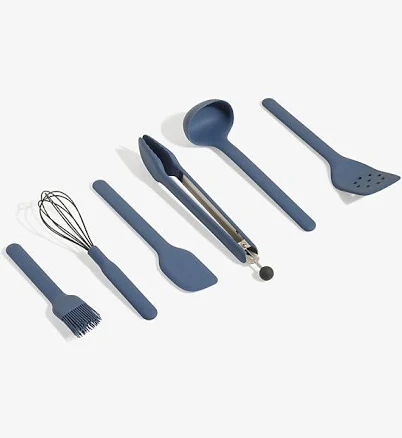
- Silicone utensils, no coating
- The brand calls it PFAS-free, which we have not verified
- Microplastic generation
2 hazards checked on this product, all on its full breakdown.
- Stainless steel utensils
- The brand calls it PFAS-free, which we have not verified
- Nickel leaching from stainless steel
2 hazards checked on this product, all on its full breakdown.
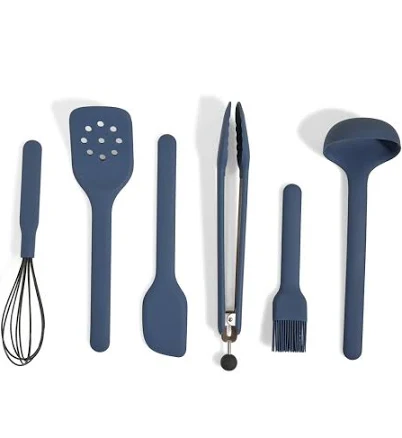
- Stainless steel utensils, material unclear
- The brand calls it PFAS-free, which we have not verified
- Handle material degradation (if present)
2 hazards checked on this product, all on its full breakdown.
More non-stick kitchen gadgets grades
How we score, every product runs through the same public 0-100 rubric based on materials, coatings, brand disclosure, lab findings, and recalls. See the full methodology → Spotted a mistake? Report an error.