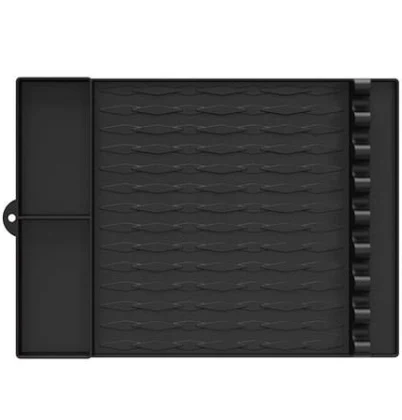
Bbq Silicone Mat for Weber, Scratch Resistant Design with Organized Slots for Tools and Seasonings, Heat Resistant (black), Multicolor
Lower PFAS concern, silicone alone rarely contains PFAS, but Weber discloses nothing.
This silicone mat emphasizes heat and scratch resistance with no mention of nonstick Teflon-family coating. Weber provides no PFAS disclosure or third-party verification.
Still want this one anyway? Check the price on Amazon. We’d swap it.
Material
silicone (no nonstick Teflon-family coating disclosed)
Brand disclosure
Brand is silent on PFAS
Lab data
No public lab test
You may also be interested in
Top-graded picks in the categories readers replace first, every one scored on the same rubric.

- polypropylene filter housing, carbon/sediment cartridge
- We found no PFAS statement from the brand
- Bacterial growth in spent cartridges
3 hazards checked on this product, all on its full breakdown.

Aquasure
Premier Series 75 GPD Under Sink Reverse Osmosis Water Filtration System
- RO membrane, carbon filters, stainless steel housing
- We found no PFAS statement from the brand
- Bacterial and microbial growth in housing and filters
4 hazards checked on this product, all on its full breakdown.

Avocado
Vegan Mattress
- organic cotton, natural latex, coconut coir, recycled steel coils
- The brand calls it PFAS-free, which we have not verified
- Heavy metals
2 hazards checked on this product, all on its full breakdown.
What Bbq Silicone Mat for Weber Multicolor is made of, ingredients and materials
This Weber mat is constructed from silicone, a synthetic rubber polymer that does not contain fluorinated compounds (Teflon-type coating, PFOA) or traditional nonstick coatings. Silicone is thermally stable and does not off-gas toxic fumes at typical grill temperatures (up to 500 degrees Fahrenheit or higher depending on formulation). The material is non-reactive with food and does not leach plasticizers like BPA or phthalates, which are concerns primarily with PVC or soft plastics. The "scratch resistant" design suggests a durable silicone matrix rather than a fragile coating overlay.
What’s concerning
Category baseline
The starting point for this type of product, before anything specific to this product is counted.
No PFAS disclosure
No public statement from the brand about PFAS in this product.
Silicone additive/filler contamination (unspecified)
Weber does not publicly disclose whether fillers, colorants, or stabilizers in the silicone matrix have been tested for heavy metals or endocrine disruptors; silicone itself is stable, but additives (especially in black formulations) can include carbon black or other pigments that require verification.
Thermal degradation at extreme temperatures
If silicone is exposed above its rated temperature (typically 500-600 degrees F continuous), it can soften, leach degradation products, or release off-gases; risk is low with correct use but users must adhere to heat limits.
Microplastic shedding if mat degrades
Silicone is not microplastic in the conventional sense, but aged or torn mats may shed fine particles; risk is minimized by proper maintenance and timely replacement before material integrity fails.
Coating degradation or peeling
If the mat includes any primer or adhesive layer beneath the silicone, poor formulation or manufacturing defects could cause peeling; Weber does not disclose construction method, so baseline expectation is solid silicone without laminate.
What’s reassuring
Base material not linked to PFAS
The main material recorded for this product is not one associated with PFAS.
Food contact allergen trace contamination
Silicone mats are not known to transfer common allergens (nuts, shellfish, gluten); silicone itself is hypoallergenic, but manufacturing cross-contamination is theoretically possible (no recalls identified).
How is this PFAS grade calculated?
The brand's record and disclosure
Weber is a long-established cookware and grill accessory manufacturer but does not publicly disclose detailed material sourcing, silicone purity specifications, or independent certifications (FDA, NSF) for this specific mat on widely available product pages. No product recalls for this mat are recorded in public databases. Weber's parent company (3G Capital) has not issued comprehensive PFAS or silicone purity statements, leaving transparency gaps on additives or fillers used in silicone formulation.
How it compares in its category
Silicone grill mats present lower concern than Teflon-type coating-coated mats regarding Teflon-family coating fume risk and lower concern than some ceramic-coated cookware regarding heavy-metal exposure. They are functionally superior to simple foil liners, which do not organize tools or seasonings. Comparable silicone mat brands (OXO, Artisan, store brands) rarely differ materially in safety profile; Weber's brand positioning offers reliability but not transparency advantages.
If you buy it
Use only up to the stated heat limit (confirm with product label; silicone typically rated to 500 degrees F continuous, 600+ intermittent). Hand wash; dishwasher use may degrade bonding in filled silicone over time. Inspect annually for cracks, tears, or discoloration; replace if material becomes sticky, brittle, or smells acrid (signs of thermal breakdown or contamination). Do not use under direct flame or if edges char or peel.
What is not known about PFAS in this product?
- Basis
- Model estimate, 78% confidence, not a lab result
- Lab test
- None on record for this exact product
- Brand statement
- Weber has made none
Formulations change between production runs, so check the current label. How we grade.
More grill & oven mats grades
How we score, every product runs through the same public 0-100 rubric based on materials, coatings, brand disclosure, lab findings, and recalls. See the full methodology → Spotted a mistake? Report an error.