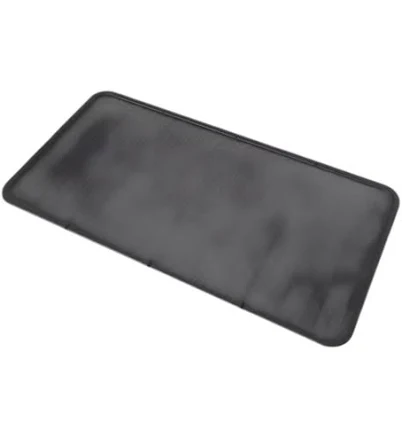
Weber Griddle Mid-Shelf Grill Mat
Silicone with no coating described, and no PFAS statement from the brand.
The product information we reviewed describes silicone mat, with no applied coating named. Silicone releases food on its own, so a non-stick claim on a silicone product describes the material rather than a coating. The brand has published no PFAS statement for it.
Still want this one anyway? Check the price on Amazon. We’d swap it.
Material
Silicone mat
Brand disclosure
Brand is silent on PFAS
Lab data
No public lab test
You may also be interested in
Top-graded picks in the categories readers replace first, every one scored on the same rubric.

- polypropylene filter housing, carbon/sediment cartridge
- We found no PFAS statement from the brand
- Bacterial growth in spent cartridges
3 hazards checked on this product, all on its full breakdown.

Aquasure
Premier Series 75 GPD Under Sink Reverse Osmosis Water Filtration System
- RO membrane, carbon filters, stainless steel housing
- We found no PFAS statement from the brand
- Bacterial and microbial growth in housing and filters
4 hazards checked on this product, all on its full breakdown.

Avocado
Vegan Mattress
- organic cotton, natural latex, coconut coir, recycled steel coils
- The brand calls it PFAS-free, which we have not verified
- Heavy metals
2 hazards checked on this product, all on its full breakdown.
What Weber Griddle Mid-Shelf Grill Mat is made of, ingredients and materials
This mat is silicone, a synthetic rubber polymer that is thermally stable and does not contain the fluorinated compounds found in traditional non-stick coatings like Teflon-type coating. Silicone mats are food-contact-safe and approved by the FDA for kitchen use. The material itself does not break down into toxic monomers or leach heavy metals under normal grilling temperatures (up to roughly 450-500F for silicone variants). No special surface coating is described, meaning the hazard profile is determined by the base silicone material alone.
What’s concerning
Category baseline
The starting point for this type of product, before anything specific to this product is counted.
No PFAS disclosure
No public statement from the brand about PFAS in this product.
Silicone degradation at extreme heat
High-temperature excursions above 500F can cause silicone to harden, crack, or shed small particles. Weber mats are designed for standard grill use; sustained high heat may accelerate aging.
Coating integrity loss over time
Repeated thermal cycling and mechanical wear (scrubbing, food contact) may gradually reduce the mat's non-stick surface. This is normal aging, not a safety failure, but indicates replacement timing.
Microplastics
Abrasion from cleaning tools or high heat can cause minute silicone particles to shed into food. Risk is low under normal care but increases with mat age and surface damage.
Source, EPA ↗What’s reassuring
Base material not linked to PFAS
The main material recorded for this product is not one associated with PFAS.
PFAS
No published reports of harmful leaching from FDA-approved silicone mats at standard cooking temperatures. The polymer is chemically stable under typical grill conditions.
Source, ATSDR ↗Allergen or irritant exposure from additives
Silicone mats do not typically contain formaldehyde releasers, azo dyes, or phthalates. No brand-specific additive concerns are on record for Weber silicone products.
How is this PFAS grade calculated?
The brand's record and disclosure
Weber is a well-established grilling equipment manufacturer with no documented safety recalls or controversies specific to silicone mat products. The brand has made no public PFAS statement regarding this product line, which is typical for silicone accessories (as opposed to non-stick cookware). Weber's general product safety profile is standard; they do not publish third-party chemical certifications for this category of mat.
How it compares in its category
Silicone grill mats present lower concern regarding fume-release risk at high heat compared to Teflon-type coating-coated (Teflon) mats. They are comparable to other silicone mat brands in material safety. Unlike fiberglass or woven mat alternatives, silicone does not shed particulates into food. This product occupies the mainstream middle of the market for non-stick grill protection.
If you buy it
Keep the mat below the manufacturer's stated temperature limit, typically 400-500F depending on silicone grade. Hand wash rather than dishwasher to extend life, as abrasive cycles can degrade surface smoothness over time. Replace if you notice visible tears, degradation, or loss of non-stick properties, as these indicate polymer breakdown. Store in a cool, dry place away from direct sunlight to prevent material brittleness.
What is not known about PFAS in this product?
- Basis
- Model estimate, 35% confidence, not a lab result
- Lab test
- None on record for this exact product
- Brand statement
- Weber has made none
Formulations change between production runs, so check the current label. How we grade.
More grill & oven mats grades
How we score, every product runs through the same public 0-100 rubric based on materials, coatings, brand disclosure, lab findings, and recalls. See the full methodology → Spotted a mistake? Report an error.