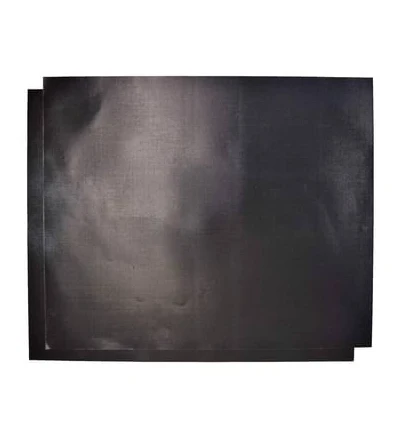
Heavy Duty NonStick Reusable BBQ Grill Mat
Skip until the brand discloses what makes this mat nonstick.
The brand's BBQ grill mat uses an unspecified nonstick coating, and the brand provides no transparency about whether it contains Teflon-type coating, other Teflon-family coating, or PFAS alternatives. Without material disclosure or third-party testing, the PFAS risk profile cannot be confidently assessed.
Still want this one anyway? Check the price on Amazon. We’d swap it.
Material
Nonstick coating composition not disclosed; marketed as 'reusable'
Brand disclosure
Brand is silent on PFAS
Lab data
No public lab test
You may also be interested in
Top-graded picks in the categories readers replace first, every one scored on the same rubric.

- polypropylene filter housing, carbon/sediment cartridge
- We found no PFAS statement from the brand
- Bacterial growth in spent cartridges
3 hazards checked on this product, all on its full breakdown.

Aquasure
Premier Series 75 GPD Under Sink Reverse Osmosis Water Filtration System
- RO membrane, carbon filters, stainless steel housing
- We found no PFAS statement from the brand
- Bacterial and microbial growth in housing and filters
4 hazards checked on this product, all on its full breakdown.

Avocado
Vegan Mattress
- organic cotton, natural latex, coconut coir, recycled steel coils
- The brand calls it PFAS-free, which we have not verified
- Heavy metals
2 hazards checked on this product, all on its full breakdown.
What Heavy Duty NonStick Reusable BBQ Grill Mat is made of, ingredients and materials
The brand does not publicly disclose what nonstick coating is used on this grill mat, only marketing it as 'reusable' and 'eco-friendly.' For reusable BBQ mats, nonstick coatings typically fall into two camps, traditional Teflon-family coating (Teflon-type coating-based, which carry PFAS concern) or ceramic/silicone hybrids (lower PFAS risk but often less durable). Without transparency, you cannot assess whether this product is coated with older Teflon-type coating formulas, newer aqueous dispersion systems, or alternative chemistries. The substrate material is also not specified, raising questions about potential leaching at high grill temperatures.
What’s concerning
Category baseline
The starting point for this type of product, before anything specific to this product is counted.
Vague safety claims only
Uses vague language ("eco-friendly", "clean") without a specific PFAS statement.
Non-stick, chemistry undisclosed
Marketed as non-stick without stating the coating chemistry.
Teflon-type coating fume risk (thermal degradation)
If the nonstick coating is Teflon-type coating-based (unconfirmed), heating above 500F can release fumes; reusable mats see repeated thermal stress. Lack of coating specification makes risk assessment impossible.
Coating degradation and particle release
All nonstick coatings degrade with repeated high-heat cycling. As the mat ages, flaking or migration of coating particles into food is a documented risk for worn mats; accelerated by direct flame or metal utensils.
Substrate leaching at high temperature
If substrate is fiberglass, polyester, or another polymer, high grill temperatures (above 400F) may cause the base layer to leach monomers or additives. Material unspecified, so baseline risk unknown.
Microplastic or coating fragment ingestion
Worn nonstick mats from multiple manufacturers have been documented to shed particles into food over time; reusable mats are particularly vulnerable as they are used repeatedly and hand-washed. The brand does not publish durability testing data.
What’s reassuring
Off-gassing of volatile organic compounds (VOCs)
No independent test data available for this specific product. Typical fiberglass grill mats can emit VOCs, especially when new or heated; monitoring for odor is advisable on first use.
How is this PFAS grade calculated?
The brand's record and disclosure
The brand positions itself as an eco-conscious brand, but this product listing shows no third-party testing, Safety Data Sheet (SDS) transparency, or formal PFAS commitment. The brand does not appear to have published independent testing on coating composition or thermal stability for this mat. No major recalls or documented safety incidents are on public record for this specific product, but the absence of disclosure is itself a transparency failure for a high-heat cooking product marketed to families.
How it compares in its category
Competing reusable grill mats from brands like Grill Armor, Kitchy, and even Amazon Basics typically provide material specifications (e.g., Teflon-type coating-free, FDA-compliant silicone) or at least acknowledge nonstick composition on packaging. Premium alternatives like cast iron or stainless steel grill mats eliminate nonstick coating risk entirely, though they require more maintenance. The brand's refusal to disclose puts this product behind most transparent competitors in the reusable mat category and closer to legacy products with known PFAS issues.
If you buy it
Do not use at temperatures above the manufacturer's stated limit; direct flame contact or extended high heat increases risk of coating degradation and potential particle or vapor release. Hand-wash only; dishwasher use may accelerate coating breakdown. Inspect before each use for peeling, discoloration, or texture changes; discontinue use if coating shows damage. Replace every 2-3 years of regular use or sooner if physical wear is visible, as nonstick coatings degrade over time with heat cycling.
What is not known about PFAS in this product?
- Basis
- Model estimate, 35% confidence, not a lab result
- Lab test
- None on record for this exact product
- Brand statement
- has made none
Formulations change between production runs, so check the current label. How we grade.
What are the PFAS-free alternatives to Heavy Duty NonStick Reusable BBQ Grill Mat?
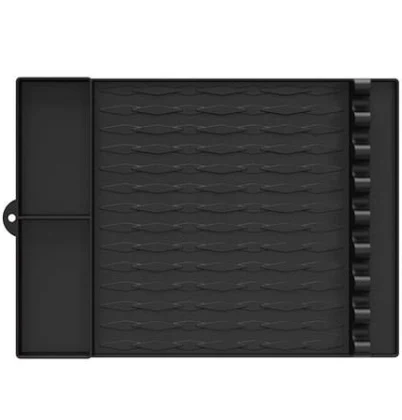
- silicone (no nonstick Teflon-family coating disclosed)
- We found no PFAS statement from the brand
- Silicone additive/filler contamination (unspecified)
4 hazards checked on this product, all on its full breakdown.
Find an alternative on Amazon
- Silicone or rubber floor mat
- We found no PFAS statement from the brand
- Thermal degradation and off-gassing
3 hazards checked on this product, all on its full breakdown.
Find an alternative on Amazon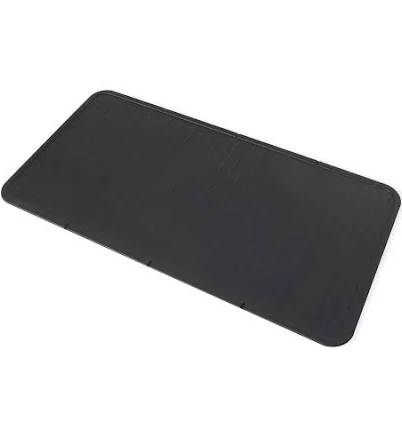
- Silicone mat or grill mat
- We found no PFAS statement from the brand
- Thermal off-gassing and VOC release
3 hazards checked on this product, all on its full breakdown.
Find an alternative on AmazonMore grill & oven mats grades
How we score, every product runs through the same public 0-100 rubric based on materials, coatings, brand disclosure, lab findings, and recalls. See the full methodology → Spotted a mistake? Report an error.