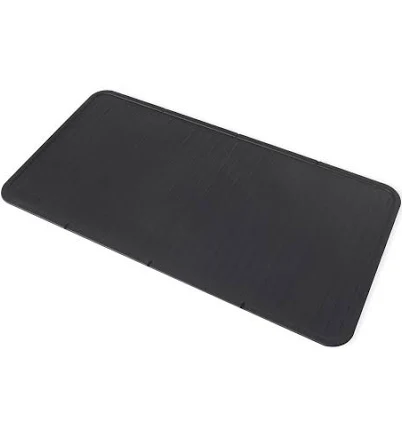
Weber Mid-Shelf Mat 3400215
Lower PFAS concern, silicone grill mats typically avoid PFAS, but Weber makes no disclosure.
Silicone-based grill mats generally pose lower PFAS risk than Teflon-type coating nonstick surfaces. Weber makes no public disclosures about material composition or PFAS testing.
Still want this one anyway? Check the price on Amazon. We’d swap it.
Material
Silicone mat or grill mat
Brand disclosure
Brand is silent on PFAS
Lab data
No public lab test
You may also be interested in
Top-graded picks in the categories readers replace first, every one scored on the same rubric.

- polypropylene filter housing, carbon/sediment cartridge
- We found no PFAS statement from the brand
- Bacterial growth in spent cartridges
3 hazards checked on this product, all on its full breakdown.

Aquasure
Premier Series 75 GPD Under Sink Reverse Osmosis Water Filtration System
- RO membrane, carbon filters, stainless steel housing
- We found no PFAS statement from the brand
- Bacterial and microbial growth in housing and filters
4 hazards checked on this product, all on its full breakdown.

Avocado
Vegan Mattress
- organic cotton, natural latex, coconut coir, recycled steel coils
- The brand calls it PFAS-free, which we have not verified
- Heavy metals
2 hazards checked on this product, all on its full breakdown.
What Weber Mid-Shelf Mat 3400215 is made of, ingredients and materials
The Weber Mid-Shelf Mat 3400215 is a silicone-based grill mat designed for use on oven racks or grill grates. Silicone is a synthetic polymer composed of silicon and oxygen chains; it does not contain the problematic plasticizers (phthalates, BPA) found in PVC or polycarbonate products. Silicone's primary safety concern in cooking contexts is thermal stability, it remains inert at typical grill/oven temperatures (up to 500-600F depending on formulation) but can degrade or off-gas if exceeded, releasing volatile organic compounds (VOCs).
What’s concerning
Category baseline
The starting point for this type of product, before anything specific to this product is counted.
No PFAS disclosure
No public statement from the brand about PFAS in this product.
Thermal off-gassing and VOC release
Silicone mats can emit volatile organic compounds if exposed to sustained temperatures above their rated maximum (typically 500-600F). Weber does not disclose the specific temperature ceiling for this model, creating uncertainty about safe upper limits.
Microplastic shedding from mat degradation
If silicone mat is physically damaged, scraped, or thermally degraded over time, small particles may shed onto cooking surfaces. Food contact with degraded mat fragments is possible but not documented in clinical studies.
Inadequate disclosure and third-party verification
Weber provides no chemical composition data, certifications (NSF, FDA pre-approval), or independent testing results. This prevents confirmation that the silicone formulation avoids restricted additives or contaminants.
What’s reassuring
Base material not linked to PFAS
The main material recorded for this product is not one associated with PFAS.
Silicone leaching under high heat or acidic foods
Food-grade silicone is formulated to resist leaching under normal cooking conditions. No established reports of silicone mats leaching into food at grill temperatures; risk is theoretical and minimal at proper use temperatures.
Flame retardants
Some commercial silicone formulations contain flame retardants or mineral fillers; Weber does not disclose whether this mat includes such additives. Standard food-contact silicone mats typically avoid these, but lack of transparency prevents certainty.
Source, EPA ↗How is this PFAS grade calculated?
The brand's record and disclosure
Weber does not publish material safety data sheets or third-party certifications for this mat. The company has not made public statements about PFAS avoidance or chemical screening. Weber's broader product line (grills, covers, accessories) has no recorded recalls or safety controversies related to silicone mats. The lack of transparency is typical for grill accessories but limits independent verification of formulation details.
How it compares in its category
Silicone grill mats present lower concern for fume-inhalation risk compared to Teflon-type coating-coated (Teflon) alternatives, which carry fume-inhalation risk if overheated. Glass and ceramic mats are more durable but heavier and fragile. Parchment paper is disposable and avoids chemical leaching but generates waste. This Weber mat's main trade-off is reliance on user temperature discipline rather than inherent material robustness.
If you buy it
Verify the product's maximum temperature rating on the label or manual and stay 50F below that threshold to avoid accelerated silicone degradation. Wash with mild soap and cool water; avoid high-heat dishwashing or bleach, which can compromise the polymer. Replace if you observe discoloration, brittleness, or odor during use. Store flat and dry in a cool location to extend lifespan.
What is not known about PFAS in this product?
- Basis
- Model estimate, 72% confidence, not a lab result
- Lab test
- None on record for this exact product
- Brand statement
- Weber has made none
Formulations change between production runs, so check the current label. How we grade.
More grill & oven mats grades
How we score, every product runs through the same public 0-100 rubric based on materials, coatings, brand disclosure, lab findings, and recalls. See the full methodology → Spotted a mistake? Report an error.