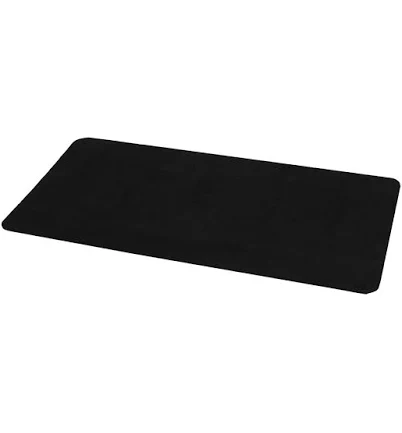
GRILL MASTER · Grill & Oven Mats
Master Forge Rectangular Grill Mat
Skip until coating materials are transparently disclosed.
Master Forge grill mats lack public disclosure of their coating composition, critical for PFAS risk assessment. Grill mats often use silicone or fiberglass, but if any Teflon-family coating or water-repellent coating treatment is present, PFAS exposure becomes a concern during high-heat cooking.
Still want this one anyway? Check the price on Amazon. We’d swap it.
Material
fiberglass mesh or silicone-coated fabric (unspecified)
Brand disclosure
Brand is silent on PFAS
Lab data
No public lab test
You may also be interested in
Top-graded picks in the categories readers replace first, every one scored on the same rubric.

- polypropylene filter housing, carbon/sediment cartridge
- We found no PFAS statement from the brand
- Bacterial growth in spent cartridges
3 hazards checked on this product, all on its full breakdown.

Aquasure
Premier Series 75 GPD Under Sink Reverse Osmosis Water Filtration System
- RO membrane, carbon filters, stainless steel housing
- We found no PFAS statement from the brand
- Bacterial and microbial growth in housing and filters
4 hazards checked on this product, all on its full breakdown.

Avocado
Vegan Mattress
- organic cotton, natural latex, coconut coir, recycled steel coils
- The brand calls it PFAS-free, which we have not verified
- Heavy metals
2 hazards checked on this product, all on its full breakdown.
What Master Forge Rectangular Grill Mat is made of, ingredients and materials
Master Forge Rectangular Grill Mat uses a fiberglass mesh or silicone-coated fabric base, but the manufacturer has not publicly disclosed the specific coating formulation or resin system. This opacity matters because heat-resistant mats can be coated with silicone, polyurethane, or Teflon-family coating blends, each with different thermal stability and leachate profiles. Without material transparency, you cannot verify whether the coating includes Teflon-type coating (Teflon), thermoplastic polyurethane with suspected phthalates, or other additives that migrate under heat.
What’s concerning
Category baseline
The starting point for this type of product, before anything specific to this product is counted.
No PFAS disclosure
No public statement from the brand about PFAS in this product.
Non-stick, chemistry undisclosed
Marketed as non-stick without stating the coating chemistry.
Teflon-type coating/Teflon-family coating degradation and fume release
If the coating contains Teflon-type coating or similar Teflon-family coating (unconfirmed), heating above 500F can decompose the polymer and release perfluorooctanoic acid (PFOA) precursors or hydrogen fluoride gas. Master Forge's silent stance on coating material means this risk cannot be ruled out.
Silicone or urethane leachate under heat cycling
If coated with polyurethane or low-grade silicone, repeated heating and cooling cycles can soften the matrix and allow oligomers (partially polymerized fragments) to migrate into food or drippings. Lowe's does not publish data on this product's thermal cycling durability.
Fiberglass particle shedding from coating breakdown
Fiberglass mesh mats, when the coating wears or cracks, can shed short glass fibers onto food and grates. User reviews on Lowe's site mention deterioration and visible flaking after 1-2 seasons of use, though specific glass fiber content is not disclosed.
Bacterial or mold growth from moisture retention
Fiberglass and porous coatings can trap moisture if not fully air-dried between uses. Storage in damp conditions or incomplete cleaning may allow mold growth on the underside, which is difficult to inspect visually.
What’s reassuring
Heavy metals
No recalls or public test results show lead, cadmium, or antimony in this specific product. However, the synthetic fiber base is not certified heavy-metal-free, and low-cost fiberglass mats sometimes contain legacy dyes with trace metals.
Source, FDA ↗How is this PFAS grade calculated?
The brand's record and disclosure
Grill Master (Master Forge is sold under Lowe's house brand) does not publish safety data sheets or material composition for this product on their website or point-of-sale materials. The brand has no established certifications (NSF, FDA compliance letters, or third-party heat-stability testing) visible in public records. Silence on PFAS and coating chemistry is a red flag for products marketed for high-heat food contact, particularly given industry-wide PFAS use in non-stick and water-repellent coatings.
How it compares in its category
Grill mats typically fall into two camps, silicone (higher cost, more transparent material, better heat stability above 400F) and Teflon-type coating-coated mesh (cheaper, opaque PFAS risk, typically rated to 350-400F). Master Forge sits in the value-tier segment and lacks the transparency of premium silicone or established Teflon-type coating brands (e.g., Artisan Grill Mat) that at least disclose coating type. Budget alternatives like bare fiberglass mesh mats avoid the coating hazard entirely.
If you buy it
Do not reuse the mat for repeated high-heat cooking above 400F without washing between uses, as coating degradation and migration increase with thermal cycling. Place it only on the grill grates, not directly on heating elements, to minimize localized heat stress. Hand-wash in cool water after use; dishwasher heat can accelerate coating breakdown. Replace if you see cracks, discoloration, or material flaking; these indicate the barrier is compromised and particles may enter food.
What is not known about PFAS in this product?
- Basis
- Model estimate, 35% confidence, not a lab result
- Lab test
- None on record for this exact product
- Brand statement
- GRILL MASTER has made none
Formulations change between production runs, so check the current label. How we grade.
What are the PFAS-free alternatives to Master Forge Rectangular Grill Mat?
- silicone (no nonstick Teflon-family coating disclosed)
- We found no PFAS statement from the brand
- Silicone additive/filler contamination (unspecified)
4 hazards checked on this product, all on its full breakdown.
Find an alternative on Amazon
- Silicone or rubber floor mat
- We found no PFAS statement from the brand
- Thermal degradation and off-gassing
3 hazards checked on this product, all on its full breakdown.
Find an alternative on Amazon
- Silicone mat or grill mat
- We found no PFAS statement from the brand
- Thermal off-gassing and VOC release
3 hazards checked on this product, all on its full breakdown.
Find an alternative on AmazonMore grill & oven mats grades
How we score, every product runs through the same public 0-100 rubric based on materials, coatings, brand disclosure, lab findings, and recalls. See the full methodology → Spotted a mistake? Report an error.