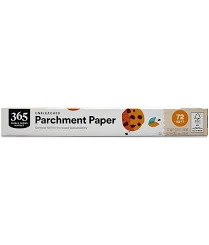
Whole Foods 365 · Parchment Paper & Baking Liners
365 by Whole Foods Market
Insufficient transparency on food packaging PFAS treatment; check product specifics.
365 by Whole Foods is a private label with many food packaging products. No public PFAS disclosures found for this category, limiting reliable assessment.
The better-graded swap
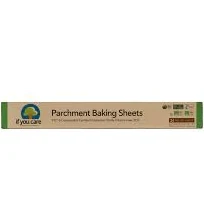
If You Care
Parchment Baking Sheets
90/100 safety
Same rubric that flunked this product. The swap earned Excellent.
Still want this one anyway? Check the price on Amazon. We’d swap it.
Material
varies by product line; typically paperboard, cardboard, or plastic film
Brand disclosure
Brand is silent on PFAS
Lab data
No public lab test
What 365 by Whole Foods Market is made of, ingredients and materials
365 by Whole Foods uses multiple packaging substrates depending on product type, paperboard (boxes, cartons), corrugated cardboard (shipping/storage), and plastic films (wraps, pouches, cling films). Paperboard and cardboard are cellulose-based and generally lower-concern for food migration at room temperature. Plastic films vary in composition (polyethylene, polypropylene, polyester, or blends) and present different leaching profiles depending on the specific polymer, thickness, and food contact temperature. No single safety profile applies across the 365 line.
What’s concerning
Category baseline
The starting point for this type of product, before anything specific to this product is counted.
No PFAS disclosure
No public statement from the brand about PFAS in this product.
BPA & bisphenols
365 plastic packaging material composition is not publicly disclosed. Polycarbonate and some polyester resins can contain BPA; 365 does not claim BPA-free status. Likelihood depends on specific resin used, which varies by product and is not labeled.
Source, FDA ↗Phthalates
Flexible PVC or PVC-blended films used in some food packaging may contain phthalates as plasticizers. 365 has not published phthalate-avoidance certifications. Exposure risk is highest with fatty or acidic foods in contact with thin plastic films.
Source, ATSDR ↗Migration from cardboard and paperboard coatings
Paperboard food contact surfaces may be treated with fluorinated coatings (PFAS) for grease resistance, or with mineral oils and waxes. 365 does not disclose coating composition. Migration risk increases with fatty foods and warm storage.
Formaldehyde / VOCs
Cardboard and paperboard manufacturing can involve formaldehyde-based binders and coatings. Conventional paperboard typically contains low residual formaldehyde; 365 does not specify resin type or testing. Offgassing is minimal for food contact at room temperature but present during manufacturing.
Source, ATSDR ↗What’s reassuring
Microplastics
No documented recalls or studies specific to 365 plastic film fragmentation into food. Risk is general to any flexible plastic film exposed to prolonged heat, light, or mechanical stress during storage or transport.
Source, EPA ↗The full breakdown
The brand's record and disclosure
Whole Foods Market (parent company Amazon) does not publicly disclose material-specific migration testing, BPA alternatives, or phthalate avoidance commitments for 365 private-label packaging. The brand has not independently certified packaging against NSF, FDA compliance statements, or third-party contaminant screening. PFAS treatment of food-contact surfaces in 365 packaging is not publicly documented, creating ambiguity on grease-barrier coatings in paperboard and film products. No major recalls specific to 365 packaging safety have been publicly recorded, but absence of recalls does not confirm testing or transparency.
How it compares in its category
365 packaging is broadly typical for conventional supermarket private-label food products and does not lead or lag on material disclosure. Many competing store brands (Kroger Simple Truth, Target Good & Gather, Trader Joe's) similarly withhold detailed packaging composition and migration data. Brands with explicit BPA-free or phthalate-phase-out statements (like some organic-certified or B-Corp products) offer more public assurance. 365's opacity on material sourcing and testing places it in the mid-range for transparency within the private-label category.
If you buy it
For room-temperature dry goods (grains, nuts, pasta in cardboard/paperboard), 365 packaging presents lower leaching concern; store in cool, dry conditions and transfer to airtight containers if keeping for years. For oily or acidic foods in plastic film or flexible pouches, minimize heat exposure during storage; do not microwave in original 365 packaging unless explicitly labeled microwave-safe. For frozen items, plastic film is generally stable at low temperature but check for cloudiness or brittleness indicating degradation. Prioritize purchasing 365 items in cardboard or glass over plastic film when available for the same product.
What we don’t know
- Basis
- Model estimate, 35% confidence, not a lab result
- Lab test
- None on record for this exact product
- Brand statement
- Whole Foods 365 has made none
Formulations change between production runs, so check the current label. How we grade.
Better-graded alternatives in Parchment Paper & Baking Liners
If You Care
Baking Paper, Parchment, 70 Square Feet
- silicone-coated parchment paper
- The brand calls it PFAS-free, which we have not verified
- Paper degradation and particulate shedding
If You Care
Parchment Baking Sheets
- unbleached paper with silicone coating
- The brand calls it PFAS-free, which we have not verified
- Silicone coating degradation at high heat
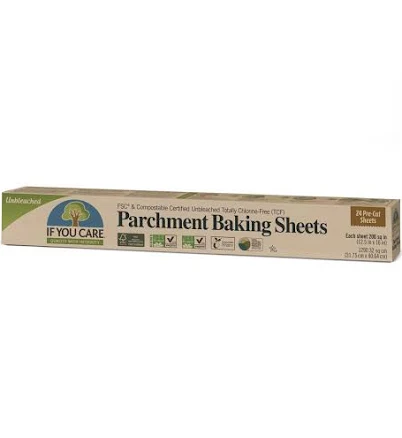
If You Care
Parchment Baking Sheets
- bleached paper with silicone coating
- The brand calls it PFAS-free, which we have not verified
- Paper degradation and fragmentation
More parchment paper & baking liners grades
How we score, every product runs through the same public 0-100 rubric based on materials, coatings, brand disclosure, lab findings, and recalls. See the full methodology → Spotted a mistake? Report an error.