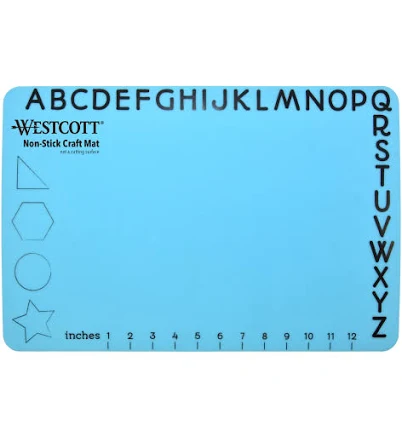
Westcott · Silicone Cutting & Prep Boards
Westcott Projectmate Silicone Non-Stick Craft Mat, Is It Non-Toxic?
Silicone with no coating described, and no PFAS statement from the brand.
The product information we reviewed describes silicone craft mat, with no applied coating named. Silicone releases food on its own, so a non-stick claim on a silicone product describes the material rather than a coating. The brand has published no PFAS statement for it.
The better-graded swap
Fiskars
Functional Form Cutting Board Set, 3-Piece
85/100 safety
Same rubric that flunked this product. The swap earned Excellent.
Still want this one anyway? Check the price on Amazon. We’d swap it.
Material
Silicone craft mat
Brand disclosure
Brand is silent on PFAS
Lab data
No public lab test
You may also be interested in
Top-graded picks in the categories readers replace first, every one scored on the same rubric.

- polypropylene filter housing, carbon/sediment cartridge
- We found no PFAS statement from the brand
- Bacterial growth in spent cartridges
3 hazards checked on this product, all on its full breakdown.

Aquasure
Premier Series 75 GPD Under Sink Reverse Osmosis Water Filtration System
- RO membrane, carbon filters, stainless steel housing
- We found no PFAS statement from the brand
- Bacterial and microbial growth in housing and filters
4 hazards checked on this product, all on its full breakdown.

Avocado
Vegan Mattress
- organic cotton, natural latex, coconut coir, recycled steel coils
- The brand calls it PFAS-free, which we have not verified
- Heavy metals
2 hazards checked on this product, all on its full breakdown.
Is Westcott Projectmate Silicone Craft Mat non-toxic? What it is made of
This is a silicone rubber craft mat, a polymer that does not require chemical coatings to achieve its non-stick properties. Silicone's non-stick behavior is intrinsic to the material itself, not applied as a surface treatment. This eliminates the risk of coating degradation, flaking, or release of volatile compounds that plague traditional coated boards. Silicone is chemically stable across typical craft use temperatures (cutting, light heat exposure from adhesives, paint drying).
What’s concerning
Category baseline
The starting point for this type of product, before anything specific to this product is counted.
No PFAS disclosure
No public statement from the brand about PFAS in this product.
Silicone leaching or migration
Uncrosslinked oligomers in silicone can migrate in contact with solvents (strong adhesive removers, paint thinners); however, this product is designed for dry craft use and brief solvent contact. Risk is minimal for typical cutting mat application.
Volatile organic compound (VOC) off-gassing
New silicone products may release a faint rubbery odor due to residual volatiles from manufacturing. This typically dissipates within days of airing and is not classified as a health hazard at low levels for non-food craft use.
What’s reassuring
Base material not linked to PFAS
The main material recorded for this product is not one associated with PFAS.
Teflon-type coating/non-stick coating risk
Silicone does not require Teflon-type coating or Teflon-family coating coatings; the non-stick property is inherent to the silicone polymer. No such coating is described in available product information.
Dye or pigment contamination
The mat is typically produced in neutral colors (gray, clear) using standard silicone colorants; no heavy metal pigments are known to be used in consumer silicone mats at this price point. No recalls or advisories exist for this product.
Antimicrobial or chemical treatment coatings
No antimicrobial, flame-retardant, or water-repellent coatings are described for this non-food craft mat. Silicone itself is inherently resistant to microbial growth and does not require additional chemical treatments.
How is this PFAS grade calculated?
The brand's record and disclosure
Westcott is a well-established office and craft supplies manufacturer with no public safety recalls or controversies on record for this product line. The brand does not publish explicit PFAS statements, which is typical for smaller specialty tool makers; however, the absence of a water-resistant or non-stick coating on a silicone mat means traditional PFAS-laden surface treatments are not relevant. No third-party certifications (e.g., GREENGUARD, FDA) are marketed for this specific product.
How it compares in its category
Silicone craft mats have lower concern compared to fabric-backed rubber boards (which may contain flame retardants or dyes) or PVC mats (which off-gas phthalates). The Projectmate sits in the mid-market tier, better than budget PVC alternatives, comparable to other consumer silicone mats, but not certified for food contact like premium food-grade silicone. For non-food craft use, this represents a low-chemical-load choice.
If you buy it
Wash with mild soap and water after use to remove adhesive, paint, or cutting debris; silicone resists staining but can retain odors if not cleaned promptly. Avoid prolonged exposure to temperatures above 200°C (silicone remains stable but craft adhesives may release fumes). Replace if the surface becomes permanently sticky (sign of contamination, not material breakdown). Store flat or rolled, away from direct sunlight, to preserve surface texture over years of use.
What is not known about PFAS in this product?
- Basis
- Model estimate, 72% confidence, not a lab result
- Lab test
- None on record for this exact product
- Brand statement
- Westcott has made none
Formulations change between production runs, so check the current label. How we grade.
What are the PFAS-free alternatives to Westcott Projectmate Silicone Non-Stick Craft Mat?
- Polypropylene or similar plastic; no nonstick or waterproof coating disclosed
- We found no PFAS statement from the brand
- Microplastic shedding from cutting action
4 hazards checked on this product, all on its full breakdown.
More silicone cutting & prep boards grades
How we score, every product runs through the same public 0-100 rubric based on materials, coatings, brand disclosure, lab findings, and recalls. See the full methodology → Spotted a mistake? Report an error.