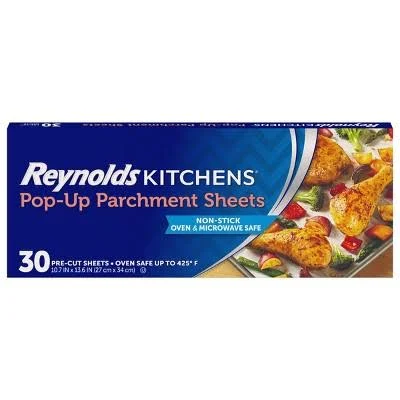
Reynolds · Parchment Paper & Baking Liners
Reynolds Kitchens Pop-Up Parchment Paper Sheets
Lower risk parchment; silicone coating typically avoids PFAS, but brand offers no confirmation.
Parchment is traditionally coated with silicone, not fluorochemicals. Reynolds won't disclose PFAS status, and no third-party verification is available for this product line.
The better-graded swap
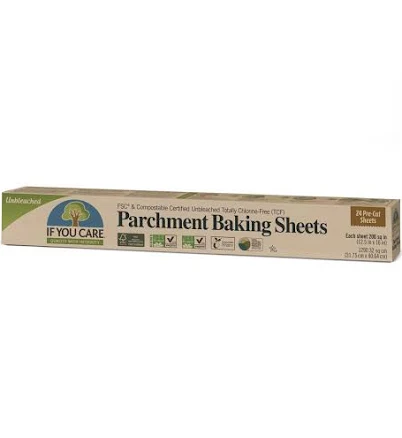
If You Care
If You Care Parchment Baking Sheets
90/100 safety
Same rubric that flunked this product. The swap earned Excellent.
Still want this one anyway? Check the price on Amazon. We’d swap it.
Material
silicone-coated parchment paper
Lab data
No public lab test
What Reynolds Kitchens Pop-Up Parchment Paper is made of, ingredients and materials
Reynolds Pop-Up Parchment Paper Sheets use parchment paper (wood pulp) coated with silicone rather than the fluorochemical coatings that trigger PFAS concerns. Silicone coating provides heat resistance and non-stick function without the persistence and bioaccumulation problems of PFAS-based Teflon-family coating. This is a conventional formulation used across most major parchment brands and is considered lower-risk for food contact.
What’s concerning
Category baseline
The starting point for this type of product, before anything specific to this product is counted.
No PFAS disclosure
No public statement from the brand about PFAS in this product.
Waterproof / stain-resistant treatment
Water-repellent coating treatments have historically used PFAS.
Silicone coating degradation and leaching
Silicone coatings are stable at normal baking temperatures but can degrade at high heat (>450F) or with repeated use over months. No published cases of harmful silicone leaching from parchment paper at standard use, but coating breakdown increases theoretical leach risk. Replace worn sheets to minimize exposure.
Non-stick coating migration under high moisture or acidic conditions
Silicone coatings are prone to slight migration when exposed to high-fat foods, steam, or acidic marinades over long contact periods. Effect is typically cosmetic (dulled non-stick surface) rather than safety-critical, but prolonged direct food contact should be minimized.
What’s reassuring
Adhesive or sizing chemicals in paper substrate
Parchment paper may contain residual sizing agents or adhesives from manufacturing. Reynolds does not disclose specific formulations. No regulatory safety concerns have been raised for this product category in established food safety databases.
Microplastic or particulate shedding
Intact silicone-coated parchment does not shed microplastics under normal baking use. Visible tearing or flaking could introduce coating fragments into food. Inspect sheets before use and discard if damaged.
Chlorine residues from paper bleaching
Parchment paper is typically bleached during manufacture; fully processed parchment should contain minimal chlorine residue. Reynolds does not specify bleach method. This hazard is not documented in safety literature for commercial parchment products used as intended.
The full breakdown
The brand's record and disclosure
Reynolds Kitchens is a long-established cookware/baking paper brand now owned by Albertsons. The company does not publicly detail PFAS avoidance or provide third-party certifications for chemical composition. No recalls or regulatory violations specific to this product line are on record. Transparency is minimal but the product category itself (parchment vs. coated cookware) carries lower inherent chemical risk.
How it compares in its category
Silicone-coated parchment is the dominant standard in commercial parchment paper and generally considered to present lower concern than Teflon-family coating-coated alternatives or heavy wax coatings. Reynolds is a mainstream competitor; specialty brands like If You Care market uncoated or minimal-coating variants but offer no measurable safety advantage for typical baking use. Pop-up sheet format is convenient but does not alter chemical profile compared to roll formats.
If you buy it
Use for temperatures up to 420-450 degrees Fahrenheit (check package guidance); silicone coatings remain stable below 450F. Replace sheets if coating visibly degrades, discolors heavily, or tears. Avoid direct contact with acidic foods for extended periods, as prolonged contact can degrade coating and increase leaching risk. Store in a cool, dry place; humidity can affect sheet separation.
What we don’t know
- Basis
- Model estimate, 72% confidence, not a lab result
- Lab test
- None on record for this exact product
- Brand statement
- Reynolds has made a specific claim
Formulations change between production runs, so check the current label. How we grade.
Better-graded alternatives in Parchment Paper & Baking Liners
If You Care
Baking Paper, Parchment, 70 Square Feet
- silicone-coated parchment paper
- The brand calls it PFAS-free, which we have not verified
- Paper degradation and particulate shedding
If You Care
Parchment Baking Sheets
- unbleached paper with silicone coating
- The brand calls it PFAS-free, which we have not verified
- Silicone coating degradation at high heat
If You Care
Parchment Baking Sheets
- bleached paper with silicone coating
- The brand calls it PFAS-free, which we have not verified
- Paper degradation and fragmentation
More parchment paper & baking liners grades
How we score, every product runs through the same public 0-100 rubric based on materials, coatings, brand disclosure, lab findings, and recalls. See the full methodology → Spotted a mistake? Report an error.