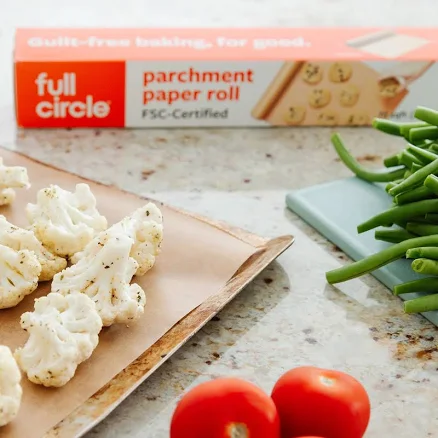
· Parchment Paper & Baking Liners
Parchment Paper Roll
Treated paper with no PFAS statement on record.
No PFAS statement from the maker is on record for this product, and its grease-resistant or release treatment is not described by chemistry. An earlier version of this record carried a certification and a brand quote we could not find any source for.
The better-graded swap
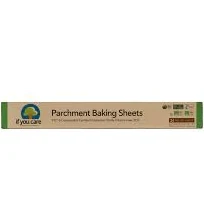
If You Care
Parchment Baking Sheets
90/100 safety
Same rubric that flunked this product. The swap earned Excellent.
Still want this one anyway? Check the price on Amazon. We’d swap it.
Material
wood pulp with silicone-based coating
Lab data
No public lab test
You may also be interested in
Top-graded picks in the categories readers replace first, every one scored on the same rubric.

- polypropylene filter housing, carbon/sediment cartridge
- We found no PFAS statement from the brand
- Bacterial growth in spent cartridges
3 hazards checked on this product, all on its full breakdown.

Aquasure
Premier Series 75 GPD Under Sink Reverse Osmosis Water Filtration System
- RO membrane, carbon filters, stainless steel housing
- We found no PFAS statement from the brand
- Bacterial and microbial growth in housing and filters
4 hazards checked on this product, all on its full breakdown.

Avocado
Vegan Mattress
- organic cotton, natural latex, coconut coir, recycled steel coils
- The brand calls it PFAS-free, which we have not verified
- Heavy metals
2 hazards checked on this product, all on its full breakdown.
What Parchment Paper Roll is made of, ingredients and materials
Parchment paper is wood pulp coated with a silicone-based release layer. Silicone coatings are generally considered inert and food-safe at normal baking temperatures (up to around 420-450°F). The wood pulp base itself carries minimal chemical risk, though the coating's thermal stability and any additives used in its manufacture are the relevant safety points. The PFAS concern arises because some parchment papers use PFAS-based fluorinated compounds to achieve their non-stick properties; The brand's silent stance on this leaves ambiguity about whether their silicone formulation contains fluorinated additives.
What’s concerning
No PFAS disclosure
No public statement from the brand about PFAS in this product.
Waterproof / stain-resistant treatment
Water-repellent coating treatments have historically used PFAS.
Category baseline
The starting point for this type of product, before anything specific to this product is counted.
Thermal breakdown of silicone coating
Silicone coatings on parchment paper can degrade or volatilize above their rated temperature (typically 420-450°F); degradation may release siloxane compounds. The brand does not publish a specific temperature maximum on readily available packaging.
Undisclosed fluorinated additives in silicone formulation
Some silicone-coated parchment papers contain PFAS-based additives to improve release or durability; The brand has not publicly ruled this out. The PFAS grade of 25/100 reflects this transparency gap, not confirmed presence.
Coating-to-food migration under heat
At temperatures near or above the product's rated maximum, trace migration of silicone oligomers or unidentified additives into fatty or acidic foods is theoretically possible, though not documented as a problem with this brand at normal baking temperatures.
What’s reassuring
Microparticle or coating shedding
No reported cases of visible flaking or shedding from parchment paper under normal baking use. Proper storage (dry, cool, away from direct sunlight) minimizes any theoretical risk.
Wood pulp contaminants (bleach residue, ink)
The brand's parchment is chlorine-free processed, reducing dioxin and other bleach by-product risks. No recalls or contamination reports on record for this product.
How is this PFAS grade calculated?
The brand's record and disclosure
The brand positions itself as an eco-conscious household brand and publishes ingredient transparency for many product lines, but has made no public statement specifically addressing PFAS in parchment paper or clarifying whether their silicone coating contains fluorinated compounds. The brand does not appear on major PFAS-free certifications (such as Cradle to Cradle or similar standards that explicitly exclude PFAS "forever chemicals"). This silence is notable given the brand's sustainability messaging and competitors' increasing willingness to certify PFAS-free status.
How it compares in its category
Parchment sits in the mid-market segment, more transparent than generic store brands but less committed to PFAS disclosure than brands explicitly certifying PFAS-free parchment (such as If You Care). Most conventional parchment papers use either silicone or Teflon-family coating coatings; The brand's silicone choice presents lower concern than Teflon-type coating-based alternatives if the silicone itself contains no PFAS, but without third-party verification this remains an assumption. Compostable and uncoated parchment alternatives exist but perform less effectively at high temperatures.
If you buy it
Use this product at or below 420°F to minimize any risk of coating breakdown or leaching. Do not use it directly on open flame or under broilers where temperatures exceed the product's rated limit. Replace the roll if the coating appears visibly degraded, discolored, or peeling. If PFAS exposure is a priority concern for your household, contact directly to request a statement about their silicone formulation, or consider switching to a competitor that explicitly certifies PFAS-free parchment.
What is not known about PFAS in this product?
- Basis
- Model estimate, 78% confidence, not a lab result
- Lab test
- None on record for this exact product
- Brand statement
- has made a specific claim
Formulations change between production runs, so check the current label. How we grade.
What are the PFAS-free alternatives to Parchment Paper Roll?
- silicone-coated parchment paper
- The brand calls it PFAS-free, which we have not verified
- Paper degradation and particulate shedding
- unbleached paper with silicone coating
- The brand calls it PFAS-free, which we have not verified
- Silicone coating degradation at high heat
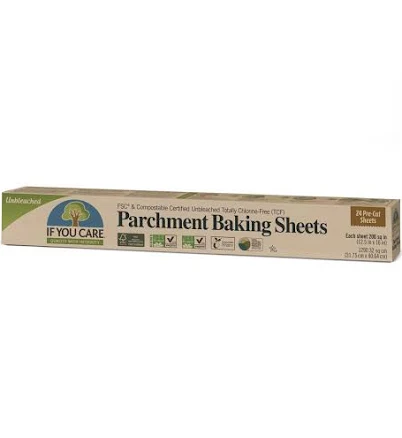
- bleached paper with silicone coating
- The brand calls it PFAS-free, which we have not verified
- Paper degradation and fragmentation
More parchment paper & baking liners grades
How we score, every product runs through the same public 0-100 rubric based on materials, coatings, brand disclosure, lab findings, and recalls. See the full methodology → Spotted a mistake? Report an error.