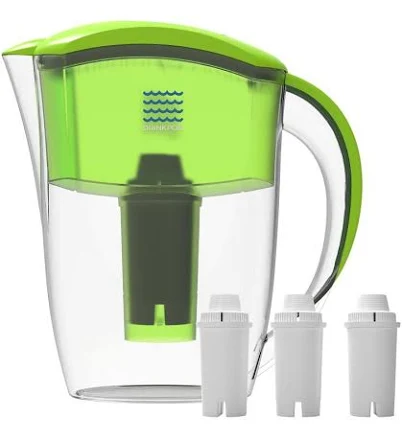
Drinkpod Alkaline Water Filter Pitcher
Lower-concern product; standard water filter pitcher design carries minimal inherent PFAS risk, but brand offers no transparency.
Alkaline water pitcher filters typically use activated carbon and ion-exchange media with lower inherent PFAS risk compared to nonstick coatings or durable water repellents. Drinkpod doesn't publicly disclose PFAS testing or make PFAS-free claims.
We flunk more products than we pass. This one earned its grade. How we grade
Material
Pitcher housing (plastic/BPA-free polycarbonate or similar), activated carbon + ion-exchange filter media
Brand disclosure
Brand is silent on PFAS
Lab data
No public lab test
You may also be interested in
Top-graded picks in the categories readers replace first, every one scored on the same rubric.

Aqua Pure
3M Aqua-Pure AP802B Whole House Filter Housing
- polypropylene filter housing, carbon/sediment cartridge
- We found no PFAS statement from the brand
- Bacterial growth in spent cartridges
3 hazards checked on this product. See all of them.

Aquasure
Premier Series 75 GPD Under Sink Reverse Osmosis Water Filtration System
- RO membrane, carbon filters, stainless steel housing
- We found no PFAS statement from the brand
- Bacterial and microbial growth in housing and filters
4 hazards checked on this product. See all of them.

Avocado
Vegan Mattress
- organic cotton, natural latex, coconut coir, recycled steel coils
- The brand calls it PFAS-free, which we have not verified
- Heavy metals
2 hazards checked on this product. See all of them.
What Drinkpod Alkaline Water Filter Pitcher is made of, ingredients and materials
The Drinkpod pitcher housing is polycarbonate or similar hard plastic engineered to be BPA-free, which eliminates the primary leaching concern for rigid plastic water containers. The filtration cartridge contains activated carbon (adsorbs chlorine, odors, some volatile organics) and ion-exchange resin beads (softens water by swapping calcium/magnesium for sodium). Neither activated carbon nor ion-exchange resin are known to leach toxic compounds into water at room temperature when manufactured to standard specifications. Cold water contact (the intended use) presents no heating-related degradation risk.
What’s concerning
No PFAS disclosure
No public statement from the brand about PFAS in this product.
Bacterial or mold growth in filter media
Activated carbon is hygroscopic and remains moist between uses. If cartridges are not replaced on schedule or the pitcher is stored in warm, humid conditions, biofilm colonization can occur. No antimicrobial treatment is mentioned in product specs; regular cartridge replacement and pitcher rinsing mitigate this.
Incomplete or unvalidated contaminant removal claims
Brand claims alkaline pH adjustment and water 'purification' without NSF/WQA certification data. Activated carbon filters do remove chlorine and some volatile organics but do not remove hardness ions, nitrates, or microbial pathogens reliably. Consumers may overestimate water safety, particularly in areas with contaminated wells or lead plumbing.
Improper water quality if cartridge exhausted or defective
If the replacement schedule is ignored, the filter becomes saturated and loses adsorption capacity, potentially allowing chlorine taste/odor or trace organics to pass through unfiltered. No sensor or visual indicator on this model alerts users to cartridge life; reliance on memory or manual timer tracking is required.
What’s reassuring
Base material not linked to PFAS
The main material recorded for this product is not one associated with PFAS.
Polycarbonate leachables from housing
Manufacturer states BPA-free formulation. Polycarbonate itself is stable in cold water contact. No independent testing results are publicly available for this specific pitcher model, but the material class is well-tolerated for food-contact storage vessels at room temperature.
Ion-exchange resin leaching
Modern ion-exchange resin beads are inert polymeric spheres designed to withstand water contact without shedding toxic components. Microplastic shedding is theoretically possible if the resin is mechanically degraded, but this requires cartridge cracking or very long service life. No field reports of this exist for standard pitcher filters.
The full breakdown
The brand's record and disclosure
Alkaline Water Plus operates primarily through e-commerce and direct sales; independent safety certifications (NSF, WQA) are not prominently documented for this specific model in available public records. The brand claims alkaline pH adjustment via the filter media but does not publish third-party validation of pH claims or contaminant removal rates. No product recalls, safety complaints, or regulatory actions against this brand are recorded in FDA or CPSC databases. Transparency on filter material sourcing and manufacturing standards is absent from marketing materials.
How it compares in its category
Pitcher filters as a category are among the lowest-risk water treatment products because they use passive filtration (no electricity, no pressurized housing) and store water at room temperature. The Drinkpod sits in the mainstream segment, similar to Brita, PUR, and ZeroWater in construction but with added alkaline claims not universally endorsed by public health authorities. NSF-certified pitcher filters (e.g., PUR models) offer documented contaminant removal; the Drinkpod lacks this third-party verification, making relative performance unclear. Price and alkaline marketing appear the main differentiators rather than material safety advantages.
If you buy it
Replace the cartridge every 30-40 gallons or 2-3 months per manufacturer guidance; exhausted carbon loses adsorption capacity and becomes a growth site for bacteria if moisture accumulates. Store the pitcher in a cool, dry cabinet; sunlight exposure to the polycarbonate housing does not typically cause leaching but can degrade clarity over years. Empty and rinse the pitcher weekly to prevent stagnant water and microbial biofilm formation, especially in the lower chamber where wet carbon residue collects. Do not use boiling water or load hot tap water into the pitcher; cold/room-temperature filling is the safe operating window.
What we don’t know
- Basis
- Model estimate, 62% confidence, not a lab result
- Lab test
- None on record for this exact product
- Brand statement
- Drinkpod has made none
Formulations change between production runs, so check the current label. How we grade.
Better-graded alternatives in Water Filters

Aquamira
Water Storage Treatment 2 oz Glass Bottles 60 gallons Purification
- glass bottles, sodium dichloroisocyanurate treatment chemical
- We found no PFAS statement from the brand
- Chemical overdose or misuse
5 hazards checked on this product. See all of them.

Big Berkey
Empty Housing with NO Filters Included
- Stainless steel housing and spigot
- We found no PFAS statement from the brand
- Bacterial growth and biofilm if filters not replaced
5 hazards checked on this product. See all of them.

LifeStraw
Home Glass Water Filter Pitcher
- Borosilicate glass pitcher, replaceable activated-carbon filter cartridge
- Bacterial growth in filter cartridge if unmaintained
5 hazards checked on this product. See all of them.
More water filters grades
How we score, every product runs through the same public 0-100 rubric based on materials, coatings, brand disclosure, lab findings, and recalls. See the full methodology → Spotted a mistake? Report an error.