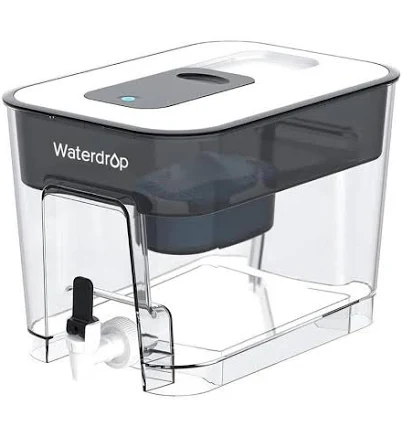
Waterdrop Alkaline Water Filter Pitcher Dispenser
Lower PFAS concern than many water pitchers, but lack of transparency on filter specifics and pitcher coating is a gap.
Waterdrop's pitcher uses BPA-free plastic and carbon filtration, materials not inherently prone to PFAS. The brand offers no public PFAS-free status, filter details, or third-party testing information.
We flunk more products than we pass. This one earned its grade. How we grade
Material
BPA-free plastic pitcher, carbon/ion-exchange filter media
Lab data
No public lab test
You may also be interested in
Top-graded picks in the categories readers replace first, every one scored on the same rubric.

Aqua Pure
3M Aqua-Pure AP802B Whole House Filter Housing
- polypropylene filter housing, carbon/sediment cartridge
- We found no PFAS statement from the brand
- Bacterial growth in spent cartridges
3 hazards checked on this product. See all of them.

Aquasure
Premier Series 75 GPD Under Sink Reverse Osmosis Water Filtration System
- RO membrane, carbon filters, stainless steel housing
- We found no PFAS statement from the brand
- Bacterial and microbial growth in housing and filters
4 hazards checked on this product. See all of them.

Avocado
Vegan Mattress
- organic cotton, natural latex, coconut coir, recycled steel coils
- The brand calls it PFAS-free, which we have not verified
- Heavy metals
2 hazards checked on this product. See all of them.
What Waterdrop Alkaline Water Filter Pitcher is made of, ingredients and materials
The pitcher housing is BPA-free plastic, typically polypropylene (PP) or copolyester, which is more stable than polycarbonate under normal use and refrigeration. The filter cartridge contains granulated activated carbon and ion-exchange resin beads to remove chlorine, heavy metals, and minerals; this media is a standard approach with a long safety track record. The critical unknown is whether the pitcher interior has any coating (epoxy, polyester, or phenolic) applied to the plastic itself, which could leach if degraded over years of use.
What’s concerning
No PFAS disclosure
No public statement from the brand about PFAS in this product.
Plastic pitcher coating degradation and leaching
If the pitcher interior is coated with epoxy or polyester to improve durability or aesthetics, prolonged exposure to acidic or mineral-rich water, temperature cycling, or UV light could slowly degrade the coating and release monomers or oligomers. No testing data is available for this specific product; risk is low but not zero, especially after 2-3 years of heavy use.
Ion-exchange resin particle shedding
If the filter cartridge housing or resin bed cracks or is not properly contained, fine resin beads can migrate into drinking water. This is uncommon with well-manufactured cartridges but more likely if the pitcher is dropped, overpressurized, or stored improperly. Regular visual inspection of the cartridge and pitcher housing can mitigate this risk.
Microplastics
BPA-free polypropylene and copolyesters are more chemically stable than older plastics, but mechanical wear, thermal cycling, or degradation of any applied coatings can generate small plastic particles, especially if the pitcher is refilled frequently or exposed to warm conditions. This is a long-term concern after 2-3 years, not an immediate risk.
Source, EPA ↗Bacterial growth in filter cartridge if maintenance is neglected
Activated carbon can harbor bacteria and mold if the cartridge is not replaced on schedule or if the pitcher is stored in warm, humid conditions without draining. Stagnant water left in the pitcher between uses accelerates biofilm formation. Replacing filters every 2-3 months and regular rinsing minimize this risk significantly.
What’s reassuring
Base material not linked to PFAS
The main material recorded for this product is not one associated with PFAS.
Heavy metals
Activated carbon and ion-exchange resins used in water pitchers are not known to leach lead, cadmium, or chromium into drinking water when manufactured to industry standards. However, the absence of published third-party testing for this specific Alkaline Water Plus model means this assumption cannot be verified independently.
Source, FDA ↗The full breakdown
The brand's record and disclosure
Alkaline Water Plus has not published detailed third-party certifications (NSF, WQA, or UL) for this specific pitcher model, nor disclosed the exact resin type or pitcher coating chemistry. The brand's marketing emphasizes alkalinity and mineral retention but remains largely silent on materials sourcing and chemical vetting. No major recalls or health complaints have surfaced in public records for this product line, but the lack of transparency around filter media specifics and pitcher manufacturing is a meaningful gap versus competitors with third-party lab reports.
How it compares in its category
Water pitchers using carbon plus ion-exchange are common and have lower concern for resin leaching than those relying solely on ion exchange, which can leach resins if not properly encased. Waterdrop pitchers (different brand, owned by same parent company) have stronger published certifications; this Alkaline Water Plus model lags on transparency. Most competitors in the alkaline pitcher category share similar PFAS opacity, so Waterdrop's stated lower PFAS concern places this product in the mid-to-upper tier of its segment, not exceptional but not below standard.
If you buy it
Replace filter cartridges every 2-3 months or after 100-150 gallons, as exhausted carbon loses adsorptive capacity and ion-exchange resin can begin to leach if oversaturated. Store the pitcher in a refrigerator or cool place; do not leave filled water in sunlight or near heat sources, as plastic can degrade and microplastics may shed over time. Rinse the pitcher with cool water before first use and after each cartridge replacement. Inspect the pitcher annually for visible cracks, cloudiness, or discoloration; if present, discontinue use and replace.
What we don’t know
- Basis
- Model estimate, 72% confidence, not a lab result
- Lab test
- None on record for this exact product
- Brand statement
- Waterdrop has made a specific claim
Formulations change between production runs, so check the current label. How we grade.
Better-graded alternatives in Water Filters

Aquamira
Water Storage Treatment 2 oz Glass Bottles 60 gallons Purification
- glass bottles, sodium dichloroisocyanurate treatment chemical
- We found no PFAS statement from the brand
- Chemical overdose or misuse
5 hazards checked on this product. See all of them.

Big Berkey
Empty Housing with NO Filters Included
- Stainless steel housing and spigot
- We found no PFAS statement from the brand
- Bacterial growth and biofilm if filters not replaced
5 hazards checked on this product. See all of them.

LifeStraw
Home Glass Water Filter Pitcher
- Borosilicate glass pitcher, replaceable activated-carbon filter cartridge
- Bacterial growth in filter cartridge if unmaintained
5 hazards checked on this product. See all of them.
More water filters grades
How we score, every product runs through the same public 0-100 rubric based on materials, coatings, brand disclosure, lab findings, and recalls. See the full methodology → Spotted a mistake? Report an error.