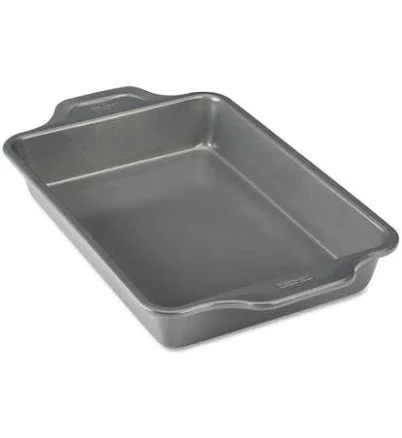
All-Clad Pro-Release Bakeware Rectangular Baking Pan
Teflon-type coating non-stick coating, disclosed by the brand.
All-Clad says its nonstick contains Teflon-type coating, and lists its HA1, Essentials, NS1, D3 and D5 nonstick lines among its Teflon-type coating coated products. Teflon-type coating is a Teflon-family coating in the PFAS family.
The better-graded swap
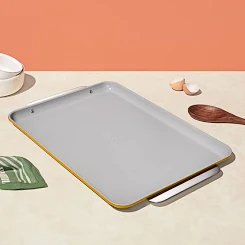
Caraway
Caraway Nonstick Ceramic Large Baking Sheet
90/100 safety
Same rubric that flunked this product. The swap earned Excellent.
Still want this one anyway? Check the price on Amazon. We’d swap it.
Material
Teflon-type coating non-stick coating, as disclosed by All-Clad
Lab data
No public lab test
Is All-Clad Pro-Release Bakeware Rectangular non-toxic? What it is made of
All-Clad Pro-Release Bakeware uses a Teflon-type coating (polytetrafluoroethylene) non-stick coating bonded to a steel or aluminum substrate. Teflon-type coating itself is chemically stable below ~500 degrees Fahrenheit, but manufacturing and disposal of Teflon-type coating products involves PFAS compounds (PFAS "forever chemicals"), which are persistent environmental contaminants. The coating can degrade over time with metal utensils or abrasive cleaning, and high-heat exposure or overheating can release volatile fluorinated compounds.
What’s concerning
No PFAS disclosure
No PFAS-free statement from the brand for this product.
PTFE / Teflon confirmed
The brand discloses a Teflon-type coating.
Category baseline
The starting point for this type of product, before anything specific to this product is counted.
Teflon-type coating fume risk (decomposition products)
Teflon-type coating is stable during normal baking (oven use below 400-500 degrees). Risk is elevated only if overheated, preheated empty, or damaged coating is heated. Symptoms of Teflon-type coating decomposition exposure include polymer fume fever (transient flu-like illness). No established threshold for low-level inhalation during standard baking.
Coating degradation and substrate exposure
Teflon-type coating coatings wear from metal utensils, aggressive scrubbing, and thermal cycling. Worn areas expose underlying aluminum or steel, which can leach into food at low levels, particularly with acidic foods. All-Clad does not specify the substrate composition or whether aluminum is anodized; standard steel is lower leaching concern than bare aluminum.
PFAS
Teflon-type coating production requires PFOA (perfluorooctanoic acid) and other PFAS as processing aids; residual PFAS may be present in the coating. PFAS compounds do not leach into food during normal use but are released during manufacturing and disposal. All-Clad does not disclose PFAS residue testing or waste management practices.
Source, ATSDR ↗Improper temperature use and overcooking risk
Bakeware is typically used at baking temperatures well below Teflon-type coating decomposition point (350-425 degrees Fahrenheit is standard). Risk of fume release is minimal under labeled conditions but increases significantly if pan is preheated empty or used under a broiler. User error, not product design, is the primary exposure route.
What’s reassuring
Lead
All-Clad is a U.S. manufacturer subject to FDA cookware regulations; no recalls or test reports document lead or cadmium in this product line. Teflon-type coating coatings and modern enamels do not inherently contain these metals, but old or counterfeit non-stick products have tested positive. Buying from authorized retailers mitigates counterfeit risk.
Source, ATSDR ↗The full breakdown
The brand's record and disclosure
All-Clad discloses the Teflon-type coating in product descriptions and care guidelines but does not publicly commit to PFAS-free alternatives or provide third-party safety certifications for non-stick cookware. The brand has not announced phase-out plans for Teflon-type coating or published statements addressing PFAS contamination concerns. This silence is typical among legacy cookware manufacturers still using traditional non-stick technology.
How it compares in its category
Teflon-type coating non-stick bakeware remains the market standard for performance and affordability. Ceramic-coated alternatives exist (lower PFAS concern during use, though manufacturing may involve legacy PFAS) and seasoned cast iron or uncoated steel options eliminate coating hazard entirely but require more skill. All-Clad's commercial-grade construction and multi-layer substrate are above budget bakeware, though the non-stick chemistry itself is not proprietary.
If you buy it
Use only at recommended temperatures (typically below 400-500 degrees Fahrenheit per All-Clad guidelines; check your manual). Avoid metal utensils and abrasive scouring; hand wash or use soft sponges to extend coating life. Replace pans if coating visibly peels, flakes, or develops scratches exposing substrate. Never preheat empty or unattended; overheating is the primary mechanism for fume release. Store away from high heat sources.
What we don’t know
- Basis
- Model estimate, 35% confidence, not a lab result
- Lab test
- None on record for this exact product
- Brand statement
- All-Clad has made a specific claim
Formulations change between production runs, so check the current label. How we grade.
Better-graded alternatives in Bakeware
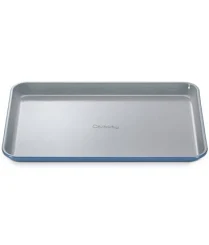
Caraway
Nonstick Ceramic Medium Baking Sheet
- ceramic nonstick coating
- A third party reports verifying it as PFAS-free
- Ceramic coating degradation over time
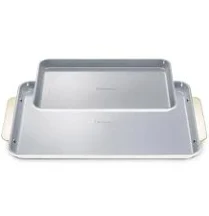
Caraway
Ceramic Nonstick Baking Sheet Duo
- ceramic nonstick coating
- A third party reports verifying it as PFAS-free
- Coating degradation and durability
2 hazards checked on this product. See all of them.
Caraway
Nonstick Ceramic Large Baking Sheet
- ceramic nonstick coating
- The brand calls it PFAS-free, which we have not verified
- Ceramic coating degradation and particle shedding
3 hazards checked on this product. See all of them.
More bakeware grades
How we score, every product runs through the same public 0-100 rubric based on materials, coatings, brand disclosure, lab findings, and recalls. See the full methodology → Spotted a mistake? Report an error.