ALPS Mountaineering · Camping Tents & Tarps
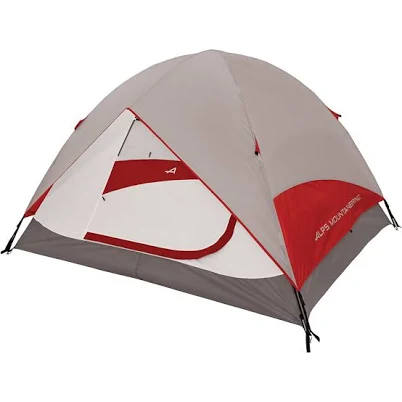
Alps Mountaineering Meramac Tent
Wait for manufacturer to disclose water-repellent coating chemistry or provide independent testing.
This tent features polyester ripstop with a water-resistant coating, but ALPS Mountaineering doesn't reveal whether it's PFAS-based. Without manufacturer transparency or third-party certification, PFAS presence remains unclear.
Still want this one anyway? Check the price on Amazon. We’d swap it.
Material
Polyester ripstop fabric with water-repellent coating (type unspecified)
Brand disclosure
Brand is silent on PFAS
Lab data
No public lab test
What Alps Mountaineering Meramac Tent is made of, ingredients and materials
The Meramac uses polyester ripstop fabric, a common synthetic weave chosen for tear resistance and lightweight strength. The critical component is its water-repellent coating (water-repellent coating) finish, which the manufacturer has not publicly specified as containing PFAS or not containing PFAS. Polyester itself is stable and poses no known leaching risk; the concern centers entirely on what chemical coating was applied to achieve water repellency.
What’s concerning
Category baseline
The starting point for this type of product, before anything specific to this product is counted.
No PFAS disclosure
No public statement from the brand about PFAS in this product.
Waterproof / stain-resistant treatment
Water-repellent coating treatments have historically used PFAS.
PFAS
The specific water-repellent coating chemistry is undisclosed. If PFAS-based (standard in the industry until recently), fabric can shed PFAS into skin contact, sweat, or groundwater if disposed improperly. Absence of manufacturer confirmation leaves this unresolved.
Source, ATSDR ↗Polyester fiber shedding and microfiber release
Ripstop polyester can shed microfibers during use, especially if abraded or if the water-repellent coating flakes. Risk increases if coating degradation accelerates fabric wear. Not specific to ALPS but inherent to polyester tent construction.
Mold and mildew growth if stored damp
Polyester itself does not support mold, but retained moisture on the fabric can promote microbial growth. This is a maintenance issue, not a material defect, but critical for health and fabric longevity.
water-repellent coating degradation and chemical leaching during use or end-of-life
As the water-repellent coating wears, its chemical components may leach into groundwater if the tent is buried or left in the field. Without water-repellent coating chemistry disclosure, the fate of these compounds is unknown.
What’s reassuring
Lead
Polyester ripstop tents do not use ceramic glazes, enamels, or pigmented coatings that typically contain heavy metals. No reports of lead or cadmium in ALPS tents.
Source, ATSDR ↗The full breakdown
The brand's record and disclosure
ALPS Mountaineering does not publish material safety data, chemical certifications, or water-repellent coating sourcing on its website or product documentation. The company has not responded publicly to PFAS concerns in outdoor gear or committed to phase-out timelines. No recalls or documented safety incidents specific to this model have been reported, but the absence of transparency is itself a red flag in an industry where leading competitors increasingly disclose water-repellent coating chemistry.
How it compares in its category
Many mainstream tent brands (Big Agnes, Nemo, REI Co-op) now offer models with PFAS-free water treatments or clearly disclose their water-repellent coating source. ALPS Mountaineering's silence on this issue places it behind peers in transparency. The Meramac's price point and durability are typical for mid-range backpacking tents, but you pay the same without the assurance that higher-transparency competitors provide.
If you buy it
Store in a dry, well-ventilated space to minimize mold growth, which can compromise the fabric and coating over time. Do not machine wash; clean by wiping with mild soap and air-dry away from direct heat or sunlight, which can degrade the polyester and water-repellent coating. Inspect seams and the coating annually for wear; once the water-repellent coating visibly fails (water beads instead of sheeting), reproof or replace the tent rather than trying to restore coating integrity.
What we don’t know
- Basis
- Model estimate, 35% confidence, not a lab result
- Lab test
- None on record for this exact product
- Brand statement
- ALPS Mountaineering has made none
Formulations change between production runs, so check the current label. How we grade.
More camping tents & tarps grades
How we score, every product runs through the same public 0-100 rubric based on materials, coatings, brand disclosure, lab findings, and recalls. See the full methodology → Spotted a mistake? Report an error.