Big Agnes · Camping Tents & Tarps
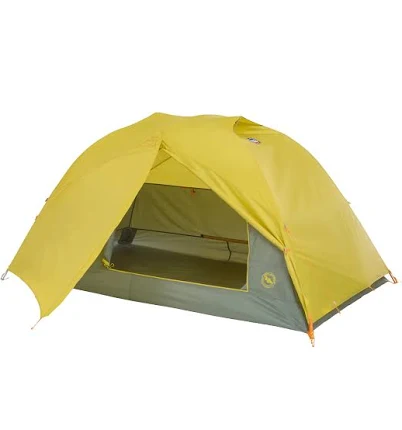
Big Agnes Blacktail 2 Backpacking Tent
Waterproof tent coating raises PFAS concern; Big Agnes does not disclose its treatment.
Nylon ripstop with a water-repellent coating finish typical of backpacking tents, which historically rely on Teflon-family coating chemistry. Big Agnes provides no disclosure of whether their water-repellent coating contains PFAS.
Still want this one anyway? Check the price on Amazon. We’d swap it.
Material
Nylon ripstop with water-repellent coating (type unspecified)
Brand disclosure
Brand is silent on PFAS
Lab data
No public lab test
What Big Agnes Blacktail 2 Backpacking Tent is made of, ingredients and materials
The Blacktail 2 uses nylon ripstop fabric, a lightweight, tear-resistant weave standard in backpacking tents. Big Agnes applies a water-repellent coating (water-repellent coating) coating to the outer layer, but the specific chemistry is not disclosed publicly. Nylon itself is inert under normal outdoor conditions; the uncertainty centers on what chemicals are used in the water-resistance treatment and whether they persist or migrate during use and washing.
What’s concerning
Category baseline
The starting point for this type of product, before anything specific to this product is counted.
No PFAS disclosure
No public statement from the brand about PFAS in this product.
Waterproof / stain-resistant treatment
Water-repellent coating treatments have historically used PFAS.
Fluorinated water-repellent coating residues (PFOA/PFCs in historical treatments)
Big Agnes does not disclose whether this model uses legacy fluorinated water-repellent coating (common in nylon tents until recent years) or newer non-fluorinated alternatives. Off-gassing or leaching during hot, humid storage is theoretically possible but not documented for this specific product.
Mold and bacterial growth in stored damp fabric
If the tent is stored wet or in humid conditions, fungal and bacterial colonies can develop on the nylon and coating. This is a maintenance issue, not a material defect, but requires proper drying and storage practices specific to this fabric type.
Heat sensitivity of water-repellent coating-coated nylon near fire or stove
Fluorinated water-repellent coating coatings can thermally degrade or off-gas when exposed to high heat (stove use inside tent). This is a known concern for all water-repellent coating-coated nylon tents and a reason manufacturers recommend keeping flames away from tent walls.
What’s reassuring
Nylon fiber integrity and shedding under UV stress
Nylon ripstop degrades naturally under prolonged UV exposure outdoors, potentially shedding microfibers. This is a long-term concern for any nylon tent, not specific to Big Agnes manufacturing, and is not a health hazard during normal use but a durability and microplastic shedding consideration.
Adhesive or glue residues at seam tape joints
Big Agnes does not disclose the chemistry of seam-sealing adhesives used in tent construction. Nylon tents typically use polyurethane or acrylic-based sealants; off-gassing during initial use is typically minimal and dissipates within days to weeks in outdoor air.
The full breakdown
The brand's record and disclosure
Big Agnes does not publish detailed material safety data sheets or water-repellent coating chemistry for consumer products. The brand has no known public commitment to PFAS-free coatings and has not disclosed independent testing results for this model. No major safety recalls or contamination incidents have been reported for the Blacktail 2 specifically. Transparency on chemical inputs remains a gap across the outdoor tent industry.
How it compares in its category
Most backpacking tents in this price and weight class use similar nylon ripstop with fluorinated or unfluorinated water-repellent coating treatments. Big Agnes is a mid-market brand without a known reputation for either leading or lagging on chemical disclosure. Competitors (REI Co-op, MSR, some brands) similarly lack public PFAS transparency, though a few smaller manufacturers now advertise PFAS-free options. The Blacktail 2 is broadly typical for the segment, not an outlier in either direction.
If you buy it
Wash the tent infrequently and only with plain water or mild detergent designed for outdoor fabrics; aggressive laundering may degrade the water-repellent coating and increase leaching risk. Allow the tent to air dry completely away from direct heat or flame. Avoid contact between tent fabric and skin for extended periods in hot weather, as this minimizes any potential dermal exposure to coating residues. Store it dry and cool; inspect annually for coating breakdown (beading loss on the outer fly) and replace the tent if the water barrier visibly fails.
What we don’t know
- Basis
- Model estimate, 55% confidence, not a lab result
- Lab test
- None on record for this exact product
- Brand statement
- Big Agnes has made none
Formulations change between production runs, so check the current label. How we grade.
More camping tents & tarps grades
How we score, every product runs through the same public 0-100 rubric based on materials, coatings, brand disclosure, lab findings, and recalls. See the full methodology → Spotted a mistake? Report an error.