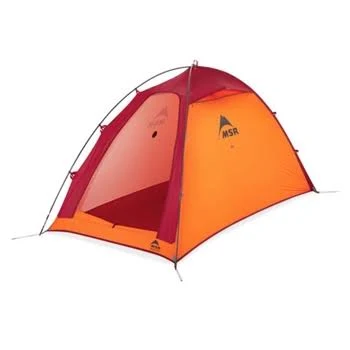
MSR Advance Pro 2 Ultralight 2-Person 4-Season Tent
Avoid unless Cascade confirms PFAS-free water-repellent coating; ultralight tents typically use fluorocarbon waterproofing.
This ultralight tent has ripstop nylon with water-repellent coating. Cascade Designs won't say if their water-repellent coating treatment contains PFAS, and fluorocarbon waterproofing is standard in lightweight tents.
Still want this one anyway? Check the price on Amazon. We’d swap it.
Material
Ripstop nylon with water-repellent coating (water-repellent coating) coating
Brand disclosure
Brand is silent on PFAS
Lab data
No public lab test
What MSR Advance Pro 2 Ultralight 2-Person is made of, ingredients and materials
The MSR Advance Pro 2 uses ripstop nylon as its primary fabric with a water-repellent coating (water-repellent coating) coating applied to the exterior. Ripstop nylon itself is a stable synthetic polymer with low leaching risk under normal use. The water-repellent coating finish is the chemical concern, ultralight tent manufacturers typically rely on fluorocarbon-based water repellents (such as C6 or C8 Teflon-family coating) rather than fluorine-free alternatives, because fluorocarbon coatings are lighter, more durable, and perform better in demanding conditions. This coating does not off-gas significantly under normal storage or field temperatures, but the PFAS compounds remain in the fabric.
What’s concerning
Category baseline
The starting point for this type of product, before anything specific to this product is counted.
No PFAS disclosure
No public statement from the brand about PFAS in this product.
Waterproof / stain-resistant treatment
Water-repellent coating treatments have historically used PFAS.
PFAS
Ultralight nylon ripstop tents almost universally use fluorocarbon-based durable water repellents; Cascade has not confirmed PFAS-free status for the Advance Pro 2, making fluorinated treatment the working assumption.
Source, ATSDR ↗Microplastics
Ripstop nylon sheds microfibers over time with mechanical wear (abrasion, washing); this is inherent to synthetic textiles and accelerates with age, though the risk is highest during washing rather than field use.
Source, EPA ↗What’s reassuring
Formaldehyde / VOCs
Ripstop nylon does not typically require formaldehyde-based finishing for color or wrinkle resistance; no record of formaldehyde complaints in MSR tent products.
Source, ATSDR ↗Heavy metals
The Advance Pro 2 uses standard ultralight nylon, typically dyed with conventional azo dyes and trace metals; no specific recalls or test results document excessive heavy metals in MSR tents.
Source, FDA ↗Volatilization of coating in high heat
Water-repellent coating coatings on nylon do not volatilize at normal field temperatures or indoor storage; risk is negligible unless the tent is subjected to temperatures above 60-70C, which is not a realistic use scenario.
The full breakdown
The brand's record and disclosure
Cascade Designs (MSR's parent company) has not publicly disclosed the specific water-repellent coating chemistry used in their tent line or committed to PFAS-free alternatives. The brand has not issued a statement addressing PFAS in camping textiles, which is notable given the ultralight gear market's known reliance on fluorocarbon treatments. No formal recall or safety controversy has been documented for this tent, but the lack of transparency on water-repellent sourcing is consistent with industry-wide silence on the issue. Consumers seeking PFAS-free gear will need to contact Cascade directly to confirm whether newer batches use non-fluorinated water-repellent coating.
How it compares in its category
Most ultralight four-season tents in this weight and durability range (under 2 kg) use fluorocarbon water-repellent coating; fully fluorine-free alternatives exist but are rarer and typically heavier or more expensive. Brands like Hyperlite Mountain Gear have begun offering explicitly PFAS-free options, while traditional players like MSR, Big Agnes, and Nemo remain silent on water-repellent coating sourcing. The MSR Advance Pro 2 is not an outlier in this regard, but it does not lead on transparency. Heavier tents using polyester with silicone or wax-based water repellents avoid PFAS entirely, though they sacrifice the ultralight appeal.
If you buy it
Store the tent dry and in a cool place; moisture and heat will not trigger off-gassing of the water-repellent coating, but avoid high-temperature washing. Do not machine wash or apply heat; hand-rinse with cool water and mild soap only. The water-repellent coating will degrade over 3-5 years of heavy field use; re-treatment with fluorine-free products (such as Nikwax TX.Direct) is an option if you wish to reduce PFAS exposure on the next application. Check the tent for tears or abrasion before and after each season, as small holes are the primary failure mode and pose no chemical risk themselves.
What we don’t know
- Basis
- Model estimate, 52% confidence, not a lab result
- Lab test
- None on record for this exact product
- Brand statement
- MSR has made none
Formulations change between production runs, so check the current label. How we grade.
More camping tents & tarps grades
How we score, every product runs through the same public 0-100 rubric based on materials, coatings, brand disclosure, lab findings, and recalls. See the full methodology → Spotted a mistake? Report an error.