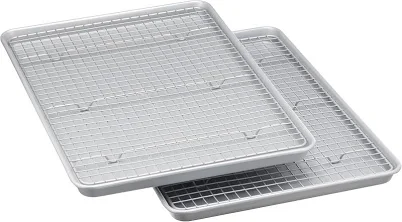
Amazon Basics Ceramic Nonstick Baking Sheets & Cooling Rack Set, Is It Non-Toxic?
Ceramic coating suggests lower PFAS risk; specifics unverified.
Amazon Basics markets this as ceramic nonstick, which generally carries less PFAS risk than Teflon-type coating coatings. The brand provides no PFAS disclosure or testing, so actual coating makeup remains unconfirmed.
The better-graded swap
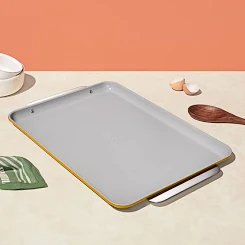
Caraway
Caraway Nonstick Ceramic Large Baking Sheet
90/100 safety
Same rubric that flunked this product. The swap earned Excellent.
Still want this one anyway? Check the price on Amazon. We’d swap it.
Material
Ceramic nonstick coating on steel; no Teflon-type coating confirmed
Lab data
No public lab test
You may also be interested in
Top-graded picks in the categories readers replace first, every one scored on the same rubric.

- polypropylene filter housing, carbon/sediment cartridge
- We found no PFAS statement from the brand
- Bacterial growth in spent cartridges
3 hazards checked on this product, all on its full breakdown.

Aquasure
Premier Series 75 GPD Under Sink Reverse Osmosis Water Filtration System
- RO membrane, carbon filters, stainless steel housing
- We found no PFAS statement from the brand
- Bacterial and microbial growth in housing and filters
4 hazards checked on this product, all on its full breakdown.

Avocado
Vegan Mattress
- organic cotton, natural latex, coconut coir, recycled steel coils
- The brand calls it PFAS-free, which we have not verified
- Heavy metals
2 hazards checked on this product, all on its full breakdown.
Is Amazon Basics Ceramic Cooling Rack Set non-toxic? What it is made of
This product pairs carbon steel baking sheets with a ceramic nonstick coating, eliminating Teflon-type coating (Teflon) and its associated fume risk above 500°F. Ceramic coatings typically consist of silica-based compounds and inorganic oxides rather than Teflon-family coating, making them chemically inert at normal baking temperatures (up to 400-450°F). The steel substrate itself is food-safe and does not leach under typical use. However, the durability and exact composition of Amazon Basics' ceramic coating formula remain unspecified in public materials.
What’s concerning
Category baseline
The starting point for this type of product, before anything specific to this product is counted.
No PFAS disclosure
No public statement from the brand about PFAS in this product.
Non-stick, chemistry undisclosed
Marketed as non-stick without stating the coating chemistry.
Ceramic coating degradation and flaking
Ceramic coatings are durable but not permanent; Amazon Basics does not publish data on coating lifespan or flaking resistance. Visible degradation may release ceramic particles; risk increases with aggressive cleaning or thermal shock (cold baking sheet into hot oven).
Thermal decomposition of coating above safe limits
If user exceeds 450-500°F, ceramic binders may degrade or off-gas low-level organic volatiles. No public test data exists for this specific product; risk is theoretical but present with all ceramic nonstick coatings.
Maintenance and bacterial growth (cooling rack)
The included cooling rack has narrow crevices that trap moisture and food debris if not dried immediately. Improper storage in damp conditions may promote mold or bacterial biofilm; regular air drying and inspection are necessary.
What’s reassuring
Metal leaching from steel substrate
Carbon steel does not leach iron, nickel, or chromium under normal acidic or thermal baking conditions if the ceramic coating remains intact. Risk only emerges if coating is severely compromised and acidic foods contact raw steel for prolonged periods.
Lead
FDA cookware regulations prohibit lead and cadmium in food-contact surfaces; Amazon Basics bakeware presumably complies. However, no third-party verification or certificate of compliance is publicly available for this product line.
Source, ATSDR ↗How is this PFAS grade calculated?
The brand's record and disclosure
Amazon Basics provides minimal detailed material safety or composition data for this product. The brand does not publish third-party test results, certifications (such as GREENGUARD or FDA compliance statements), or transparency reports on chemical inputs in coatings. No recalls specific to this bakeware set appear in FDA or CPSC databases as of public record. The parent company (Amazon) has not made public commitments to PFAS reduction in cookware lines.
How it compares in its category
Ceramic nonstick bakeware is a middle-ground option, lower concern regarding fume risk compared to traditional Teflon-type coating-coated sheets, but less durable than uncoated stainless steel or cast iron and more prone to coating wear over time. Premium ceramic alternatives (e.g., GreenPan, Our Place) offer explicit third-party testing and longer warranties; budget alternatives like this Amazon Basics set trade specificity of materials for lower cost. Most ceramic coatings perform adequately for home bakers who do not exceed 450°F and avoid metal utensils.
If you buy it
Hand wash with soft sponges; avoid metal or abrasive scrubbers that accelerate coating degradation. Do not exceed oven temperatures of 450°F, as ceramic coatings can crack or degrade above this range. Replace the sheets if nonstick performance visibly deteriorates (flaking, rough patches, or sticking) to prevent potential coating fragments in food. Store in a dry environment to prevent rust on bare steel edges.
What is not known about PFAS in this product?
- Basis
- Model estimate, 72% confidence, not a lab result
- Lab test
- None on record for this exact product
- Brand statement
- Amazon Basics has made a specific claim
Formulations change between production runs, so check the current label. How we grade.
What are the PFAS-free alternatives to Amazon Basics Ceramic Nonstick Baking Sheets & Cooling Rack Set?
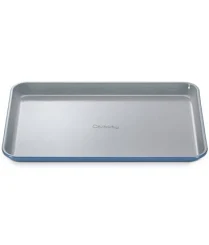
- ceramic nonstick coating
- A third party reports verifying it as PFAS-free
- Ceramic coating degradation over time
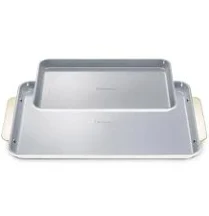
- ceramic nonstick coating
- A third party reports verifying it as PFAS-free
- Coating degradation and durability
2 hazards checked on this product, all on its full breakdown.
- ceramic nonstick coating
- The brand calls it PFAS-free, which we have not verified
- Ceramic coating degradation and particle shedding
3 hazards checked on this product, all on its full breakdown.
More bakeware grades
How we score, every product runs through the same public 0-100 rubric based on materials, coatings, brand disclosure, lab findings, and recalls. See the full methodology → Spotted a mistake? Report an error.