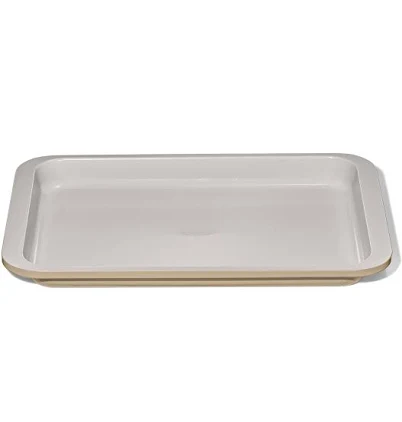
OXO Good Grips Non-Stick Pro Ceramic Coated Metal Bakeware Quarter Sheet Pan
Ceramic coating likely lower PFAS concern, but OXO silent on formula.
OXO advertises ceramic coating rather than traditional non-stick, suggesting lower PFAS risk. Brand discloses no PFAS testing or claims, limiting full assurance.
The better-graded swap
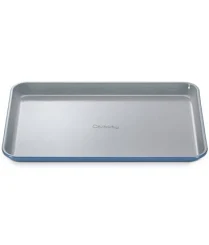
Caraway
Caraway Nonstick Ceramic Medium Baking Sheet
100/100 safety
Same rubric that flunked this product. The swap earned Excellent.
Still want this one anyway? Check the price on Amazon. We’d swap it.
Material
Ceramic-coated steel
Lab data
No public lab test
Is OXO Good Grips Non-Stick Pro Ceramic non-toxic? What it is made of
This pan is steel substrate with a ceramic non-stick coating applied topically. Ceramic coatings are inorganic mineral-based layers that do not contain Teflon-type coating (Teflon) and are considered lower-toxicity alternatives to traditional Teflon-family coating non-stick surfaces. The steel base itself is stable and does not leach at normal baking temperatures. The ceramic finish is the wear point, once it begins to chip or degrade, direct contact with underlying steel becomes possible, though steel itself poses minimal acute risk at kitchen temperatures.
What’s concerning
Category baseline
The starting point for this type of product, before anything specific to this product is counted.
No PFAS disclosure
No public statement from the brand about PFAS in this product.
Non-stick, chemistry undisclosed
Marketed as non-stick without stating the coating chemistry.
Ceramic coating degradation and delamination
Ceramic non-stick coatings are prone to chipping or peeling with repeated use, especially if washed in dishwashers or scraped aggressively. Once compromised, the coating no longer provides non-stick function and exposes the steel base; no acute toxicity results, but functionality and surface quality decline.
Coating durability and replacement frequency
Ceramic coatings are generally less durable than seasoned cast iron and may require replacement every 2-5 years with regular use. This creates cost and waste considerations rather than acute safety risk, but frequent re-coating failures can indicate manufacturing quality variance.
What’s reassuring
Thermal stability of coating additives
OXO does not disclose additives or processing aids in the ceramic formula. No public reports of fume emission or off-gassing from ceramic-coated bakeware at normal baking temperatures. Risk at typical use (under 400°F) is considered minimal.
Steel substrate leaching (iron, chromium, nickel)
The underlying steel is sealed by the ceramic layer when intact. Stainless steel grade is not specified by OXO but is standard for food-contact cookware. Once coating is intact, leaching is not a concern; if coating fails, minimal iron leaching occurs at baking temperatures.
Lead
No recalls or testing reports on OXO ceramic bakeware for lead or cadmium contamination. Modern food-contact ceramics sold in North America are subject to FDA limits (lead limit 0.5 mcg/mL in cookware). No reason to suspect OXO deviates from standard compliance, but explicit third-party testing is not publicly available.
Source, ATSDR ↗The full breakdown
The brand's record and disclosure
OXO does not publicly disclose the detailed chemistry of its ceramic coating formula, including any additives or processing aids. The brand has no known recalls or safety controversies on this product line. OXO is not recognized for aggressive transparency on non-stick coating composition or PFAS avoidance statements, distinguishing it from some competitors who market explicitly PFAS-free claims. However, absence of reported incidents suggests standard manufacturing safety compliance.
How it compares in its category
Ceramic-coated bakeware sits in the middle of the non-stick spectrum, lower concern for off-gassing compared to vintage or cheap Teflon-type coating pans if overheated, but less durable than seasoned cast iron or uncoated steel. Most major cookware brands (All-Clad, Calphalon, GreenPan) now offer ceramic alternatives with similar or better disclosure practices. OXO's ceramic offering is competitively positioned but offers no transparency advantage; ceramic longevity varies widely by manufacturing quality and maintenance.
If you buy it
Keep oven temperature at or below 400°F to avoid ceramic coating stress and potential coating failure. Hand wash or use gentle cycles; abrasive scrubbing and dishwashers accelerate coating wear. Inspect the surface every 6-12 months for chips, cracks, or flaking. If the coating begins to peel visibly, replace the pan rather than use it with exposed steel, as acidic foods may cause rust staining. Store dry to prevent moisture entrapment that can undermine coating adhesion.
What we don’t know
- Basis
- Model estimate, 72% confidence, not a lab result
- Lab test
- None on record for this exact product
- Brand statement
- OXO has made a specific claim
Formulations change between production runs, so check the current label. How we grade.
Better-graded alternatives in Bakeware
Caraway
Nonstick Ceramic Medium Baking Sheet
- ceramic nonstick coating
- A third party reports verifying it as PFAS-free
- Ceramic coating degradation over time
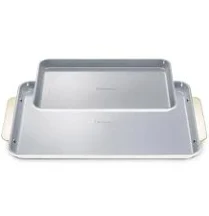
Caraway
Ceramic Nonstick Baking Sheet Duo
- ceramic nonstick coating
- A third party reports verifying it as PFAS-free
- Coating degradation and durability
2 hazards checked on this product. See all of them.
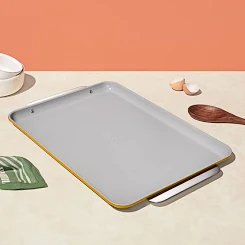
Caraway
Nonstick Ceramic Large Baking Sheet
- ceramic nonstick coating
- The brand calls it PFAS-free, which we have not verified
- Ceramic coating degradation and particle shedding
3 hazards checked on this product. See all of them.
More bakeware grades
How we score, every product runs through the same public 0-100 rubric based on materials, coatings, brand disclosure, lab findings, and recalls. See the full methodology → Spotted a mistake? Report an error.