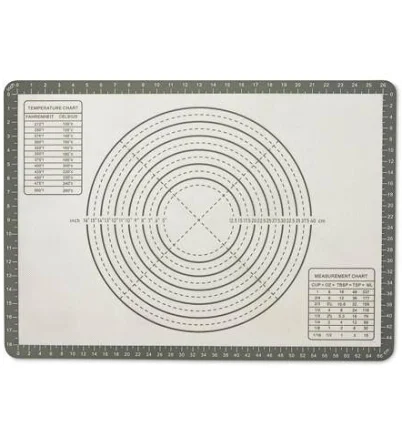
Amazon Basics Nonstick Silicone Pastry Baking Mat with Measurements, Are They Non-Toxic?
Lower concern; silicone mats typically avoid PFAS coatings.
Silicone baking mats naturally avoid PFAS-heavy Teflon-family coating coatings. Amazon Basics does not make PFAS claims, but silicone's chemistry keeps risk lower than traditional nonstick products.
The better-graded swap
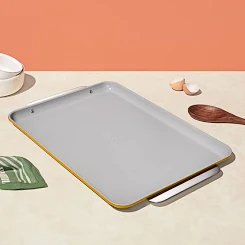
Caraway
Caraway Nonstick Ceramic Large Baking Sheet
90/100 safety
Same rubric that flunked this product. The swap earned Excellent.
Still want this one anyway? Check the price on Amazon. We’d swap it.
Material
silicone (primarily)
Lab data
No public lab test
You may also be interested in
Top-graded picks in the categories readers replace first, every one scored on the same rubric.

- polypropylene filter housing, carbon/sediment cartridge
- We found no PFAS statement from the brand
- Bacterial growth in spent cartridges
3 hazards checked on this product, all on its full breakdown.

Aquasure
Premier Series 75 GPD Under Sink Reverse Osmosis Water Filtration System
- RO membrane, carbon filters, stainless steel housing
- We found no PFAS statement from the brand
- Bacterial and microbial growth in housing and filters
4 hazards checked on this product, all on its full breakdown.

Avocado
Vegan Mattress
- organic cotton, natural latex, coconut coir, recycled steel coils
- The brand calls it PFAS-free, which we have not verified
- Heavy metals
2 hazards checked on this product, all on its full breakdown.
Are Amazon Basics Nonstick Measurements non-toxic? What it is made of
This product is primarily food-grade silicone, a synthetic rubber polymer. Silicone does not inherently contain Teflon-type coating (Teflon) or similar Teflon-family coating coatings that shed fumes at high heat. The measurement markings are printed or embedded onto the surface, not applied as a separate coating layer. Silicone's non-porous structure resists leaching of additives into food when used as intended at typical baking temperatures (under 500°F).
What’s concerning
Category baseline
The starting point for this type of product, before anything specific to this product is counted.
No PFAS disclosure
No public statement from the brand about PFAS in this product.
Silicone thermal degradation
Silicone can soften or off-gas volatile compounds at sustained temperatures above 500°F, though food-contact silicone is formulated to remain stable in typical baking ranges (up to 450°F). Occasional exposure to higher temperatures is unlikely to cause acute harm, but prolonged overheating may accelerate material breakdown.
Leaching of oligomers or additives
Silicone formulations can contain low-molecular-weight compounds (oligomers) that migrate into fatty foods at elevated temperatures. This risk is present in all silicone mats regardless of brand; Amazon Basics product details do not specify whether the silicone meets migration standards set by FDA or EU regulations.
What’s reassuring
Base material not linked to PFAS
The main material recorded for this product is not one associated with PFAS.
Coating adhesion and particulate shedding
No recalls or documented cases of silicone mats shedding particles into food have been established for Amazon Basics or comparable budget silicone mat brands. The material structure does not support microplastic generation in the way that rigid plastics can.
Measurement ink or surface markings toxicity
The printed measurements on this mat do not appear to be a documented contamination vector. Ink used for food-contact silicone products is typically food-grade, though Amazon Basics does not publicly confirm certification standards for the markings on this specific mat.
Manufacturing trace contaminants
No specific testing data or recalls link Amazon Basics silicone mats to heavy metals, formaldehyde, or other processing residues. Silicone as a polymer class does not require formaldehyde-releasing resins, and the material is not typically subject to flame-retardant treatment.
How is this PFAS grade calculated?
The brand's record and disclosure
Amazon Basics does not publish detailed material safety certifications or third-party testing results for this product. The brand has not disclosed specific FDA food-contact approvals or manufacturing standards for this mat. Amazon Basics has no documented recalls specific to this silicone mat product as of available public records. The brand maintains a passive stance on PFAS disclosures across its product line.
How it compares in its category
Silicone baking mats are commonly considered to have lower concern compared to traditional nonstick cookware that relies on Teflon-type coating coatings. Parchment paper alternatives lack the durability and reusability, making silicone mats economically and environmentally preferable. Most commercial silicone mats at this price point (budget tier) offer similar material composition; Amazon Basics is competitively positioned. Unlike ceramic or coated steel mats, silicone does not degrade into visible particles under normal use.
If you buy it
Keep the mat below 500°F to avoid silicone softening or degradation at extreme temperatures. Hand wash after use; avoid scouring pads that can degrade the surface finish. Replace the mat if you notice tears, permanent discoloration, or loss of non-stick properties (typically after 3-5 years of frequent use). Do not use the mat in direct contact with open flame or broiler elements.
What is not known about PFAS in this product?
- Basis
- Model estimate, 78% confidence, not a lab result
- Lab test
- None on record for this exact product
- Brand statement
- Amazon Basics has made a specific claim
Formulations change between production runs, so check the current label. How we grade.
What are the PFAS-free alternatives to Amazon Basics Nonstick Silicone Pastry Baking Mat with Measurements?
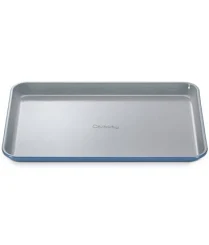
- ceramic nonstick coating
- A third party reports verifying it as PFAS-free
- Ceramic coating degradation over time
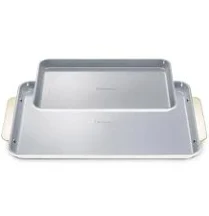
- ceramic nonstick coating
- A third party reports verifying it as PFAS-free
- Coating degradation and durability
2 hazards checked on this product, all on its full breakdown.
- ceramic nonstick coating
- The brand calls it PFAS-free, which we have not verified
- Ceramic coating degradation and particle shedding
3 hazards checked on this product, all on its full breakdown.
More bakeware grades
How we score, every product runs through the same public 0-100 rubric based on materials, coatings, brand disclosure, lab findings, and recalls. See the full methodology → Spotted a mistake? Report an error.