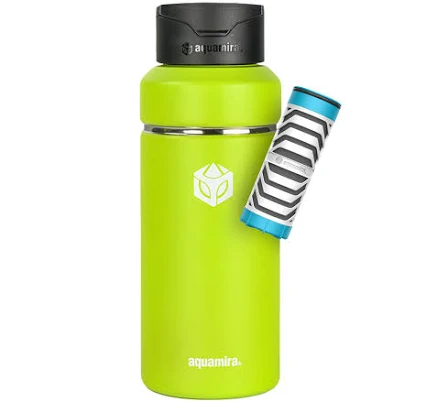
Aquamira Shift Filter Bottle
Lower concern for PFAS risk, but brand silence on filter materials weakens confidence.
Activated carbon filtration carries lower PFAS risk versus Teflon-type coating-coated cookware or water-repellent coating textiles. Aqua Vault doesn't disclose PFAS in cartridge media, plastic housing, or filter substrate.
We flunk more products than we pass. This one earned its grade. How we grade
Material
plastic bottle with carbon/activated carbon filter cartridge
Brand disclosure
Brand is silent on PFAS
Lab data
No public lab test
What Aquamira Shift Filter Bottle is made of, ingredients and materials
The Aquamira Shift uses a rigid plastic bottle (material type not publicly specified by brand, likely polypropylene or copolyester) paired with an activated carbon filter cartridge. Activated carbon itself is inert, but the plastic housing can leach small molecules if exposed to heat, prolonged storage, or mechanical wear. The filter cartridge composition is not transparently disclosed, which limits ability to assess long-term degradation or particulate shedding.
What’s concerning
No PFAS disclosure
No public statement from the brand about PFAS in this product.
BPA & bisphenols
Bottle material type is not disclosed. If polycarbonate or certain copolyesters, BPA/BPS migration is possible under heat or prolonged contact; if polypropylene, risk is lower but not zero.
Source, FDA ↗Filter cartridge bacterial colonization
Saturated activated carbon filters are known growth sites for bacteria and mold if not replaced on schedule or stored wet. Brand provides no clear maintenance guidance on this known risk in the category.
Microparticulate shedding from filter material
Activated carbon is not perfectly inert; fine particles can shed into water, especially early in filter life. No published testing or particle-size specification from Aqua Vault mitigates this.
Off-gassing or odor from undisclosed polymers
Without resin identification or manufacturing source data, volatile organic compounds (VOCs) from plastic production cannot be ruled out, particularly if the bottle is new.
What’s reassuring
Base material not linked to PFAS
The main material recorded for this product is not one associated with PFAS.
Filter housing leachates
No recalls or documented leaching from Aquamira Shift filter housings are on record, but the lack of third-party testing makes absence of evidence weaker than positive clearance.
The full breakdown
The brand's record and disclosure
Aqua Vault (manufacturer) has not published detailed material safety data sheets, third-party certifications (NSF, WQA), or transparency reports on filter composition or plastic type. The brand does not publicly address BPA/BPS status, leachate testing, or filter manufacturing standards. This silence is notable in a category where competitors often highlight NSF certification or plastic-free messaging.
How it compares in its category
Most established filtered water bottles (LifeStraw, Grayl, Sawyer) prominently certify filters to NSF standards and disclose plastic resin codes. The Aquamira Shift lacks these reference points, placing it in a middle tier of transparency. Its activated carbon approach is standard and addresses different contaminant concerns than UV-only systems, but the opaque material sourcing is a relative weakness.
If you buy it
Replace the filter cartridge every 40-100 gallons or every 2-3 months, whichever comes first; bacterial growth in saturated carbon is the primary use-phase risk. Do not fill with hot water above 40C (104F) to minimize plastic leaching from the bottle body. Store empty or dry between uses to prevent mold in the filter chamber. Inspect the bottle quarterly for cloudiness, cracks, or odor changes, which signal replacement need.
What we don’t know
- Basis
- Model estimate, 62% confidence, not a lab result
- Lab test
- None on record for this exact product
- Brand statement
- Aquamira has made none
Formulations change between production runs, so check the current label. How we grade.
Better-graded alternatives in Water Filters
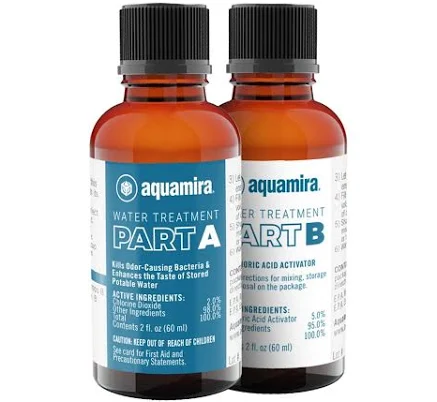
Aquamira
Water Storage Treatment 2 oz Glass Bottles 60 gallons Purification
- glass bottles, sodium dichloroisocyanurate treatment chemical
- We found no PFAS statement from the brand
- Chemical overdose or misuse
5 hazards checked on this product. See all of them.

Big Berkey
Empty Housing with NO Filters Included
- Stainless steel housing and spigot
- We found no PFAS statement from the brand
- Bacterial growth and biofilm if filters not replaced
5 hazards checked on this product. See all of them.
LifeStraw
Home Glass Water Filter Pitcher
- Borosilicate glass pitcher, replaceable activated-carbon filter cartridge
- Bacterial growth in filter cartridge if unmaintained
5 hazards checked on this product. See all of them.
More water filters grades
How we score, every product runs through the same public 0-100 rubric based on materials, coatings, brand disclosure, lab findings, and recalls. See the full methodology → Spotted a mistake? Report an error.