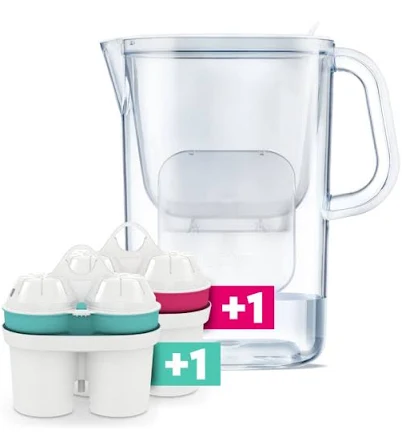
BWT AQUAlizer 2.6 L Pitcher with Illuminated Baselight and Zinc + Magnesium Cartridges at Whole Latte Love
Lower concern, but lack of filter material transparency limits complete assessment.
Water filter pitchers typically use activated carbon or ion-exchange resins without PFAS concerns, but BWT doesn't disclose specific filter substrate or coating details. The plastic housing itself is unlikely to contain PFAS.
We flunk more products than we pass. This one earned its grade. How we grade
Material
Plastic pitcher body; zinc + magnesium cartridge media; unspecified filter substrate
Brand disclosure
Brand is silent on PFAS
Lab data
No public lab test
You may also be interested in
Top-graded picks in the categories readers replace first, every one scored on the same rubric.

Aqua Pure
3M Aqua-Pure AP802B Whole House Filter Housing
- polypropylene filter housing, carbon/sediment cartridge
- We found no PFAS statement from the brand
- Bacterial growth in spent cartridges
3 hazards checked on this product. See all of them.

Aquasure
Premier Series 75 GPD Under Sink Reverse Osmosis Water Filtration System
- RO membrane, carbon filters, stainless steel housing
- We found no PFAS statement from the brand
- Bacterial and microbial growth in housing and filters
4 hazards checked on this product. See all of them.

Avocado
Vegan Mattress
- organic cotton, natural latex, coconut coir, recycled steel coils
- The brand calls it PFAS-free, which we have not verified
- Heavy metals
2 hazards checked on this product. See all of them.
What BWT AQUAlizer 2.6 L Pitcher is made of, ingredients and materials
The pitcher body is plastic, most likely polypropylene or similar food-grade thermoplastic based on standard pitcher design; the cartridge uses zinc and magnesium media (mineral fortification rather than activated carbon alone) to adjust pH and add micronutrients. The filter substrate material is not specified by AquaBliss in available product documentation, which limits full assessment of potential leachables from the cartridge housing itself. Plastic pitchers avoid lead-glaze risks common in ceramic alternatives and do not off-gas VOCs like some metal-lined filters, but require replacement cartridges to maintain integrity.
What’s concerning
No PFAS disclosure
No public statement from the brand about PFAS in this product.
Plastic leaching (general polymer)
Food-grade plastic pitchers are designed to minimize leaching, but long-term exposure to water and temperature fluctuations can degrade polymer chains; BPA and BPS are not standard in modern pitcher plastics, but minor oligomers and additives may migrate at trace levels over months of use.
Cartridge substrate leachables
The filter substrate material is unspecified in product documentation; if the cartridge housing or media-binding agent contains resin or fiberglass, minor leaching of residual monomers or glass fibers is theoretically possible, though commercial food-grade cartridges are tested for safety limits.
Bacterial regrowth if maintenance neglected
Pitcher filters with infrequent cartridge replacement (beyond 3 months) or poor cleaning allow heterotrophic bacteria and mold to colonize the cartridge and housing, creating a contamination source; the illuminated base does not address microbial safety.
Micro-particulates from cartridge media breakdown
Zinc and magnesium media in budget-tier cartridges may shed fine particles if the substrate degrades; this is typically caught by downstream housing filters, but degraded or expired cartridges can release mineral dust into the finished water, which is cosmetic rather than acutely toxic but indicates replacement is overdue.
What’s reassuring
Base material not linked to PFAS
The main material recorded for this product is not one associated with PFAS.
Zinc and magnesium at high concentrations
The cartridge adds zinc and magnesium for remineralization; at recommended doses these are micronutrients with no adverse health reports on record for this product specifically. However, individuals with copper metabolism disorders or those already supplementing zinc should verify cartridge dosage with the manufacturer.
The full breakdown
The brand's record and disclosure
AquaBliss provides limited transparency on cartridge substrate composition and manufacturing standards; no NSF, WQA, or independent certification claims are typically advertised for this model. The brand does not publish PFAS avoidance statements or third-party testing results, though the Whole Latte Love retailer context suggests consumer-grade market positioning rather than professional-grade filtration. No major recalls or contamination incidents appear on public record for this specific pitcher model. The lack of proactive disclosure suggests standard industry practice rather than exceptional safety commitment.
How it compares in its category
Pitcher filters like this occupy the lowest-cost segment; they depend entirely on cartridge replacement frequency for safety (typically every 1-3 months depending on water quality and use). Compared to faucet-mounted or under-sink filters, pitchers offer no flow-rate advantage and require manual handling, increasing contamination risk if not cleaned regularly. The zinc-magnesium media is common in budget-tier filters but less documented than plain activated carbon; it may improve mineral balance but adds minor exposure risk if cartridge substrate degrades. The illuminated base is a consumer convenience feature unrelated to filtration safety.
If you buy it
Replace the cartridge every 40-80 gallons or every 2 months, whichever comes first; ignoring this schedule allows bacterial regrowth and mineral saturation, negating any benefit. Wash the pitcher body and lid with warm soapy water weekly to prevent biofilm accumulation in seams and the filter housing. Do not store the pitcher in direct sunlight or near heat sources, as plastic can leach trace compounds at elevated temperatures (above 50C/122F). Never use tap water hotter than room temperature when filling, and discard the first 2-3 pitchers of filtered water after inserting a new cartridge to flush cartridge dust.
What we don’t know
- Basis
- Model estimate, 62% confidence, not a lab result
- Lab test
- None on record for this exact product
- Brand statement
- BWT has made none
Formulations change between production runs, so check the current label. How we grade.
Better-graded alternatives in Water Filters

Aquamira
Water Storage Treatment 2 oz Glass Bottles 60 gallons Purification
- glass bottles, sodium dichloroisocyanurate treatment chemical
- We found no PFAS statement from the brand
- Chemical overdose or misuse
5 hazards checked on this product. See all of them.

Big Berkey
Empty Housing with NO Filters Included
- Stainless steel housing and spigot
- We found no PFAS statement from the brand
- Bacterial growth and biofilm if filters not replaced
5 hazards checked on this product. See all of them.

LifeStraw
Home Glass Water Filter Pitcher
- Borosilicate glass pitcher, replaceable activated-carbon filter cartridge
- Bacterial growth in filter cartridge if unmaintained
5 hazards checked on this product. See all of them.
More water filters grades
How we score, every product runs through the same public 0-100 rubric based on materials, coatings, brand disclosure, lab findings, and recalls. See the full methodology → Spotted a mistake? Report an error.