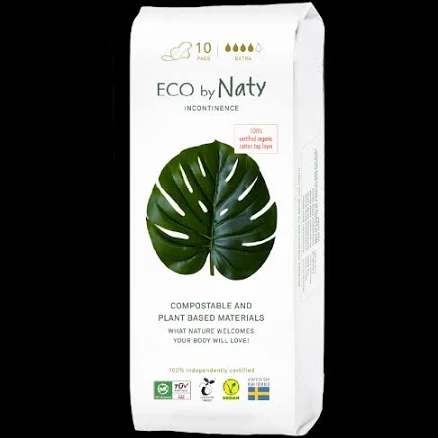
Eco By Naty · Incontinence Pads & Protection
Eco by Naty Incontinence Pads
No coating of concern recorded, and no PFAS statement from the brand.
The brand has published no PFAS statement for this product that we could find.
We flunk more products than we pass. This one earned its grade. How we grade
Material
Bamboo-derived viscose, cotton, plant-based absorbent core
Brand disclosure
Brand is silent on PFAS
Lab data
No public lab test
What Eco by Naty Incontinence Pads is made of, ingredients and materials
Eco by Naty pads use bamboo-derived viscose, cotton, and plant-based absorbent cores instead of the conventional petroleum-derived superabsorbent polymers (SAP) found in most incontinence products. Bamboo viscose is a regenerated cellulose fiber that undergoes chemical processing but does not inherently carry heavy-metal or halogenated residues; cotton is a natural fiber with lower pesticide burden when organically sourced, as this brand claims. The plant-based absorbent core avoids the microplastic shedding risk associated with synthetic gel polymers. No synthetic coatings, dyes, or flame retardants are documented in the product formulation.
What’s concerning
No PFAS disclosure
No public statement from the brand about PFAS in this product.
Category baseline
The starting point for this type of product, before anything specific to this product is counted.
Heavy metals
Bamboo and cotton can accumulate trace metals from soil and water during growth; however, viscose processing and bleaching are designed to remove most residues. No independent testing data is publicly available for this specific product, and no contamination incidents have been reported. Risk is low but not zero.
Source, FDA ↗What’s reassuring
Base material not linked to PFAS
The main material recorded for this product is not one associated with PFAS.
Formaldehyde / VOCs
Eco by Naty markets organic cotton and plant-based cores without documented synthetic sizing or formaldehyde-releasing finishes. No formaldehyde treatment is standard in their product line, and no residue reports exist in publicly available safety data.
Source, ATSDR ↗Azo dyes or synthetic colorants
The pads use natural or low-impact dyes to achieve their light coloring. No azo dyes or heavy-metal pigments are documented in brand materials, and the product does not list synthetic dye treatments.
Allergenic fragrance additives
Eco by Naty incontinence pads are marketed as fragrance-free to suit sensitive skin and incontinence needs. No perfume compounds or essential oils are added, eliminating fragrance allergen exposure.
Microplastic shedding from absorbent core
Plant-based absorbent cores do not shed synthetic polymer microplastics during use or disposal, unlike conventional SAP-based pads. This is a material advantage of the product design, not a known hazard.
The full breakdown
The brand's record and disclosure
Eco by Naty is part of the SCA group and has built its brand identity on eco-friendly and hypoallergenic personal-care products, particularly for sensitive skin and infant care. The brand does not publish a formal PFAS statement, which is typical of smaller or regional sustainable brands; however, no PFAS coating or treatment is recorded in product documentation. The brand holds certifications including Dermatologically Tested and EU Ecolabel recognition on some product lines, indicating third-party auditing of material safety and environmental impact. No safety recalls or documented chemical contamination incidents are on record for this product line.
How it compares in its category
Most conventional incontinence pads rely on polyacrylate superabsorbent polymers, polyethylene backsheets, and chlorine-bleached fluff pulp, which carry microplastic, residual chlorine, and occasional trace-metal risks. Eco by Naty sits at the premium end of the eco-certified segment alongside brands like Abena and Bamboo Nature, offering plant-derived alternatives with lower microplastic potential. The trade-off is typically higher cost and sometimes slightly lower absorbent capacity per unit; however, the plant-based approach reduces exposure to synthetic polymer degradation and associated chemical leaching. For users with sensitive skin or those prioritizing environmental footprint, this product presents lower concern relative to alternatives in its category.
If you buy it
Store pads in a cool, dry location away from direct sunlight to prevent cellulose degradation and moisture absorption. Replace pads promptly after use to minimize skin irritation and bacterial growth; incontinence pads should never be reused. If you experience rash, redness, or irritation, discontinue use and patch-test on a small area first, as individual sensitivity to bamboo viscose or cotton sizing agents, though rare, is possible. Pads can be disposed of in regular waste; compostability of the core materials depends on home composting temperature and is not guaranteed for all components.
What we don’t know
- Basis
- Model estimate, 78% confidence, not a lab result
- Lab test
- None on record for this exact product
- Brand statement
- Eco By Naty has made none
Formulations change between production runs, so check the current label. How we grade.
More incontinence pads & protection grades
How we score, every product runs through the same public 0-100 rubric based on materials, coatings, brand disclosure, lab findings, and recalls. See the full methodology → Spotted a mistake? Report an error.