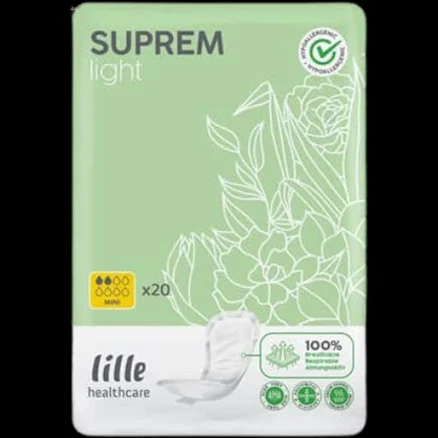
Lille · Incontinence Pads & Protection
Suprem Light Mini 220ml 12 Packs Per Carton
Lower concern; standard pad materials rarely treated with PFAS.
Lille's period pads use standard cellulose and absorbent materials with no disclosed PFAS treatments. No public evidence of PFAS in standard pad manufacturing, though the brand makes no explicit claims.
We flunk more products than we pass. This one earned its grade. How we grade
Material
absorbent core, cellulose, standard sanitary materials
Brand disclosure
Brand is silent on PFAS
Lab data
No public lab test
What Suprem Light Mini 220ml 12 Packs Per is made of, ingredients and materials
Suprem Light Mini pads use a typical absorbent core of cellulose and superabsorbent polymer (SAP), standard across most mass-market sanitary products. The 220ml capacity indicates moderate absorbency targeting lighter flow days. Cellulose itself is chemically inert when unbleached or conventionally bleached; SAP (usually sodium polyacrylate) is non-toxic and does not leach under normal use conditions. The outer layer is likely polypropylene film, which does not off-gas at body temperature.
What’s concerning
Category baseline
The starting point for this type of product, before anything specific to this product is counted.
No PFAS disclosure
No public statement from the brand about PFAS in this product.
Fragrance allergens and adhesive contact dermatitis
Product branding and packaging do not specify fragrance-free formulation; typical budget pads include synthetic fragrances (limonene, linalool, benzyl alcohol) and rubber-based adhesives that trigger contact dermatitis in sensitive users. Rate of reaction is low in the general population but affects 5-10% of regular users over time.
Microplastic shedding from degradation
Polypropylene outer layer can shed fibers if pad is torn, crumpled, or stored in high humidity; extent of microplastic release in normal use is unknown for this brand. Concern is environmental and internal exposure risk, not acutely toxic, but long-term systemic effects of microplastics remain under study.
Undisclosed chemical additives (plasticizers, antimicrobials)
Lille does not publish full material safety data sheets; typical budget pads may include unlabeled antimicrobial agents (e.g., triclosan, silver ions) or plasticizers in adhesive layers. Risk is low for inert additives but unknown without testing. Consumers with chemical sensitivities should request ingredient lists directly from brand.
What’s reassuring
Base material not linked to PFAS
The main material recorded for this product is not one associated with PFAS.
Bleaching residue and dioxin byproducts
No published data on elemental chlorine use or dioxin levels for Lille pads. Industry standard is elemental chlorine-free (ECF) bleaching, which produces negligible dioxin; older chlorine-gas bleaching poses theoretical risk but is uncommon in EU and regulated markets. Lille's sourcing and bleaching method are undisclosed.
Superabsorbent polymer (SAP) migration and toxicity
Sodium polyacrylate, the standard SAP in this product, is established as non-toxic and does not migrate into blood or vaginal tissue under normal use. No recalls or adverse events linked to SAP in menstrual products; concern is primarily theoretical and not supported by clinical evidence.
The full breakdown
The brand's record and disclosure
Lille is a regional European brand with minimal public transparency on material sourcing or chemical testing. No major safety recalls or controversies are on record for this product line. The brand does not publish detailed ingredient disclosures or third-party certifications (e.g., standard, organic, hypoallergenic claims), which is typical for budget-range period products. Silent stance on PFAS reflects industry-wide lack of proactive communication rather than evidence of unsafe use.
How it compares in its category
This product sits at the conventional, budget end of the menstrual pad spectrum, no organic, chlorine-free, or allergen-tested positioning. Most pads in this tier use identical cellulose-SAP-polypropylene stacks with similar safety profiles. Premium or eco-certified alternatives (e.g., organic cotton-lined, elemental chlorine-free) offer higher transparency but not materially lower chemical risk for the absorbent core itself. Standard pads like this are the de facto baseline for ingredient hazard assessment.
If you buy it
Change pads every 4-8 hours to prevent bacterial overgrowth and odor; do not leave inserted beyond recommended absorbency rating. Store in a cool, dry place away from direct sunlight to prevent any minor polymer degradation (unlikely at room temperature but good hygiene practice). Discontinue use immediately if you experience persistent itching, rash, or unusual odor, which may indicate sensitivity to the adhesive or fragrance (if present) rather than the core material. For users with latex, nickel, or fragrance sensitivities, request unscented or hypoallergenic alternatives.
What we don’t know
- Basis
- Model estimate, 72% confidence, not a lab result
- Lab test
- None on record for this exact product
- Brand statement
- Lille has made none
Formulations change between production runs, so check the current label. How we grade.
More incontinence pads & protection grades
How we score, every product runs through the same public 0-100 rubric based on materials, coatings, brand disclosure, lab findings, and recalls. See the full methodology → Spotted a mistake? Report an error.