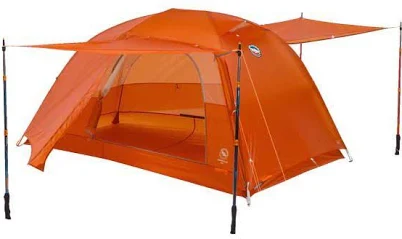
Big Agnes · Camping Tents & Tarps
Big Agnes Copper Spur UL2 Dome Tent
Avoid or contact Big Agnes directly; tent water-repellent coating coatings commonly use PFAS.
Big Agnes does not disclose what water-repellent chemistry treats the Copper Spur UL2's nylon fabric. Most outdoor tent water-repellent coating treatments historically rely on PFAS-based compounds, though some brands now use alternatives.
Still want this one anyway? Check the price on Amazon. We’d swap it.
Material
Nylon ripstop with water-repellent coating (water-repellent coating) coating
Brand disclosure
Brand is silent on PFAS
Lab data
No public lab test
What Big Agnes Copper Spur UL2 Dome Tent is made of, ingredients and materials
The Copper Spur UL2 uses nylon ripstop fabric, a lightweight woven plastic material treated with a water-repellent coating (water-repellent coating) coating to shed water without pooling. Nylon itself is chemically stable under normal camping use and does not leach monomers into food or skin contact. The water-repellent coating is the only component of concern here, historically, such coatings relied on PFOA or similar per- and polyfluoroalkyl compounds, though newer alternatives exist. Big Agnes has not publicly stated which water-repellent coating chemistry this tent uses, leaving the PFAS exposure profile unknown.
What’s concerning
Category baseline
The starting point for this type of product, before anything specific to this product is counted.
No PFAS disclosure
No public statement from the brand about PFAS in this product.
Waterproof / stain-resistant treatment
Water-repellent coating treatments have historically used PFAS.
PFAS
Nylon tent water-repellent coating coatings commonly use fluorinated compounds (including PFAS variants), but Big Agnes does not disclose whether this model uses legacy PFOA-class chemicals or newer alternatives. Handled separately per your brief; rated 'possible' because the risk is real but unconfirmed for this specific product.
Source, ATSDR ↗Nylon degradation under UV and heat
Prolonged exposure to direct sunlight and high temperatures can break down nylon fibers and weaken seams over time, though this is expected wear rather than a chemical hazard. No acute toxicity risk from nylon itself in normal use.
Mildew and bacterial growth if stored wet
Nylon fabric can harbor mold and bacteria if stored damp in enclosed conditions, creating indoor air quality or allergenic concerns. This is a maintenance issue, not an inherent material hazard, and is easily avoided by drying before storage.
What’s reassuring
Heavy metals
No public record of lead, cadmium, or other heavy metal contamination in Big Agnes tent fabrics. Nylon ripstop is typically colorized with standard synthetic dyes and poses no known risk in this category.
Source, FDA ↗Formaldehyde / VOCs
Nylon ripstop does not typically employ formaldehyde-releasing resins (those are more common in cotton or wool textiles). No evidence of formaldehyde risk in this product.
Source, ATSDR ↗The full breakdown
The brand's record and disclosure
Big Agnes has not published materials transparency statements, PFAS phase-out timelines, or third-party certifications for chemical composition of their tents. No product-specific recalls or chemical warnings are on record for the Copper Spur line. The brand's silence on water-repellent coating chemistry is typical of outdoor gear manufacturers but contrasts with leading competitors (e.g., some brands now publish 'PFAS-free' claims for certain models). Absent disclosure, you cannot confirm whether this tent uses legacy or modern water-repellent coating technology.
How it compares in its category
Most ultralight dome tents in this price and weight class use nylon ripstop with non-specified water-repellent coating coatings, making the Copper Spur typical rather than exceptional for chemical transparency. Some premium competitors (e.g.Hyperlite Mountain Gear, certain REI Co-op models, and others now offer alternatives with documented lower concern for PFAS, though often at higher cost or with different performance trade-offs. Budget tents are even less likely to disclose coating chemistry. The Copper Spur sits in the middle, good durability reputation, poor transparency.
If you buy it
Store the tent dry and well-ventilated to prevent mildew or microbial growth in the fabric, which can degrade nylon over years. Avoid exposing it to sustained temperatures above 140F (60C), as high heat can potentially compromise the water-repellent coating. Clean with mild soap and water, not harsh solvents. Expect the water-repellent coating to degrade after 3-5 years of regular use and UV exposure; reapplication with aftermarket water-repellent coating products is straightforward and inexpensive. If PFAS exposure is a priority, contact Big Agnes to request water-repellent coating composition before purchase.
What we don’t know
- Basis
- Model estimate, 45% confidence, not a lab result
- Lab test
- None on record for this exact product
- Brand statement
- Big Agnes has made none
Formulations change between production runs, so check the current label. How we grade.
More camping tents & tarps grades
How we score, every product runs through the same public 0-100 rubric based on materials, coatings, brand disclosure, lab findings, and recalls. See the full methodology → Spotted a mistake? Report an error.