Big Agnes · Camping Tents & Tarps
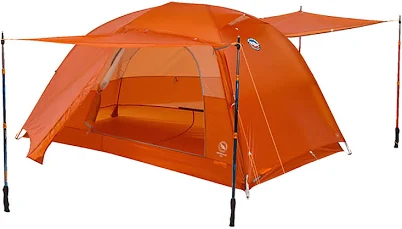
Big Agnes Copper Spur UL3 Backpacking Tent
Avoid unless Big Agnes confirms PFAS-free water-repellent coating treatment.
Big Agnes does not disclose PFAS status or water-repellent coating chemistry for the Copper Spur UL3. Modern tent waterproofing frequently relies on fluorinated compounds; without explicit PFAS-free certification, this product carries elevated uncertainty.
Still want this one anyway? Check the price on Amazon. We’d swap it.
Material
ripstop nylon with water-repellent coating (water-repellent coating) coating
Brand disclosure
Brand is silent on PFAS
Lab data
No public lab test
What Big Agnes Copper Spur UL3 Backpacking Tent is made of, ingredients and materials
The Copper Spur UL3 uses ripstop nylon fabric with a water-repellent coating (water-repellent coating) treatment applied to the outer surface. Ripstop nylon itself is a stable, non-toxic synthetic polymer; the chemical risk lies entirely in the water-repellent coating, which manufacturers historically used PFAS-based fluorocarbon compounds to achieve water shedding. Big Agnes has not publicly stated whether their water-repellent coating is PFAS-free, conventional PFAS, or fluorine-free, leaving the exact composition unknown to consumers.
What’s concerning
Category baseline
The starting point for this type of product, before anything specific to this product is counted.
No PFAS disclosure
No public statement from the brand about PFAS in this product.
Waterproof / stain-resistant treatment
Water-repellent coating treatments have historically used PFAS.
PFAS
The water-repellent coating treatment on the nylon outer is a known PFAS risk vector. Big Agnes does not disclose whether conventional PFAS fluorocarbons or fluorine-free alternatives were used. Exposure risk is low during normal use (camping outdoors) but higher during washing or storage in enclosed spaces where vapor contact could occur.
Source, ATSDR ↗Nylon degradation and microplastic shedding
Extended UV exposure and repeated handling can cause ripstop nylon to break down microscopically. This is not acute but can release nylon microfibers into the environment over the tent's lifespan, particularly if fabric tears are not promptly repaired.
Mold and bacterial growth if stored wet
Nylon fabric itself does not promote mold, but poor ventilation or storage in damp conditions allows fungal colonization on the fabric. This creates musty odor and potential respiratory irritation if the tent is used without airing. Not a manufacturing defect but a maintenance risk.
What’s reassuring
Formaldehyde / VOCs
No published data indicates Big Agnes uses formaldehyde-releasing adhesives in seam tape. Seam sealants used on modern nylon tents are typically polyurethane-based and not documented as formaldehyde sources for this product.
Source, ATSDR ↗Heavy metals
No recalls or testing data for the Copper Spur indicate lead, cadmium, or antimony in fabric dyes or water-repellent coating treatment. Nylon dyes for outdoor textiles are generally low-heavy-metal, though no third-party certification confirms this for Big Agnes products.
Source, FDA ↗The full breakdown
The brand's record and disclosure
Big Agnes does not maintain a public PFAS transparency statement or commitment visible on their website or product documentation (as of available records). The brand has not advertised PFAS-free certifications for this model or their tent line generally. No recalls or safety controversies specific to Copper Spur tents are documented. The silence on water-repellent coating chemistry is typical of outdoor brands but represents a disclosure gap for consumers seeking information about PFAS presence.
How it compares in its category
The Copper Spur UL3 is a lightweight backpacking tent in the premium segment. Most competitors in this weight class (Big Agnes, MSR, Nemo, Zpacks) similarly use nylon with water-repellent coating coatings and do not disclose PFAS status publicly. Some outdoor brands (notably Patagonia) have pledged PFAS-free manufacturing, but this tent brand has not. Within Big Agnes's own line, the Copper Spur occupies the middle ground on price and features; no model has documented absence of PFAS.
If you buy it
Store the tent dry and well-ventilated to prevent mold and fabric degradation. Avoid excessive heat (keep away from direct sun or hot car storage for extended periods) as nylon can weaken and water-repellent coating coatings can degrade prematurely. Wash with mild soap and water only; harsh detergents strip water-repellent coating. Replace the tent if seams separate, fabric tears, or waterproofing visibly fails (water beading ceases). Do not dry-clean or use heat-drying equipment.
What we don’t know
- Basis
- Model estimate, 45% confidence, not a lab result
- Lab test
- None on record for this exact product
- Brand statement
- Big Agnes has made none
Formulations change between production runs, so check the current label. How we grade.
More camping tents & tarps grades
How we score, every product runs through the same public 0-100 rubric based on materials, coatings, brand disclosure, lab findings, and recalls. See the full methodology → Spotted a mistake? Report an error.