Big Agnes · Camping Tents & Tarps
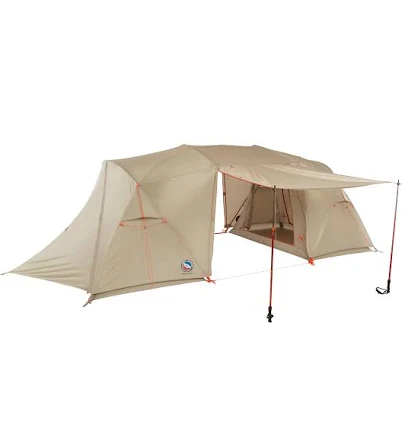
Big Agnes Wyoming Trail 4 Person Tent
Tent has water-repellent coating of unspecified chemistry and no brand PFAS disclosure.
Polyester fabric with water-repellent coating applied. Big Agnes has no PFAS statement on record and does not publicly specify the chemistry of the water-repellent coating. water-repellent coating treatments have historically used PFAS.
Still want this one anyway? Check the price on Amazon. We’d swap it.
Material
Polyester fabric with water-repellent coating water-repellent coating (type unspecified)
Brand disclosure
Brand is silent on PFAS
Lab data
No public lab test
What Big Agnes Wyoming Trail 4 Person Tent is made of, ingredients and materials
The Wyoming Trail 4 uses polyester fabric as its primary shell and floor material. Polyester itself is chemically stable under normal use and does not leach BPA, phthalates, or other endocrine disruptors. The critical unknown is the water-repellent coating (water-repellent coating) coating applied to the polyester, Big Agnes does not publicly specify whether this uses PFAS-based chemistry (such as fluorinated compounds) or non-fluorinated alternatives. water-repellent coating coatings are essential for waterproofing but are a common vector for PFAS or other persistent chemicals in outdoor gear.
What’s concerning
Category baseline
The starting point for this type of product, before anything specific to this product is counted.
No PFAS disclosure
No public statement from the brand about PFAS in this product.
Waterproof / stain-resistant treatment
Water-repellent coating treatments have historically used PFAS.
PFAS
Unspecified water-repellent coating formulation on polyester is a known vector for fluorinated PFAS; Big Agnes provides no information on whether PFAS-free alternatives are used. Risk scales with contact duration (e.g., sleeping inside tent for hours) and potential off-gassing.
Source, ATSDR ↗Off-gassing from coating or glues
Polyester tents with water-repellent coating coatings commonly emit odor and volatile organic compounds in first 1-2 weeks of use; this is normal and not specific to Big Agnes. Ventilation during initial use minimizes exposure.
Mold or bacterial colonization if stored wet
Polyester does not prevent microbial growth if stored in damp conditions; prolonged wetness can promote mold on floor or interior. Risk is use-dependent, not material-inherent.
What’s reassuring
Polyester fiber degradation and microfiber shedding
Polyester fabric itself does not release microplastics under normal dry use; concern only arises if tent is aggressively washed or if seams fray due to damage. Field use and storage do not typically generate shedding.
Antimony in polyester yarn (antimony trioxide catalyst)
Polyester production may use antimony catalysts, but residual antimony in finished fabric is typically negligible and does not leach under normal camping conditions. No antimony-specific safety alerts exist for consumer tents.
The full breakdown
The brand's record and disclosure
Big Agnes has not published a chemical composition statement, PFAS policy, or supplier certifications for the Wyoming Trail line. The brand does not appear in public records of outdoor gear manufacturers that have committed to PFAS phase-out or disclosed water-repellent coating chemistry. This silence is not unique among tent makers but represents a significant gap in transparency, especially given widespread awareness of PFAS in outdoor coatings since the mid-2010s. No recalls or chemical contamination incidents specific to Big Agnes tents are on record.
How it compares in its category
Most mainstream tent brands (Coleman, MSR, REI-branded) similarly do not disclose water-repellent coating type or PFAS content. Brands that have explicitly moved to PFAS-free water-repellent coating (such as some Patagonia or Decathlon lines) are the exception and typically cost more or sacrifice water-repellency durability. The Wyoming Trail 4 is positioned in the mid-range recreational segment where chemical transparency is rarer than in premium ultralight tents or budget models. Its three-season design and polyester material are standard for this price and performance tier.
If you buy it
Store the tent dry and well-ventilated to avoid mold growth and odor buildup; off-gassing of coating treatments is normal in the first few weeks of use and does not indicate chemical safety failure. Avoid machine-washing; rinse gently with water and mild soap and air-dry completely before storage. Do not store in direct sunlight for extended periods, as UV can degrade both polyester and water-repellent coating coatings. Replace the tent if the floor develops punctures or seams leak persistently, as field repairs are temporary and water ingress defeats the waterproofing function.
What we don’t know
- Basis
- Model estimate, 45% confidence, not a lab result
- Lab test
- None on record for this exact product
- Brand statement
- Big Agnes has made none
Formulations change between production runs, so check the current label. How we grade.
More camping tents & tarps grades
How we score, every product runs through the same public 0-100 rubric based on materials, coatings, brand disclosure, lab findings, and recalls. See the full methodology → Spotted a mistake? Report an error.