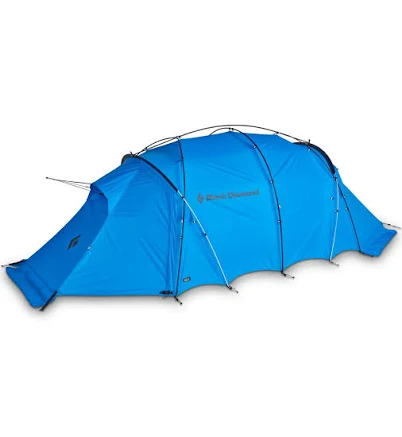
Black Diamond · Camping Tents & Tarps
Black Diamond Mission 3 Person Tent
Likely contains PFAS-based water treatment; seek PFAS-free certification or test data first.
Black Diamond doesn't disclose PFAS content or water-repellent coating chemistry for this tent. Outdoor tents typically use Teflon-family coating-based water-repellent coating treatments, a common PFAS source.
Still want this one anyway? Check the price on Amazon. We’d swap it.
Material
Nylon fabric with water-repellent coating (water-repellent coating) coating
Brand disclosure
Brand is silent on PFAS
Lab data
No public lab test
What Black Diamond Mission 3 Person Tent is made of, ingredients and materials
The Mission 3 uses nylon fabric with a water-repellent coating (water-repellent coating) finish typical of modern camping tents. water-repellent coating coatings are applied to the fabric surface to shed water without sealing the tent fully, allowing breathability. The specific chemistry of Black Diamond's water-repellent coating is not publicly disclosed; historically, many outdoor brands have used PFAS-based water repellents because they are highly effective and durable, though some have transitioned to PFAS-free alternatives. Without test data or a manufacturer statement, the presence and type of PFAS in this product cannot be confirmed from available sources.
What’s concerning
Category baseline
The starting point for this type of product, before anything specific to this product is counted.
No PFAS disclosure
No public statement from the brand about PFAS in this product.
Waterproof / stain-resistant treatment
Water-repellent coating treatments have historically used PFAS.
water-repellent coating (water-repellent coating) coating composition
Nylon tents typically use water-repellent coating finishes that may contain PFAS or other synthetic hydrophobic agents; Black Diamond does not publicly disclose the specific chemistry. The coating is external and not ingested, but inhalation during manufacturing and off-gassing during use (especially in humid, warm conditions) are theoretical exposure routes of lower probability for consumers.
Microplastic shedding from degraded nylon
Nylon fabric sheds fine fibers over time, especially with friction, UV exposure, and temperature cycling. While this occurs slowly in a typical tent used seasonally, microplastics may be released into the environment during washing, storage, or disposal. This is a concern for outdoor ecosystem accumulation rather than direct consumer health.
Adhesives and seam sealant off-gassing
Tent seam taping and any adhesives used in assembly may release volatile organic compounds (VOCs) or formaldehyde during initial use or storage, especially in warm or humid conditions. Airing the tent outdoors before first use can reduce this exposure. No specific complaints about Black Diamond seam products are on record.
What’s reassuring
Formaldehyde / VOCs
No public records indicate that Black Diamond applies formaldehyde-releasing resins or added flame retardants to the Mission 3. Nylon is inherently flame-resistant and does not require additional fire-retardant chemicals. Standard water-repellent coating does not typically include formaldehyde.
Source, ATSDR ↗Aluminum pole corrosion or leaching
The Mission 3 uses aluminum poles, which are standard; aluminum is not a material linked to PFAS in tent use. Corrosion risk is minimal in normal storage and does not present a consumer health hazard.
The full breakdown
The brand's record and disclosure
Black Diamond Equipment has not published detailed transparency reports on chemical use in textiles or made public commitments to PFAS elimination comparable to brands like Patagonia or Arcteryx. The company does not advertise PFAS-free tents or provide material safety data sheets for consumer-grade products. No recalls or safety controversies specific to this tent model are on record in public databases. Contacting Black Diamond directly for water-repellent coating composition is the most reliable way to assess your exposure tolerance.
How it compares in its category
Most three-season camping tents in this price and performance tier use nylon with some form of water-repellent coating, creating similar uncertainty around PFAS exposure. Competitors like MSR and Big Agnes also do not widely advertise PFAS-free status, though a few premium brands (e.g., certain Patagonia partnerships) now explicitly avoid PFAS in tent coatings. The Mission 3 is well-regarded for durability and weather resistance; the trade-off is typical chemical ambiguity. If PFAS avoidance is a priority, seeking a tent explicitly labeled PFAS-free or naturally water-resistant (e.g., canvas, silicone-coated polyester) is advisable.
If you buy it
Avoid prolonged exposure to the tent fabric in direct sunlight during storage, as UV degradation can degrade the water-repellent coating and potentially release particles. When pitching or packing, handle the fabric gently to minimize wear; small tears will reduce water resistance and may expand if not repaired promptly. Do not machine wash the tent; rinse with plain water and air dry to preserve the water-repellent coating finish. If PFAS concerns are high, consider requesting a product material declaration from Black Diamond before purchase, or test a small section for water beading to assess water-repellent coating viability over time.
What we don’t know
- Basis
- Model estimate, 42% confidence, not a lab result
- Lab test
- None on record for this exact product
- Brand statement
- Black Diamond has made none
Formulations change between production runs, so check the current label. How we grade.
More camping tents & tarps grades
How we score, every product runs through the same public 0-100 rubric based on materials, coatings, brand disclosure, lab findings, and recalls. See the full methodology → Spotted a mistake? Report an error.