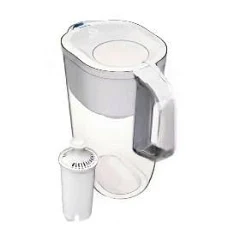
Brita 10-Cup Water Filter Pitcher
Lower PFAS concern for a standard water pitcher, though Brita makes no public PFAS statement.
Brita's pitcher relies on activated carbon and ion-exchange media, both established chemistries without documented PFAS problems. The polypropylene housing has no known PFAS-prone finishes.
We flunk more products than we pass. This one earned its grade. How we grade
Material
Activated carbon and ion-exchange resin filter cartridge; polypropylene pitcher body
Lab data
No public lab test
You may also be interested in
Top-graded picks in the categories readers replace first, every one scored on the same rubric.

Aqua Pure
3M Aqua-Pure AP802B Whole House Filter Housing
- polypropylene filter housing, carbon/sediment cartridge
- We found no PFAS statement from the brand
- Bacterial growth in spent cartridges
3 hazards checked on this product. See all of them.

Aquasure
Premier Series 75 GPD Under Sink Reverse Osmosis Water Filtration System
- RO membrane, carbon filters, stainless steel housing
- We found no PFAS statement from the brand
- Bacterial and microbial growth in housing and filters
4 hazards checked on this product. See all of them.

Avocado
Vegan Mattress
- organic cotton, natural latex, coconut coir, recycled steel coils
- The brand calls it PFAS-free, which we have not verified
- Heavy metals
2 hazards checked on this product. See all of them.
What Brita 10-Cup Water Filter Pitcher is made of, ingredients and materials
The Brita 10-cup pitcher body is molded polypropylene (PP), a thermoplastic chosen for its rigidity, clarity, and cost. The replaceable cartridge contains activated carbon (to absorb chlorine, taste, odor) and ion-exchange resin beads (to reduce hardness minerals like calcium and magnesium). Neither material is known to leach BPA, phthalates, or other endocrine disruptors under normal cold-water use; PP itself does not contain these compounds by design.
What’s concerning
No PFAS disclosure
No public statement from the brand about PFAS in this product.
Polypropylene degradation under heat or UV
PP can degrade or leach oligomers if exposed to sustained heat (above 140F) or direct sunlight for months. Normal refrigerator storage poses no known risk; leaving the pitcher on a sunny windowsill or filling it with hot water may accelerate wear over years.
Bacterial or mold growth in filter cartridge or gasket
If cartridges are not replaced on schedule or the pitcher is left in warm/humid conditions, the carbon bed and rubber gasket can harbor bacterial biofilm. This is a maintenance issue, not a manufacturing defect; proper replacement and rinsing prevent it.
Activated carbon dust inhalation or ingestion
New cartridges shed fine carbon particles if not rinsed. Inhaling dust during cartridge installation is unlikely to cause harm, but rinsing cartridges under running water for 10 seconds removes most loose particles and is a simple precaution.
Residual chlorine or contaminant breakthrough
If a cartridge exceeds its rated lifespan (40 gallons) without replacement, activated carbon becomes saturated and no longer absorbs chlorine or taste compounds effectively. The water remains unfiltered; this is a performance failure, not a hazard of this kind on record, and is entirely user-controlled.
What’s reassuring
Base material not linked to PFAS
The main material recorded for this product is not one associated with PFAS.
Lead
Brita's NSF certification confirms the cartridge reduces lead and other heavy metals. No documented cases of cartridge failure to reduce lead are on record; the pitcher itself does not leach lead.
Source, ATSDR ↗The full breakdown
The brand's record and disclosure
Brita has not publicly released PFAS test data or commitments despite Brita pitchers being named in some consumer PFAS testing studies (results inconclusive to date). The company holds NSF certification for standard contaminant reduction, which covers lead, mercury, chlorine, and sediment but does not address PFAS. No recalls or health incidents tied to Brita pitchers are documented in FDA or CPSC records.
How it compares in its category
Brita is the market leader in pitcher filters and uses the same polypropylene and standard activated-carbon architecture as nearly all competitors (PUR, ZeroWater, Aqua-Pure). The key differentiator is filter lifespan and mineral-reduction performance, not safety margin; all pitcher-filter brands carry similar low hazard profiles for the pitcher body itself. ZeroWater claims more aggressive PFAS reduction via additional resin, but independent validation is sparse.
If you buy it
Replace cartridges every 40 gallons or 2 months (sooner if flow slows). Never pour boiling water into the pitcher; polypropylene softens above 140 degrees Fahrenheit and can warp. Rinse cartridges briefly under cold tap water before first use to remove carbon dust. Store pitcher in a cool cupboard away from sunlight; inspect the gasket quarterly for mold or slime and hand-wash the pitcher interior monthly with mild soap.
What we don’t know
- Basis
- Model estimate, 72% confidence, not a lab result
- Lab test
- None on record for this exact product
- Brand statement
- Brita has made a specific claim
Formulations change between production runs, so check the current label. How we grade.
Better-graded alternatives in Water Filters

Aquamira
Water Storage Treatment 2 oz Glass Bottles 60 gallons Purification
- glass bottles, sodium dichloroisocyanurate treatment chemical
- We found no PFAS statement from the brand
- Chemical overdose or misuse
5 hazards checked on this product. See all of them.

Big Berkey
Empty Housing with NO Filters Included
- Stainless steel housing and spigot
- We found no PFAS statement from the brand
- Bacterial growth and biofilm if filters not replaced
5 hazards checked on this product. See all of them.

LifeStraw
Home Glass Water Filter Pitcher
- Borosilicate glass pitcher, replaceable activated-carbon filter cartridge
- Bacterial growth in filter cartridge if unmaintained
5 hazards checked on this product. See all of them.
More water filters grades
How we score, every product runs through the same public 0-100 rubric based on materials, coatings, brand disclosure, lab findings, and recalls. See the full methodology → Spotted a mistake? Report an error.