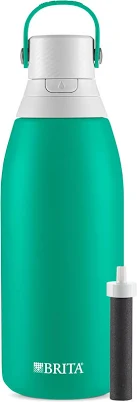
Brita Insulated Filtered Water Bottle with Straw
Lower concern; typical filtered bottle with no PFAS signals reported.
This insulated bottle uses standard BPA-free plastic and carbon filtration. No PFAS disclosures exist, and no specific PFAS concerns appear in public material data either.
We flunk more products than we pass. This one earned its grade. How we grade
Material
BPA-free plastic bottle with internal carbon/resin filter
Lab data
No public lab test
You may also be interested in
Top-graded picks in the categories readers replace first, every one scored on the same rubric.

Aqua Pure
3M Aqua-Pure AP802B Whole House Filter Housing
- polypropylene filter housing, carbon/sediment cartridge
- We found no PFAS statement from the brand
- Bacterial growth in spent cartridges
3 hazards checked on this product. See all of them.

Aquasure
Premier Series 75 GPD Under Sink Reverse Osmosis Water Filtration System
- RO membrane, carbon filters, stainless steel housing
- We found no PFAS statement from the brand
- Bacterial and microbial growth in housing and filters
4 hazards checked on this product. See all of them.

Avocado
Vegan Mattress
- organic cotton, natural latex, coconut coir, recycled steel coils
- The brand calls it PFAS-free, which we have not verified
- Heavy metals
2 hazards checked on this product. See all of them.
What Brita Insulated Filtered Water Bottle is made of, ingredients and materials
Brita's insulated filtered bottle uses BPA-free plastic housing (typically polypropylene or similar food-grade polymer) with an internal activated carbon and ion-exchange resin filter cartridge. The straw and valve components are also non-BPA plastic. Carbon filtration itself poses no chemical leaching risk; the plastic shell is the relevant exposure pathway. The insulation likely uses foam or air-gap design, not chemical blowing agents that off-gas significantly in modern construction.
What’s concerning
No PFAS disclosure
No public statement from the brand about PFAS in this product.
Filter biofilm and bacterial colonization
Expired or poorly maintained carbon filters can harbor bacteria, mold, or algae in the resin bed, especially if the bottle sits unused or filter replacement intervals are skipped. This is a use-maintenance issue, not a manufacturing defect, but remains a practical concern if users neglect cartridge schedules.
Incomplete contaminant removal
Brita consumer-grade activated carbon filters are not certified to NSF 53 or equivalent for reduction of heavy metals, pharmaceuticals, or microbial pathogens. Users with contaminated source water (lead, bacteria, PFOA/PFOS) should not rely on this bottle alone; independent water testing and certified point-of-use treatment are necessary.
Filter housing cracking and plastic brittleness
Repeated thermal stress (filling with cold water after hot-liquid exposure) or impact damage can micro-crack the plastic shell, creating pathways for unfiltered water bypass. The insulation adds structural complexity that may increase brittleness risk at stress points, though no widespread defect reports are on record.
What’s reassuring
Base material not linked to PFAS
The main material recorded for this product is not one associated with PFAS.
BPA & bisphenols
Brita explicitly markets BPA-free plastic. No public reports of BPS, BPF, or other BPA-substitute leaching from this model under normal use. Risk is lowest with cold or room-temperature water; hot water exposure increases theoretical risk modestly but remains not documented.
Source, FDA ↗Straw valve degradation and material off-gassing
Plastic valve seals can degrade over 1-2 years of use, potentially releasing silicone lubricants or plastic components into water. No recalls or specific reports exist for this product line, but inspection and replacement of worn valves is prudent. VOC off-gassing from the plastic is minimal in new bottles but not independently verified by Brita.
The full breakdown
The brand's record and disclosure
Brita does not publicly highlight PFAS avoidance or provide detailed chemical disclosure beyond BPA-free claims, which is typical for consumer water-filter brands but not exceptional. No recalls for chemical leaching or filter contamination have been widely reported for Brita's insulated bottle line. The brand is owned by Constellation Brands and has established market presence for 50+ years, suggesting basic quality control; however, Brita does not certify filters to NSF 53 or equivalent heavy-metal removal standards on this consumer portable model.
How it compares in its category
Portable filtered bottles vary widely, some use simple reusable metal + plastic combos with no filtration, others integrate active-carbon cartridges like Brita. This Brita model sits mid-range, offering carbon filtration at consumer-grade purity levels (removes chlorine, taste/odor, some particles) without heavy-metal or contaminant guarantees. It is not a clinical-grade purification device and should not be used for water known to contain lead, bacteria, or pharmaceutical residues without independent testing.
If you buy it
Replace filter cartridges per manufacturer guidance (typically every 2 months with normal use) to prevent bacterial biofilm buildup inside spent filters and to maintain flow rate. Do not expose the bottle to sustained heat above 120°F (50°C) or leave it filled with hot water, as this can stress plastic seals and may increase micro-leaching risk over time. Hand-wash the bottle and straw weekly; dishwasher use on the plastic shell is acceptable but may accelerate minor degradation. Inspect the straw valve for slime or discoloration monthly and replace if present.
What we don’t know
- Basis
- Model estimate, 72% confidence, not a lab result
- Lab test
- None on record for this exact product
- Brand statement
- Brita has made a specific claim
Formulations change between production runs, so check the current label. How we grade.
Better-graded alternatives in Water Filters

Aquamira
Water Storage Treatment 2 oz Glass Bottles 60 gallons Purification
- glass bottles, sodium dichloroisocyanurate treatment chemical
- We found no PFAS statement from the brand
- Chemical overdose or misuse
5 hazards checked on this product. See all of them.

Big Berkey
Empty Housing with NO Filters Included
- Stainless steel housing and spigot
- We found no PFAS statement from the brand
- Bacterial growth and biofilm if filters not replaced
5 hazards checked on this product. See all of them.

LifeStraw
Home Glass Water Filter Pitcher
- Borosilicate glass pitcher, replaceable activated-carbon filter cartridge
- Bacterial growth in filter cartridge if unmaintained
5 hazards checked on this product. See all of them.
More water filters grades
How we score, every product runs through the same public 0-100 rubric based on materials, coatings, brand disclosure, lab findings, and recalls. See the full methodology → Spotted a mistake? Report an error.