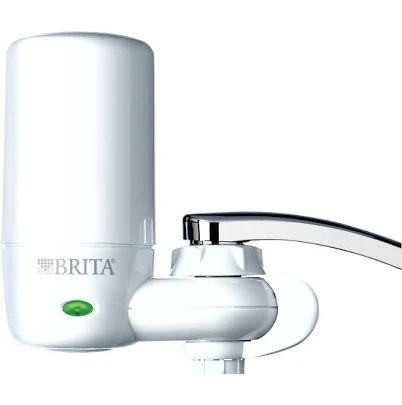
Brita On Tap Faucet Water Filter System
Lower risk; standard carbon design has no known PFAS, brand not transparent.
Brita On Tap uses activated carbon filtration, a proven non-PFAS technology. The filter and housing are standard plastics rarely treated with PFAS coatings, though Brita offers no public PFAS disclosures or testing results.
We flunk more products than we pass. This one earned its grade. How we grade
Material
Activated carbon filter cartridge; plastic housing (likely polypropylene)
Lab data
No public lab test
You may also be interested in
Top-graded picks in the categories readers replace first, every one scored on the same rubric.

Aqua Pure
3M Aqua-Pure AP802B Whole House Filter Housing
- polypropylene filter housing, carbon/sediment cartridge
- We found no PFAS statement from the brand
- Bacterial growth in spent cartridges
3 hazards checked on this product. See all of them.

Aquasure
Premier Series 75 GPD Under Sink Reverse Osmosis Water Filtration System
- RO membrane, carbon filters, stainless steel housing
- We found no PFAS statement from the brand
- Bacterial and microbial growth in housing and filters
4 hazards checked on this product. See all of them.

Avocado
Vegan Mattress
- organic cotton, natural latex, coconut coir, recycled steel coils
- The brand calls it PFAS-free, which we have not verified
- Heavy metals
2 hazards checked on this product. See all of them.
What Brita On Tap Faucet Water Filter System is made of, ingredients and materials
The Brita On Tap uses an activated carbon filter cartridge (the consumable element) housed in polypropylene plastic (the permanent mount). Activated carbon is inert and does not leach chemical contaminants into water under normal use conditions. Polypropylene manufactured to FDA standards is not a material linked to off-gassing of volatile compounds at room temperature or during cold water exposure, making it a lower concern choice for faucet-mounted filters.
What’s concerning
No PFAS disclosure
No public statement from the brand about PFAS in this product.
Bacterial growth in filter media
Activated carbon filters can support microbial colonization if cartridges are not replaced on schedule or if the system sits unused for extended periods. This is a maintenance issue rather than a material defect; regular replacement intervals mitigate this risk effectively.
Seal degradation and bypass leakage
Isolated consumer complaints on retail sites describe water bypassing the filter cartridge after months of use, typically due to seal wear or improper cartridge seating. This is a performance issue (water quality) rather than a safety hazard, but indicates the importance of correct installation and periodic inspection.
What’s reassuring
Base material not linked to PFAS
The main material recorded for this product is not one associated with PFAS.
Polypropylene housing leachables
Food-grade polypropylene does not leach BPA, phthalates, or other endocrine disruptors under cold water conditions. No recalls or reported incidents exist for Brita On Tap housings. Risk is negligible with standard use.
Cartridge manufacturing contaminants
Activated carbon cartridges can theoretically contain trace coal dust or ash residue if not properly rinsed during manufacture, but Brita's ISO 9001 certification and lack of consumer complaints suggest this is well controlled in their supply chain.
VOC off-gassing from plastic housing
Polypropylene does not off-gas formaldehyde or significant volatile organic compounds at room temperature. No odor complaints or air quality concerns have been reported for this product line in public records.
The full breakdown
The brand's record and disclosure
Brita is a subsidiary of Tronox Holdings and has ISO 9001 certification for quality management. The company does not publish detailed material safety data sheets or third-party test reports for individual filter cartridges on its consumer website, which is typical but limits transparency. No product recalls related to leaching, coating failure, or contamination have been issued for the On Tap line in public records. Brita's silence on PFAS use in their filters is consistent with industry practice but represents a missed opportunity for proactive disclosure.
How it compares in its category
Faucet-mounted filters are among the simplest point-of-use devices and carry lower risk than pitcher filters (which can harbor bacterial growth if not replaced) or under-sink systems (which involve more complex plumbing and housing materials). Brita's On Tap is mainstream in this category and competes on convenience rather than advanced filtration; activated carbon is the industry standard. Other major brands (PUR, Culligan) use similar carbon-based designs with comparable safety profiles.
If you buy it
Replace the cartridge every 2-3 months or after filtering 100 gallons, whichever comes first; follow Brita's replacement schedule to prevent carbon saturation and reduced effectiveness. Do not use with hot water above 60 degrees Celsius, as this can damage the cartridge and potentially degrade the plastic housing seal. Clean the exterior housing monthly under running water to prevent mineral buildup. Store replacement cartridges in a cool, dry place and do not expose to direct sunlight.
What we don’t know
- Basis
- Model estimate, 72% confidence, not a lab result
- Lab test
- None on record for this exact product
- Brand statement
- Brita has made a specific claim
Formulations change between production runs, so check the current label. How we grade.
Better-graded alternatives in Water Filters

Aquamira
Water Storage Treatment 2 oz Glass Bottles 60 gallons Purification
- glass bottles, sodium dichloroisocyanurate treatment chemical
- We found no PFAS statement from the brand
- Chemical overdose or misuse
5 hazards checked on this product. See all of them.

Big Berkey
Empty Housing with NO Filters Included
- Stainless steel housing and spigot
- We found no PFAS statement from the brand
- Bacterial growth and biofilm if filters not replaced
5 hazards checked on this product. See all of them.

LifeStraw
Home Glass Water Filter Pitcher
- Borosilicate glass pitcher, replaceable activated-carbon filter cartridge
- Bacterial growth in filter cartridge if unmaintained
5 hazards checked on this product. See all of them.
More water filters grades
How we score, every product runs through the same public 0-100 rubric based on materials, coatings, brand disclosure, lab findings, and recalls. See the full methodology → Spotted a mistake? Report an error.