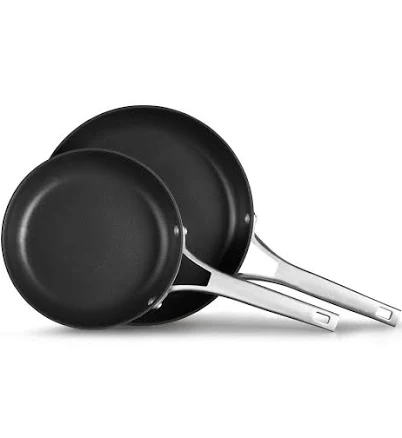
Calphalon Premier Hard-Anodized Nonstick Frying Pan Set, Is It Non-Toxic?
Nonstick coating chemistry not stated. PFAS concern cannot be assessed.
Calphalon does not name the non-stick chemistry on its Premier hard-anodized line, so the coating’s PFAS status is unknown.
The better-graded swap
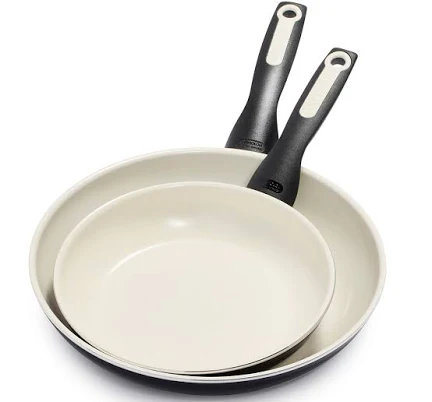
GreenPan
GreenPan Rio Ceramic Set
70/100 safety
Same rubric that flunked this product. The swap earned Good.
Still want this one anyway? Check the price on Amazon. We’d swap it.
Material
Hard-anodized aluminum with proprietary nonstick coating (unspecified)
Lab data
No public lab test
You may also be interested in
Top-graded picks in the categories readers replace first, every one scored on the same rubric.

- polypropylene filter housing, carbon/sediment cartridge
- We found no PFAS statement from the brand
- Bacterial growth in spent cartridges
3 hazards checked on this product, all on its full breakdown.

Aquasure
Premier Series 75 GPD Under Sink Reverse Osmosis Water Filtration System
- RO membrane, carbon filters, stainless steel housing
- We found no PFAS statement from the brand
- Bacterial and microbial growth in housing and filters
4 hazards checked on this product, all on its full breakdown.

Avocado
Vegan Mattress
- organic cotton, natural latex, coconut coir, recycled steel coils
- The brand calls it PFAS-free, which we have not verified
- Heavy metals
2 hazards checked on this product, all on its full breakdown.
Is Calphalon Premier Frying Pan Set non-toxic? What it is made of
Calphalon Premier uses hard-anodized aluminum as its core, which creates a dense oxide layer that significantly reduces aluminum leaching compared to bare aluminum cookware. The nonstick coating is proprietary and unspecified by Calphalon, meaning its exact chemical composition and PFAS content are not publicly known. Hard anodization itself is a mechanical process that strengthens the surface and provides some built-in scratch resistance, but the durability of the nonstick topcoat remains the critical variable. Without transparency on the coating formulation, the long-term safety profile cannot be fully assessed.
What’s concerning
Category baseline
The starting point for this type of product, before anything specific to this product is counted.
No PFAS disclosure
No public statement from the brand about PFAS in this product.
Non-stick, chemistry undisclosed
Marketed as non-stick without stating the coating chemistry.
Nonstick coating degradation and fume risk
If the coating contains Teflon-type coating or similar Teflon-family coating (unconfirmed by Calphalon), overheating or mechanical damage can release degradation products. Nonstick coatings degrade at high temperature; the specific risk here cannot be quantified without knowing the exact formulation.
Coating integrity loss over time
Consumer reports indicate that Calphalon nonstick skillets show visible wear and reduced nonstick performance within 1-2 years of regular use. As coating fails, flaking and adherence loss become risks, and replacement is necessary to avoid contact with underlying substrate or fragmented coating particles.
Proprietary coating composition undisclosed
Calphalon does not publicly detail the chemical identity of its nonstick layer, making independent verification of PFAS content, heavy metals, or other additives impossible. This opacity is the primary reason for downgrading this product from 'buy' to 'care'.
What’s reassuring
Aluminum leaching from core substrate
Hard anodization creates a protective oxide barrier that substantially reduces aluminum migration into food. No recalls or reports of aluminum leaching from hard-anodized Calphalon cookware are on record, suggesting this hazard is well-controlled by the manufacturing process.
Heat-induced off-gassing from base or handles
Hard-anodized aluminum does not off-gas volatile compounds at normal cooking temperatures. No established hazard is on record for this product class in this regard.
How is this PFAS grade calculated?
The brand's record and disclosure
Calphalon has not made public commitments to PFAS-free formulations or disclosed the specific chemistry of their nonstick coatings. The brand has faced no major recalls specific to nonstick coating hazards in recent years, but silence on ingredient transparency is notable given industry-wide scrutiny of fluorinated compounds. Calphalon is owned by Groupe SEB, a large cookware conglomerate that does not lead the industry in proactive chemical disclosure. This lack of transparency places the burden on the consumer to use the product carefully rather than rely on brand assurance.
How it compares in its category
Calphalon Premier sits in the mid-to-premium range of hard-anodized nonstick skillets, competing with brands like Anolon and T-fal. Unlike some competitors (e.g., GreenPan, Our Place), Calphalon has not advertised PFAS-free or ceramic-based alternatives in its core product lines, making it a riskier choice if PFAS avoidance is a priority. Hard-anodized construction is generally considered to show lower concern than aluminum non-stick cookware because the anodization layer reduces direct aluminum contact with food, but this advantage is negated if the nonstick coating itself contains harmful compounds. Compared to stainless steel or cast iron, nonstick skillets always carry greater chemical uncertainty.
If you buy it
Use only at low to medium heat; nonstick coatings begin degrading significantly above 500F, and Teflon-type coating-based coatings can release fumes at high temperatures. Hand wash only, avoid abrasive scrubbers and high heat drying, as damage to the coating accelerates breakdown and potential leaching. Replace the pan if the nonstick surface shows visible flaking, peeling, or discoloration, which signals coating failure. Do not preheat empty or allow cookware to sit unused on heat, as this accelerates degradation. Keep receipts and monitor Calphalon's future disclosure statements; if the company eventually confirms PFAS content, consider phasing out in favor of certified alternatives.
What is not known about PFAS in this product?
- Basis
- Model estimate, 35% confidence, not a lab result
- Lab test
- None on record for this exact product
- Brand statement
- Calphalon has made a specific claim
Formulations change between production runs, so check the current label. How we grade.
What are the PFAS-free alternatives to Calphalon Premier Hard-Anodized Nonstick Frying Pan Set?
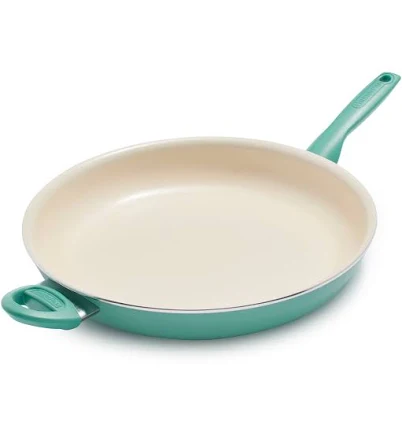
- ceramic nonstick coating
- The brand calls it PFAS-free, which we have not verified
- Coating degradation and particulate release
3 hazards checked on this product, all on its full breakdown.
- ceramic non-stick coating
- The brand calls it PFAS-free, which we have not verified
- Coating degradation and aluminum leaching
3 hazards checked on this product, all on its full breakdown.
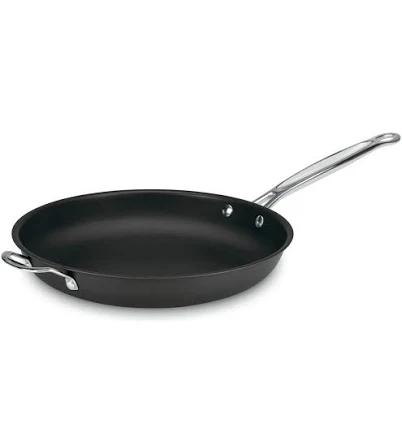
- anodized aluminum (hard-coat anodic oxidation)
- Coating degradation and leachables from breakdown
More nonstick skillets grades
How we score, every product runs through the same public 0-100 rubric based on materials, coatings, brand disclosure, lab findings, and recalls. See the full methodology → Spotted a mistake? Report an error.