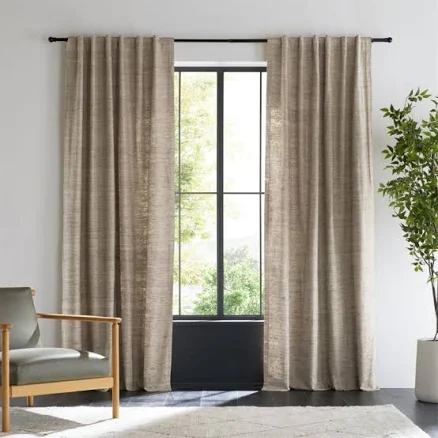
Trevino Cotton Silk Blend Window Curtain Panel
Lower PFAS concern; standard blend fabric with no visible water or stain treatments.
Trevino's cotton-silk blend curtains are natural fibers unlikely to need fluorochemical treatments. No visible water-repellent coating, stain-resist, or grease-resistant features are marketed, reducing PFAS concern.
We flunk more products than we pass. This one earned its grade. How we grade
Material
Cotton-silk blend, no known finishes applied
Brand disclosure
Brand is silent on PFAS
Lab data
No public lab test
You may also be interested in
Top-graded picks in the categories readers replace first, every one scored on the same rubric.

- polypropylene filter housing, carbon/sediment cartridge
- We found no PFAS statement from the brand
- Bacterial growth in spent cartridges
3 hazards checked on this product, all on its full breakdown.

Aquasure
Premier Series 75 GPD Under Sink Reverse Osmosis Water Filtration System
- RO membrane, carbon filters, stainless steel housing
- We found no PFAS statement from the brand
- Bacterial and microbial growth in housing and filters
4 hazards checked on this product, all on its full breakdown.

Avocado
Vegan Mattress
- organic cotton, natural latex, coconut coir, recycled steel coils
- The brand calls it PFAS-free, which we have not verified
- Heavy metals
2 hazards checked on this product, all on its full breakdown.
What Trevino Cotton Silk Blend Curtain Panel is made of, ingredients and materials
This curtain is a cotton-silk blend, meaning it combines cellulose fibers (cotton) with protein fibers (silk) without chemical-intensive synthetic alternatives. Neither cotton nor silk requires heavy finishing chemistry to function as window fabric. The absence of noted water-resistant or stain-resistant treatments means you avoid the chemical cocktails (historically PFAS-laden) that are common in performance curtains. Raw blended fabrics like this are chemically simpler than coated or treated alternatives.
What’s concerning
Category baseline
The starting point for this type of product, before anything specific to this product is counted.
No PFAS disclosure
No public statement from the brand about PFAS in this product.
Azo dyes and synthetic colorants
Dyes used in the Trevino panel are not disclosed. Conventional synthetic dyes may include azo compounds, though problematic azo dyes (banned under REACH) are rare in mainstream US curtains. No specific testing or certification data is publicly available for this product line.
Formaldehyde / VOCs
New curtains may release volatile organic compounds during initial use due to residual dyes and finishing agents. This is typical for textiles and usually diminishes after 1-2 weeks of airing in a well-ventilated space. No specific off-gassing data has been reported for this product.
Source, ATSDR ↗What’s reassuring
Base material not linked to PFAS
The main material recorded for this product is not one associated with PFAS.
Formaldehyde / VOCs
No formaldehyde-releasing finish agents have been reported in standard Crate and Barrel cotton-silk curtains. Untreated blends do not require the wrinkle-resist or durable-press resins that are common in polyester or cotton-heavy curtains.
Source, ATSDR ↗Antimony in polyester (not applicable here)
Antimony oxide is used as a polyester catalyst and is not present in cotton-silk blends. This hazard does not apply to this product.
Flame retardants
Cotton-silk blends do not inherently require flame retardant treatments and none are reported in standard Crate and Barrel curtain lines. Performance-rated curtains would carry these; this product does not.
Source, EPA ↗How is this PFAS grade calculated?
The brand's record and disclosure
Crate and Barrel does not publicly disclose detailed chemical safety testing or certifications for most home textiles, including this curtain line. The brand has not faced documented product recalls or safety controversies specific to curtains or window treatments. As a mainstream home furnishings retailer, they meet baseline US textile regulations but do not volunteer third-party certifications (e.g., OEKO-TEX, Global Organic Textile Standard) that would signal stricter chemical controls.
How it compares in its category
Untreated cotton-silk blends occupy the lower-chemical end of the curtain spectrum. Performance or blackout curtains often use polyester with multiple chemical coatings and flame retardants, creating higher hazard profiles. This Trevino panel avoids those treatments, making it simpler from a chemical safety standpoint, though it will offer less durability against fading and staining than treated alternatives. It represents a reasonable middle ground between chemical simplicity and practical lifespan.
If you buy it
Wash in cool water with mild detergent to preserve fiber integrity and avoid unnecessary chemical exposure during care. Avoid high heat or prolonged direct sunlight exposure, which can degrade both cotton and silk fibers and cause color shift. Inspect periodically for seam degradation or fiber pilling; a well-maintained cotton-silk curtain typically lasts 5-7 years in normal indoor use. Dry cleaning is optional and adds chemical exposure; home washing is sufficient and involves lower concern for chemical exposure.
What is not known about PFAS in this product?
- Basis
- Model estimate, 78% confidence, not a lab result
- Lab test
- None on record for this exact product
- Brand statement
- Crate and Barrel has made none
Formulations change between production runs, so check the current label. How we grade.
More curtains grades
How we score, every product runs through the same public 0-100 rubric based on materials, coatings, brand disclosure, lab findings, and recalls. See the full methodology → Spotted a mistake? Report an error.