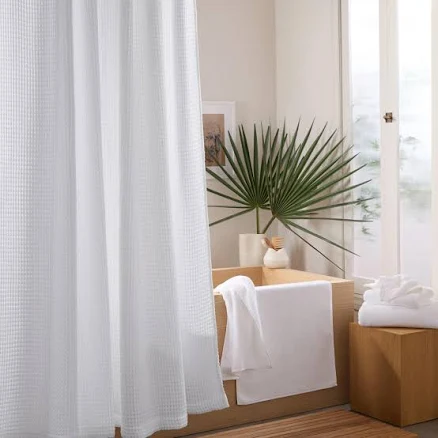
Parachute Waffle Shower Curtain
No coating described, and no PFAS statement from the brand.
The product information we reviewed describes pVC shower curtain, no coating disclosed, with no water-repellent coating named. Water resistance on products like this usually comes from the material and its seals rather than a surface treatment. The brand has published no PFAS statement for it.
We flunk more products than we pass. This one earned its grade. How we grade
Material
PVC shower curtain, no coating disclosed
Brand disclosure
Brand is silent on PFAS
Lab data
No public lab test
You may also be interested in
Top-graded picks in the categories readers replace first, every one scored on the same rubric.

- polypropylene filter housing, carbon/sediment cartridge
- We found no PFAS statement from the brand
- Bacterial growth in spent cartridges
3 hazards checked on this product, all on its full breakdown.

Aquasure
Premier Series 75 GPD Under Sink Reverse Osmosis Water Filtration System
- RO membrane, carbon filters, stainless steel housing
- We found no PFAS statement from the brand
- Bacterial and microbial growth in housing and filters
4 hazards checked on this product, all on its full breakdown.

Avocado
Vegan Mattress
- organic cotton, natural latex, coconut coir, recycled steel coils
- The brand calls it PFAS-free, which we have not verified
- Heavy metals
2 hazards checked on this product, all on its full breakdown.
What Parachute Waffle Shower Curtain is made of, ingredients and materials
This is a rigid PVC (polyvinyl chloride) shower curtain with a waffle texture. PVC requires plasticizers, typically phthalates or non-phthalate alternatives, to achieve flexibility and durability. The waffle weave does not indicate a coating; it is the base material structure. PVC itself is stable when dry, but in a humid shower environment, plasticizers can off-gas, especially in warm water spray and high humidity.
What’s concerning
Category baseline
The starting point for this type of product, before anything specific to this product is counted.
No PFAS disclosure
No public statement from the brand about PFAS in this product.
Phthalates
PVC in warm, humid shower conditions can release plasticizers into air. Parachute has not confirmed which plasticizer system is used (phthalate, DINP, or alternative); no independent test data on this specific product is publicly available.
Source, ATSDR ↗Volatile organic compound (VOC) emissions
PVC products typically emit VOCs during manufacturing off-gassing and accelerated by heat and humidity. No third-party VOC testing or certification (e.g., Oeko-Tex, GreenGuard) is disclosed for this curtain.
Mold and bacterial growth on surface
All PVC shower curtains, including this one, are prone to mold and mildew in damp conditions if ventilation is poor or the curtain is left wet. Regular cleaning and drying are required to prevent microbial colonization.
Material degradation and microparticle shedding
PVC becomes brittle and degraded over time, especially in high-humidity and temperature cycles. Degraded plastic can shed microparticles into water runoff and airborne dust; no data on the rate or composition of shedding from this specific product.
What’s reassuring
Base material not linked to PFAS
The main material recorded for this product is not one associated with PFAS.
Heavy metals
No recalls or published safety data indicate lead, cadmium, or azo dye hazards in Parachute shower curtains. The waffle texture is inherent to the PVC material, not a printed or dyed surface, limiting dye-based risk.
Source, FDA ↗How is this PFAS grade calculated?
The brand's record and disclosure
Parachute has not publicly disclosed the specific plasticizer chemistry or made a formal PFAS statement about this product. The brand markets natural and sustainable positioning in other product lines (bedding, linens) but does not provide equivalent transparency on this shower curtain's chemical composition. No established recalls or safety controversies tied to this specific product are on record.
How it compares in its category
Standard PVC shower curtains dominate the category and share the same off-gassing profile. Some alternatives use EVA (ethylene vinyl acetate, lower plasticizer burden) or PEVA (polyethylene vinyl acetate, phthalate-free). Parachute's PVC waffle is typical in price and durability but does not claim phthalate-free or low-VOC status like some premium competitors do.
If you buy it
Ensure consistent bathroom ventilation during and after showers to limit plasticizer inhalation. Replace the curtain every 12 to 18 months, or sooner if you see mold, mildew, or visible degradation. Do not use in unventilated spaces or high-temperature steam environments. Store in a dry location to minimize off-gassing between uses.
What is not known about PFAS in this product?
- Basis
- Model estimate, 45% confidence, not a lab result
- Lab test
- None on record for this exact product
- Brand statement
- Parachute has made none
Formulations change between production runs, so check the current label. How we grade.
More curtains grades
How we score, every product runs through the same public 0-100 rubric based on materials, coatings, brand disclosure, lab findings, and recalls. See the full methodology → Spotted a mistake? Report an error.