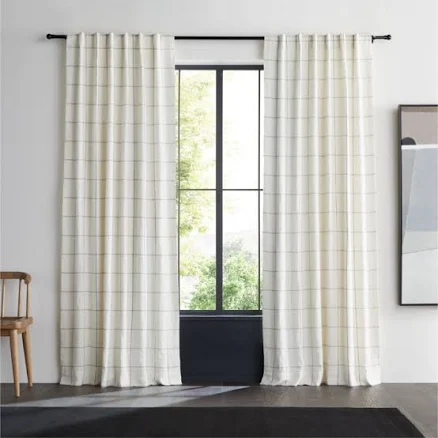
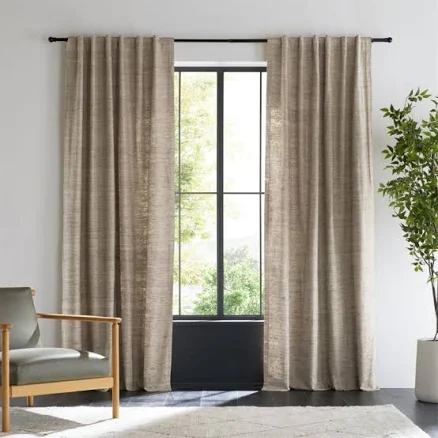
Crate & Barrel Warm Beige & Storm Grey Linen Double Pinstripe Grid Blackout Window Curtain Panel
Avoid until Crate & Barrel discloses blackout coating chemistry. Treated linen often contains PFAS.
This linen-blend blackout curtain includes an undisclosed coating to achieve light-blocking and water resistance. Blackout and water-resistant textile coatings have historically relied on fluorinated compounds.
The better-graded swap
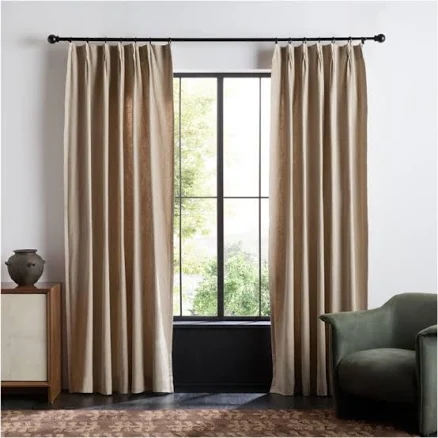
Crate and Barrel
Crate & Barrel French Pleat Window Curtain Panel
75/100 safety
Same rubric that flunked this product. The swap earned Excellent.
Still want this one anyway? Check the price on Amazon. We’d swap it.
Material
Linen blend with blackout coating (unspecified)
Brand disclosure
Brand is silent on PFAS
Lab data
No public lab test
You may also be interested in
Top-graded picks in the categories readers replace first, every one scored on the same rubric.

- polypropylene filter housing, carbon/sediment cartridge
- We found no PFAS statement from the brand
- Bacterial growth in spent cartridges
3 hazards checked on this product, all on its full breakdown.

Aquasure
Premier Series 75 GPD Under Sink Reverse Osmosis Water Filtration System
- RO membrane, carbon filters, stainless steel housing
- We found no PFAS statement from the brand
- Bacterial and microbial growth in housing and filters
4 hazards checked on this product, all on its full breakdown.

Avocado
Vegan Mattress
- organic cotton, natural latex, coconut coir, recycled steel coils
- The brand calls it PFAS-free, which we have not verified
- Heavy metals
2 hazards checked on this product, all on its full breakdown.
What Crate & Barrel Warm Beige Curtain Panel is made of, ingredients and materials
This product is a linen blend (percentage unspecified by Crate & Barrel) with a blackout coating applied to block light. The blackout layer is the critical unknown, manufacturers typically use either acrylic, polyurethane, or Teflon-type coating-based coatings to achieve blackout function. Linen itself is a natural fiber and relatively inert, but the coating chemistry determines actual safety. Without disclosure, you cannot verify what chemical stain treatments, flame retardants, or water-repellent finishes were added during manufacture.
What’s concerning
Category baseline
The starting point for this type of product, before anything specific to this product is counted.
No PFAS disclosure
No public statement from the brand about PFAS in this product.
Waterproof / stain-resistant treatment
Water-repellent coating treatments have historically used PFAS.
PFAS
Blackout treatments on consumer curtains frequently rely on PFAS-based fluorochemical water and stain repellents. Crate & Barrel's refusal to disclose coating chemistry makes this assessment probable rather than confirmed. Graded separately at 30/100 (Poor).
Source, ATSDR ↗Formaldehyde / VOCs
Linen blends are often finished with formaldehyde-based wrinkle-resist or dye-fixing resins. No specific testing data exists for this Crate & Barrel product, but the practice is standard in affordable-to-mid-market textiles. Initial off-gassing typically decreases after first wash.
Source, ATSDR ↗Azo dyes
The storm grey and beige colorants may include azo dyes, some of which cleave to release carcinogenic amines under conditions like sweat contact or aging. Linen does not inherently require azo dyes, but no brand disclosure confirms lower-concern alternatives were used.
Coating degradation and particulate release
Blackout coatings degrade over years of sun exposure and laundering cycles. Peeling or flaking coating can shed microparticles into the home environment. No product durability data from Crate & Barrel exists; risk depends on use intensity and climate.
What’s reassuring
Flame retardants
Window curtains sold in the United States do not face mandatory flame retardant regulations as textiles sold loose (unlike upholstered furniture). No public evidence suggests Crate & Barrel adds flame retardants to these curtains, but lack of disclosure means it cannot be ruled out.
Source, EPA ↗How is this PFAS grade calculated?
The brand's record and disclosure
Crate & Barrel does not publicly disclose blackout coating chemistry on product pages or safety data sheets. The brand has no known formal commitments to eliminate PFAS from textiles and has not responded to industry pressure on chemical transparency in window treatments. No recalls or confirmed chemical violations have been documented for this specific product line, but silence on coating composition is a red flag in an industry where PFAS-based water and stain repellents remain common.
How it compares in its category
Most mainstream retailer blackout curtains (Target, Wayfair, Amazon Basics) similarly lack coating transparency. Premium alternatives like Pottery Barn or West Elm also do not always disclose; however, certified organic or GOTS-certified linen curtains from specialty retailers (e.g.Brands (such as Parachute, Snowe) often use finishing processes with lower concern and disclosed methods. Budget blackout curtains carry similar or higher coating uncertainty; Crate & Barrel's mid-market positioning offers no inherent safety advantage.
If you buy it
Wash before first use in cool water to remove loose dyes or finish residues; many formaldehyde-based fabric resins hydrolyze during initial laundering. Avoid dry cleaning, which may introduce additional solvents. Do not use on windows above infant sleep areas or in rooms where young children mouth textiles. Replace if the coating begins to peel, crack, or shed particles, as degradation can release coating fragments. Keep windows ventilated on mild days; blackout linings reduce air exchange and can trap moisture.
What is not known about PFAS in this product?
- Basis
- Model estimate, 48% confidence, not a lab result
- Lab test
- None on record for this exact product
- Brand statement
- Crate and Barrel has made none
Formulations change between production runs, so check the current label. How we grade.
What are the PFAS-free alternatives to Crate & Barrel Warm Beige & Storm Grey Linen Double Pinstripe Grid Blackout Window Curtain Panel?
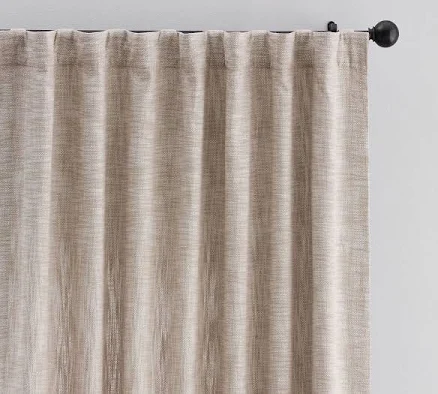
- 100% cotton textile, no stated coating
- Formaldehyde / VOCs
3 hazards checked on this product, all on its full breakdown.
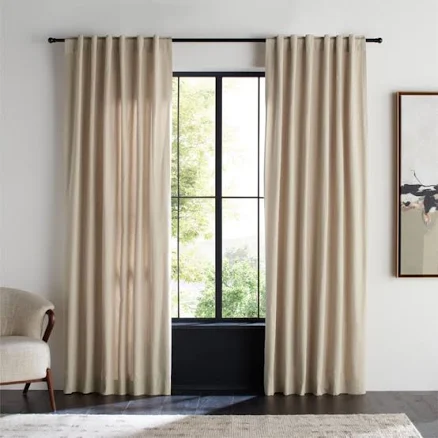
Crate and Barrel
Crate & Barrel Organic Cotton Natural Taupe Window Curtain Panel
- organic cotton, no applied coating mentioned
- We found no PFAS statement from the brand
- Heavy metals
2 hazards checked on this product, all on its full breakdown.
- Cotton-silk blend, no known finishes applied
- We found no PFAS statement from the brand
- Azo dyes and synthetic colorants
2 hazards checked on this product, all on its full breakdown.
More curtains grades
How we score, every product runs through the same public 0-100 rubric based on materials, coatings, brand disclosure, lab findings, and recalls. See the full methodology → Spotted a mistake? Report an error.