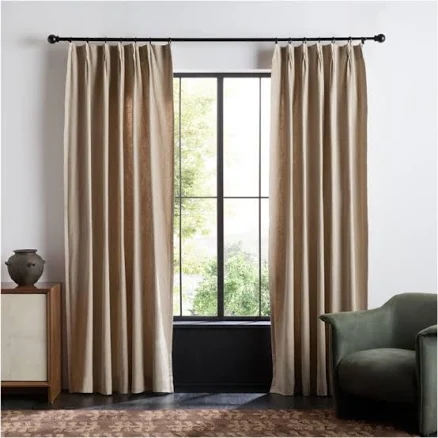
Crate & Barrel French Pleat Window Curtain Panel
Lower PFAS concern because standard fabric lacks water-resistant finish needing chemical treatment.
Crate & Barrel's French Pleat curtain is woven polyester with no disclosed water-repellent, stain-resistant, or specialty coating. Standard decorative curtains rarely require PFAS-based treatments.
We flunk more products than we pass. This one earned its grade. How we grade
Material
100% polyester fabric, likely uncoated
Brand disclosure
Brand is silent on PFAS
Lab data
No public lab test
You may also be interested in
Top-graded picks in the categories readers replace first, every one scored on the same rubric.

- polypropylene filter housing, carbon/sediment cartridge
- We found no PFAS statement from the brand
- Bacterial growth in spent cartridges
3 hazards checked on this product, all on its full breakdown.

Aquasure
Premier Series 75 GPD Under Sink Reverse Osmosis Water Filtration System
- RO membrane, carbon filters, stainless steel housing
- We found no PFAS statement from the brand
- Bacterial and microbial growth in housing and filters
4 hazards checked on this product, all on its full breakdown.

Avocado
Vegan Mattress
- organic cotton, natural latex, coconut coir, recycled steel coils
- The brand calls it PFAS-free, which we have not verified
- Heavy metals
2 hazards checked on this product, all on its full breakdown.
What Crate & Barrel French Pleat Curtain Panel is made of, ingredients and materials
This product is 100% polyester fabric without a water-resistant or stain-resistant coating. Uncoated polyester curtains carry minimal chemical treatment risk compared to performance fabrics. The fiber itself is stable at room temperature and does not off-gas significantly under normal indoor use. No Teflon-type coating (Teflon), wax, or flame-retardant chemistry is required for a standard interior curtain panel.
What’s concerning
Category baseline
The starting point for this type of product, before anything specific to this product is counted.
No PFAS disclosure
No public statement from the brand about PFAS in this product.
Azo dyes and residual dye chemicals
Polyester textiles are typically acid-dyed; no specific test data for this product exists, but azo dye residues can persist if rinsing is incomplete during manufacturing. Washing before use mitigates this risk.
Antimony catalyst residue in polyester fiber
Polyester resin polymerization may use antimony oxide as a catalyst; residual levels depend on manufacturing controls. This is a known but low-concentration concern in mass-produced polyester; no specific data for Crate and Barrel sourcing exists.
Heavy metals
Synthetic dyes used on colored polyester can contain trace heavy metals (e.g., chromium, lead in pigment formulations); unregulated in the US for home textiles. Cold-water washing reduces leaching risk if present.
Source, FDA ↗Microplastic shedding from wear
Polyester curtains shed microfibers during use and washing, a known concern for all synthetic textiles. Minimal in stationary curtains compared to apparel, but present over years of use and laundering.
What’s reassuring
Base material not linked to PFAS
The main material recorded for this product is not one associated with PFAS.
Formaldehyde / VOCs
Uncoated polyester curtains do not typically require formaldehyde-based finishes; no evidence suggests this product uses resin treatments. Standard polyester does not off-gas formaldehyde at indoor temperatures.
Source, ATSDR ↗How is this PFAS grade calculated?
The brand's record and disclosure
Crate and Barrel does not publicly disclose detailed chemical or PFAS testing for textiles; this silence is typical of major home furnishings retailers. The brand has no known major recalls or safety controversies specific to window treatments. Third-party certifications (e.g., OEKO-TEX, GOTS) are not advertised for this product line, leaving chemical composition largely unverified by independent standards.
How it compares in its category
Uncoated polyester curtains are the industry baseline and lower-risk than water-resistant or performance-treated fabrics, which often contain PFAS or other durable-finish chemicals. Crate and Barrel's price point and mainstream positioning suggest standard dyeing and finishing rather than advanced chemical treatments. Natural fiber alternatives (linen, cotton blends) would carry different hazards (dye residues, pesticide history) rather than lower overall risk.
If you buy it
Wash before first use to remove excess dye and dust; cold water and mild detergent are standard for polyester. Avoid prolonged high heat (dryer) and direct sunlight exposure to prevent fading and fiber degradation over years. Inspect annually for tears or pilling; replace when structural integrity declines or discoloration indicates dye breakdown. Dry cleaning is not necessary and may introduce additional chemical exposure.
What is not known about PFAS in this product?
- Basis
- Model estimate, 72% confidence, not a lab result
- Lab test
- None on record for this exact product
- Brand statement
- Crate and Barrel has made none
Formulations change between production runs, so check the current label. How we grade.
More curtains grades
How we score, every product runs through the same public 0-100 rubric based on materials, coatings, brand disclosure, lab findings, and recalls. See the full methodology → Spotted a mistake? Report an error.