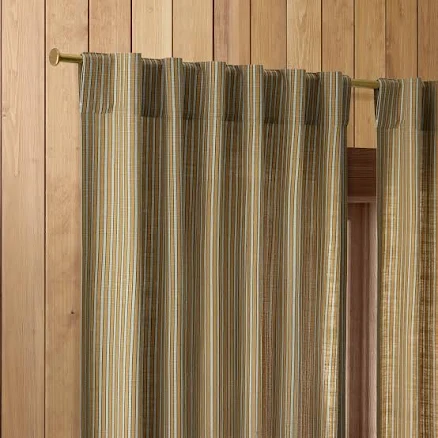
West Elm Emma Chamberlain Multi-Stripe Curtain
Lower concern because plain woven fabric shows no PFAS triggers, but West Elm lacks transparency.
West Elm's Emma Chamberlain Multi-Stripe Curtain is a woven cotton or cotton-blend fabric with no stain-guard, water-repellent, or performance coating advertised. West Elm does not disclose finishing details.
We flunk more products than we pass. This one earned its grade. How we grade
Material
Cotton/linen blend multi-stripe woven textile
Lab data
No public lab test
You may also be interested in
Top-graded picks in the categories readers replace first, every one scored on the same rubric.

- polypropylene filter housing, carbon/sediment cartridge
- We found no PFAS statement from the brand
- Bacterial growth in spent cartridges
3 hazards checked on this product, all on its full breakdown.

Aquasure
Premier Series 75 GPD Under Sink Reverse Osmosis Water Filtration System
- RO membrane, carbon filters, stainless steel housing
- We found no PFAS statement from the brand
- Bacterial and microbial growth in housing and filters
4 hazards checked on this product, all on its full breakdown.

Avocado
Vegan Mattress
- organic cotton, natural latex, coconut coir, recycled steel coils
- The brand calls it PFAS-free, which we have not verified
- Heavy metals
2 hazards checked on this product, all on its full breakdown.
What West Elm Emma Chamberlain Curtain is made of, ingredients and materials
This curtain is a woven cotton and linen blend, both natural cellulose fibers with inherently low chemical risk compared to synthetics. The multi-stripe pattern suggests pigment-based dyeing rather than fiber-reactive chemistry, which is standard for decorative textiles. West Elm does not disclose finishing details (such as sizing agents, dyes, or post-weave treatments), so residual chemicals from manufacturing cannot be fully assessed, but the base material class carries minimal inherent toxicity.
What’s concerning
Category baseline
The starting point for this type of product, before anything specific to this product is counted.
No PFAS disclosure
No public statement from the brand about PFAS in this product.
Formaldehyde / VOCs
Formaldehyde-based sizing and durable-press finishes are common in woven textiles to improve appearance and wrinkle resistance. West Elm does not disclose whether this product contains formaldehyde resins; pre-wash use recommended to reduce any residual exposure.
Source, ATSDR ↗VOC off-gassing
Residual solvents from dyeing and finishing processes may off-gas slightly when new; this dissipates quickly with ventilation and is negligible for natural-fiber textiles compared to synthetics.
What’s reassuring
Base material not linked to PFAS
The main material recorded for this product is not one associated with PFAS.
Azo dyes and synthetic colorants
No azo dye restrictions or contamination reported for West Elm textiles. Cotton-linen blends in this price tier typically use low-risk acid or reactive dyes, though West Elm does not confirm dye chemistry.
Flame retardants
Cotton-linen blends are not required to meet flame retardancy standards in the US for curtains, and there is no indication West Elm applies flame-retardant coatings to this product line.
Source, EPA ↗Heavy metals
No cadmium, lead, or other heavy-metal dyes have been reported in West Elm textiles or this product. Conventional dyeing of natural fibers does not typically introduce heavy metals.
Source, FDA ↗How is this PFAS grade calculated?
The brand's record and disclosure
West Elm has not published specific safety or chemical disclosures for this product line. The brand does not appear on major third-party certifications (GOTS, OEKO-TEX) for this item based on available public records. West Elm's parent company (Williams Sonoma Group) has faced no major textile safety recalls in recent years, but the brand maintains a generally opaque stance on chemical finishing processes.
How it compares in its category
Natural fiber curtains (cotton-linen blends) are a lower-risk choice compared to polyester or synthetic blends, which often contain flame retardants and higher VOC off-gassing. West Elm's pricing and positioning sit in the mid-to-premium segment; comparable alternatives from certified manufacturers (e.g., organic-certified or OEKO-TEX labeled) exist but at similar or higher cost. This product offers a reasonable balance of material safety and aesthetic choice without extraordinary risk.
If you buy it
Wash before first use to remove residual dyes and finishes from manufacturing; this step reduces any potential irritant exposure. Use lukewarm water and mild detergent, and avoid very hot water, which can accelerate fading and unnecessary dye bleeding. Inspect the fabric periodically for pilling or seam degradation; natural fiber curtains are durable but may fray if handled roughly. Hang in well-ventilated spaces; off-gassing risk is minimal but air circulation is always beneficial for textiles in enclosed rooms.
What is not known about PFAS in this product?
- Basis
- Model estimate, 72% confidence, not a lab result
- Lab test
- None on record for this exact product
- Brand statement
- West Elm has made a specific claim
Formulations change between production runs, so check the current label. How we grade.
More curtains grades
How we score, every product runs through the same public 0-100 rubric based on materials, coatings, brand disclosure, lab findings, and recalls. See the full methodology → Spotted a mistake? Report an error.