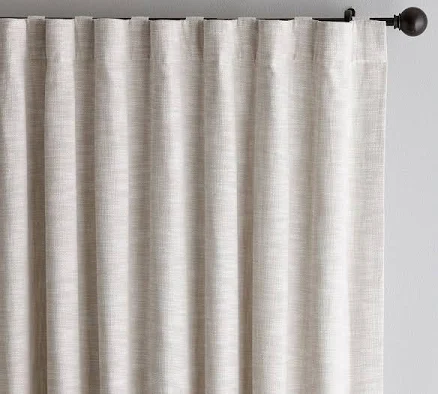
Pottery Barn Seaton Textured Cotton Light Filtering Curtain
Lower concern because plain cotton carries minimal PFAS risk when untreated.
Pottery Barn's Seaton curtain is textured cotton with no visible water-resistant or stain-resistant treatment mentioned. Untreated or lightly treated cotton carries lower PFAS risk than finished synthetics.
We flunk more products than we pass. This one earned its grade. How we grade
Material
100% cotton, uncoated
Lab data
No public lab test
You may also be interested in
Top-graded picks in the categories readers replace first, every one scored on the same rubric.

- polypropylene filter housing, carbon/sediment cartridge
- We found no PFAS statement from the brand
- Bacterial growth in spent cartridges
3 hazards checked on this product, all on its full breakdown.

Aquasure
Premier Series 75 GPD Under Sink Reverse Osmosis Water Filtration System
- RO membrane, carbon filters, stainless steel housing
- We found no PFAS statement from the brand
- Bacterial and microbial growth in housing and filters
4 hazards checked on this product, all on its full breakdown.

Avocado
Vegan Mattress
- organic cotton, natural latex, coconut coir, recycled steel coils
- The brand calls it PFAS-free, which we have not verified
- Heavy metals
2 hazards checked on this product, all on its full breakdown.
What Pottery Barn Seaton Textured Curtain is made of, ingredients and materials
These are plain-weave 100% cotton with no synthetic coating or finish layer. Cotton fiber itself is inert and does not off-gas volatile organic compounds (VOCs) or break down into microplastics under normal household use. The 'textured' descriptor refers to the weave pattern, not a chemical treatment. Uncoated cotton is one of the lowest-risk fiber types for indoor air quality.
What’s concerning
Category baseline
The starting point for this type of product, before anything specific to this product is counted.
No PFAS disclosure
No public statement from the brand about PFAS in this product.
Azo dyes (synthetic dye toxicity)
Cotton curtains are almost always dyed with industrial synthetic dyes. Azo dyes are restricted in EU textiles but still permitted in US consumer goods if they do not break down into harmful amines. Brand does not specify dye chemistry. Risk of skin sensitization from direct contact is very low due to drying and fixation during manufacturing; risk to infants or sensitive skin placing fabric against
Formaldehyde / VOCs
Manufacturing sizing or starch finishes may be present to maintain shape during shipping but are water-soluble and typically release minimal VOCs. Initial off-gassing risk is very low; washing before hang removes most residue. Plastic packaging itself may off-gas, not the fabric.
Source, ATSDR ↗What’s reassuring
Base material not linked to PFAS
The main material recorded for this product is not one associated with PFAS.
Formaldehyde / VOCs
No finish layer is claimed or visible in product specs. Uncoated plain cotton typically requires no formaldehyde-releasing resin for dye fixation at this production scale. If any finish were applied, Pottery Barn does not disclose it.
Source, ATSDR ↗Flame retardants
Light-filtering curtains are not subject to flammability standards in most US jurisdictions (blackout and thermal curtains are). No flame retardant treatment is disclosed or likely. This is a major advantage over coated or blend curtains.
Source, EPA ↗Lead
Heavy metal contamination in synthetic dyes is rare in US and EU-sourced textiles due to supplier regulations. Pottery Barn does not source exclusively from disclosed mills, so verifiable testing is unavailable. Risk of leaching into water or skin during normal use is very low; risk during swallowing (infants) is nonzero but curtains are not a typical ingestion hazard.
Source, ATSDR ↗How is this PFAS grade calculated?
The brand's record and disclosure
Pottery Barn (owned by Williams-Sonoma Inc.) does not publish detailed chemical disclosures for home textiles on their website or product labels. The brand has not faced major recalls or public controversies specific to curtain chemical safety. No independent certifications (e.g., OEKO-TEX, GOTS) are claimed on this product listing, which is typical for mainstream retail home goods at this price point.
How it compares in its category
Light-filtering cotton curtains present lower concern in the window treatment category because they avoid blackout coatings, which are often linked to flame retardants or antimony compounds. This product sits in the middle of the market, not premium eco-certified, but also not economy synthetic blends prone to off-gassing. Most competitors at similar price points (Target, West Elm, Wayfair) use comparable uncoated cotton construction.
If you buy it
Wash before first use in cool water to remove any residual manufacturing dust or sizing agents. Standard laundry detergent is fine. Hang away from direct heat sources and intense UV (which can degrade cotton fibers over years, but not release hazards). Replace if visible mildew develops in humid rooms, as mold itself poses respiratory risk independent of the fabric. No special filters or off-gassing period needed.
What is not known about PFAS in this product?
- Basis
- Model estimate, 78% confidence, not a lab result
- Lab test
- None on record for this exact product
- Brand statement
- Pottery Barn has made a specific claim
Formulations change between production runs, so check the current label. How we grade.
More curtains grades
How we score, every product runs through the same public 0-100 rubric based on materials, coatings, brand disclosure, lab findings, and recalls. See the full methodology → Spotted a mistake? Report an error.