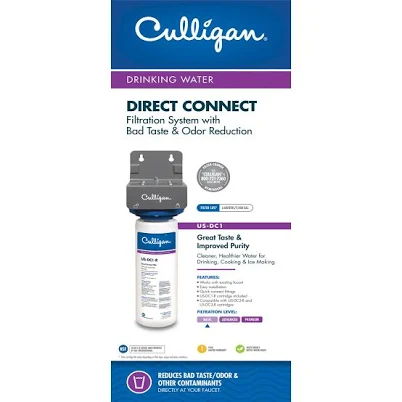
Culligan Direct Connect Under Sink Water Filtration System US-DC1
Lower-concern water filter; carbon and sediment media avoid PFAS materials.
The US-DC1 uses standard carbon and sediment filtration not inherently associated with PFAS sources. However, Culligan provides no public disclosure of PFAS testing, certification, or removal claims.
We flunk more products than we pass. This one earned its grade. How we grade
Material
Carbon and sediment filtration media (non-membrane RO/carbon)
Lab data
No public lab test
You may also be interested in
Top-graded picks in the categories readers replace first, every one scored on the same rubric.

Aqua Pure
3M Aqua-Pure AP802B Whole House Filter Housing
- polypropylene filter housing, carbon/sediment cartridge
- We found no PFAS statement from the brand
- Bacterial growth in spent cartridges
3 hazards checked on this product. See all of them.

Aquasure
Premier Series 75 GPD Under Sink Reverse Osmosis Water Filtration System
- RO membrane, carbon filters, stainless steel housing
- We found no PFAS statement from the brand
- Bacterial and microbial growth in housing and filters
4 hazards checked on this product. See all of them.

Avocado
Vegan Mattress
- organic cotton, natural latex, coconut coir, recycled steel coils
- The brand calls it PFAS-free, which we have not verified
- Heavy metals
2 hazards checked on this product. See all of them.
What Culligan Direct Connect Under Sink Water is made of, ingredients and materials
The US-DC1 uses granular activated carbon and sediment filtration media, materials that do not leach synthetic chemicals or degradation byproducts into water under normal use. Carbon is inert and chemically stable at ambient temperature and pressure; sediment filters are mechanical barriers with no known toxicant release. This design avoids the housing-leachable and membrane-breakdown risks associated with some reverse-osmosis or polymer-membrane filters.
What’s concerning
No PFAS disclosure
No public statement from the brand about PFAS in this product.
Bacterial growth in filter media and housing (unmaintained)
Activated carbon and sediment filters create a favorable environment for microbial colonization if not replaced on schedule or if water sits stagnant in the cartridge. Culligan does not emphasize maintenance protocols in standard consumer materials; improper use could allow biofilm accumulation.
Sediment filter media integrity over time
Sediment cartridges can fragment or shed fibers if overloaded or if water pressure spikes exceed design limits. Culligan does not provide burst-pressure or media-durability data in consumer documentation, creating uncertainty about long-term micro-particle release.
Incorrect installation or coupling failure
Direct-connect systems rely on push-fit or threaded couplings that can loosen or crack if misaligned during cartridge replacement. Failure to secure connections properly may lead to leaks or cross-contamination. Culligan's installation guides are basic and do not emphasize torque or tightness verification.
What’s reassuring
Base material not linked to PFAS
The main material recorded for this product is not one associated with PFAS.
Housing material leachables (plastic or epoxy fittings)
No specific public reports of leaching from the US-DC1 housing. However, Culligan does not disclose the polymer resin or epoxy composition of the direct-connect coupling; typical food-grade polypropylene or polyethersulfone should pose minimal risk, but absence of material certification prevents full assurance.
The full breakdown
The brand's record and disclosure
Culligan is a major commercial and residential water treatment supplier with long market presence but limited public transparency on third-party safety testing or PFAS-specific certification. No major product recalls or safety controversies are on public record for the US-DC1 line. The brand does not advertise independent NSF or WQA certification for this specific model in available marketing materials, which is a transparency gap compared to premium competitors.
How it compares in its category
Under-sink carbon filters occupy the middle tier of residential filtration, simpler and lower-leach-risk than cartridge RO systems with polymer housings, but less comprehensive than certified point-of-use RO or multi-stage systems. The direct-connect design (non-membrane) reduces the housing degradation risk seen in some cartridge-based filters. Typical alternatives (Aquasana, iSpring RO, NU Aqua) often carry third-party certification; Culligan's silence on this is a competitive weakness in disclosure.
If you buy it
Replace cartridges on the manufacturer's schedule (typically every 6 to 12 months depending on water quality and flow rate); delayed replacement allows trapped sediment and biofilm to harbor bacteria. Run water for 30 seconds after long idle periods to flush stagnant water. Store unused filters in a cool, dry place; do not expose to direct heat or sunlight. Monitor flow rate; sudden drops signal cartridge saturation and increased bacterial risk if not replaced promptly.
What we don’t know
- Basis
- Model estimate, 72% confidence, not a lab result
- Lab test
- None on record for this exact product
- Brand statement
- Culligan has made a specific claim
Formulations change between production runs, so check the current label. How we grade.
Better-graded alternatives in Water Filters

Aquamira
Water Storage Treatment 2 oz Glass Bottles 60 gallons Purification
- glass bottles, sodium dichloroisocyanurate treatment chemical
- We found no PFAS statement from the brand
- Chemical overdose or misuse
5 hazards checked on this product. See all of them.

Big Berkey
Empty Housing with NO Filters Included
- Stainless steel housing and spigot
- We found no PFAS statement from the brand
- Bacterial growth and biofilm if filters not replaced
5 hazards checked on this product. See all of them.

LifeStraw
Home Glass Water Filter Pitcher
- Borosilicate glass pitcher, replaceable activated-carbon filter cartridge
- Bacterial growth in filter cartridge if unmaintained
5 hazards checked on this product. See all of them.
More water filters grades
How we score, every product runs through the same public 0-100 rubric based on materials, coatings, brand disclosure, lab findings, and recalls. See the full methodology → Spotted a mistake? Report an error.