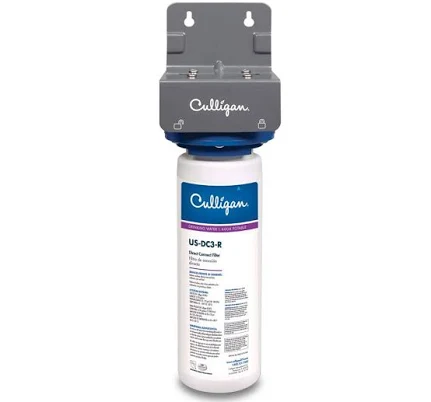
Culligan US-DC3 Direct Connect Under-Sink Water Filtration System
Lower concern for PFAS; standard carbon design typically avoids Teflon-family coating.
The US-DC3 uses replaceable carbon and sediment filter cartridges with polypropylene housing, established materials not typically treated with PFAS coatings. However, Culligan discloses no PFAS absence or holds no third-party verification.
We flunk more products than we pass. This one earned its grade. How we grade
Material
Carbon/sediment filter cartridges, polypropylene housing
Lab data
No public lab test
You may also be interested in
Top-graded picks in the categories readers replace first, every one scored on the same rubric.

Aqua Pure
3M Aqua-Pure AP802B Whole House Filter Housing
- polypropylene filter housing, carbon/sediment cartridge
- We found no PFAS statement from the brand
- Bacterial growth in spent cartridges
3 hazards checked on this product. See all of them.

Aquasure
Premier Series 75 GPD Under Sink Reverse Osmosis Water Filtration System
- RO membrane, carbon filters, stainless steel housing
- We found no PFAS statement from the brand
- Bacterial and microbial growth in housing and filters
4 hazards checked on this product. See all of them.

Avocado
Vegan Mattress
- organic cotton, natural latex, coconut coir, recycled steel coils
- The brand calls it PFAS-free, which we have not verified
- Heavy metals
2 hazards checked on this product. See all of them.
What Culligan US-DC3 Direct Connect Under-Sink is made of, ingredients and materials
The Culligan US-DC3 uses activated carbon and sediment filter media housed in polypropylene (PP) plastic. Activated carbon is chemically inert and does not leach when in contact with water at ambient temperature. Polypropylene housing is stable in cold water; formaldehyde and volatile organics are not materials linked to polypropylene off-gassing under normal under-sink conditions where temperatures remain below 50°C. The direct-connect design minimizes exposed tubing and fittings that might introduce secondary contamination.
What’s concerning
No PFAS disclosure
No public statement from the brand about PFAS in this product.
Bacterial contamination in filter housing
Carbon filters can harbor biofilm if not replaced regularly or if system sits unused for extended periods. Culligan does not provide explicit maintenance intervals or antimicrobial treatment data for the US-DC3 housing. Risk is lower with direct-connect design than with exposed tubing.
Carbon filter dust and particulate migration
Newly installed or improperly flushed carbon cartridges may release fine black particles (activated carbon dust) into water. Culligan cartridges carry standard flush-before-use instructions, but compliance is user-dependent. This is a nuisance rather than a toxicity issue but can indicate improper installation.
Activated carbon saturation and contaminant breakthrough
Activated carbon capacity is finite and depends on source-water contamination levels. Once saturated, the filter ceases to remove contaminants effectively. Culligan provides no water-quality testing or smart-replacement indicators; users must guess based on time and use. Skipping replacement cycles can leave contaminants like chlorine, VOCs, or pesticides unfiltered.
What’s reassuring
Base material not linked to PFAS
The main material recorded for this product is not one associated with PFAS.
Polypropylene housing leaching
Polypropylene is stable in cold water and does not typically leach BPA, phthalates, or other endocrine disruptors under standard use. No recalls or reports of leaching from the US-DC3 housing are on record. However, prolonged exposure to warm water or acidic conditions could theoretically increase migration risk; manufacturer guidance limits use to ambient temperature.
Tubing and connection material hazard (secondary)
The US-DC3 direct-connect design minimizes exposed tubing, lowering risk of leaching from vinyl or rubber connectors. Culligan does not publicly detail tubing composition, but standard food-grade polyethylene or silicone in under-sink systems poses negligible cold-water risk. No recalls or complaints specific to tubing leaching are on record.
The full breakdown
The brand's record and disclosure
Culligan is a major filtration brand with long market presence but has not published explicit PFAS testing data or a commitment to PFOA/PFOS avoidance for this model. The company holds NSF certifications for some product lines, though specific third-party validation for the US-DC3 is not widely documented in public sources. No product recalls related to leaching, bacterial contamination, or material failure have been established for this model in available records. Culligan's transparency on chemical composition is typical of the industry but below leaders like BRITA or PUR in disclosure detail.
How it compares in its category
Under-sink carbon filters are generally lower-risk than pitcher filters because they avoid repeated handling and heating of filter media. The US-DC3 sits in the mid-market range, simpler and cheaper than activated-carbon-plus-ion-exchange systems from brands like Aqua-Pure, but offering more capacity than basic faucet-mount filters. Direct-connect systems reduce air exposure during filter changes, lowering bacterial regrowth risk compared to gravity-fed alternatives. Price and replacement-cartridge availability are competitive.
If you buy it
Replace cartridges every 3 to 6 months depending on water hardness and volume, or sooner if flow slows noticeably. Store replacement cartridges in a cool, dry place away from direct sunlight to prevent carbon degradation. Before first use, flush the system for 5 minutes to clear carbon dust and activate the filter. Do not use this system to filter water above 38°C (100°F), as heat can degrade carbon performance and housing integrity; it is not suitable for hot-water dispensers.
What we don’t know
- Basis
- Model estimate, 72% confidence, not a lab result
- Lab test
- None on record for this exact product
- Brand statement
- Culligan has made a specific claim
Formulations change between production runs, so check the current label. How we grade.
Better-graded alternatives in Water Filters

Aquamira
Water Storage Treatment 2 oz Glass Bottles 60 gallons Purification
- glass bottles, sodium dichloroisocyanurate treatment chemical
- We found no PFAS statement from the brand
- Chemical overdose or misuse
5 hazards checked on this product. See all of them.

Big Berkey
Empty Housing with NO Filters Included
- Stainless steel housing and spigot
- We found no PFAS statement from the brand
- Bacterial growth and biofilm if filters not replaced
5 hazards checked on this product. See all of them.

LifeStraw
Home Glass Water Filter Pitcher
- Borosilicate glass pitcher, replaceable activated-carbon filter cartridge
- Bacterial growth in filter cartridge if unmaintained
5 hazards checked on this product. See all of them.
More water filters grades
How we score, every product runs through the same public 0-100 rubric based on materials, coatings, brand disclosure, lab findings, and recalls. See the full methodology → Spotted a mistake? Report an error.