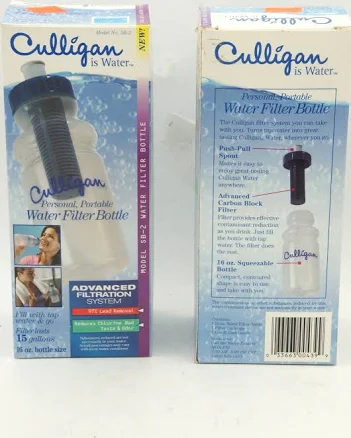
Culligan Water Filter Bottles Personal Portable Two Pack
Lower-concern option; no known PFAS hotspots but brand transparency is absent.
Culligan's portable water filter bottles combine activated carbon filters with plastic housings, neither typically containing PFAS. The brand offers no public statements about PFAS testing or material sourcing.
We flunk more products than we pass. This one earned its grade. How we grade
Material
Plastic bottle housing, carbon/activated carbon filter media
Lab data
No public lab test
You may also be interested in
Top-graded picks in the categories readers replace first, every one scored on the same rubric.

Aqua Pure
3M Aqua-Pure AP802B Whole House Filter Housing
- polypropylene filter housing, carbon/sediment cartridge
- We found no PFAS statement from the brand
- Bacterial growth in spent cartridges
3 hazards checked on this product. See all of them.

Aquasure
Premier Series 75 GPD Under Sink Reverse Osmosis Water Filtration System
- RO membrane, carbon filters, stainless steel housing
- We found no PFAS statement from the brand
- Bacterial and microbial growth in housing and filters
4 hazards checked on this product. See all of them.

Avocado
Vegan Mattress
- organic cotton, natural latex, coconut coir, recycled steel coils
- The brand calls it PFAS-free, which we have not verified
- Heavy metals
2 hazards checked on this product. See all of them.
What Culligan Water Filter Bottles Personal is made of, ingredients and materials
This product consists of a plastic bottle housing (likely polypropylene or tritan copolyester) and replaceable activated carbon filter cartridges. The housing material itself poses no known leaching risk under normal cold-water use. Activated carbon is inert and food-safe; it does not shed microplastics into water in normal operation, though physical degradation of filter media over many months can theoretically release fine carbon particles if the cartridge cracks.
What’s concerning
No PFAS disclosure
No public statement from the brand about PFAS in this product.
Microbial growth (mold, bacteria) in filter media
If the bottle is stored wet or used infrequently, the carbon filter cartridge can accumulate mold or bacterial films. This is a storage and maintenance issue, not a manufacturing defect, and is preventable through air-drying and timely cartridge replacement.
Activated carbon filter media shedding
Fine carbon particles can theoretically be released if the filter cartridge cracks or degrades with age. This is cosmetically objectionable but poses no established health risk; replacement before failure eliminates this risk.
Degradation of plastic housing from heat or UV
Polypropylene and copolyester plastics can become brittle or leach compounds if exposed to hot water, direct sunlight, or freezing temperatures over extended periods. This is a durability issue but can lead to leakage or micro-crack formation.
What’s reassuring
Base material not linked to PFAS
The main material recorded for this product is not one associated with PFAS.
BPA & bisphenols
No public testing or recalls document leaching from Culligan's bottle housing material under normal cold-water use. Most modern portable bottles use BPA-free plastics (polypropylene or Tritan), but Culligan does not explicitly certify material composition for this product.
Source, FDA ↗The full breakdown
The brand's record and disclosure
Culligan is a long-established water treatment company with a parent company (Culligan International) that does not prominently publish third-party certification data or detailed material safety documentation for consumer bottle products. No major recalls or safety incidents have been publicly recorded for Culligan portable filter bottles. The company does not publicly disclose PFAS testing or mitigation for this product category, which is typical for the portable bottle market but represents a gap in transparency.
How it compares in its category
Portable filter bottles are among the lowest-risk water container categories because they use passive carbon filtration without electronics, heated seals, or complex coatings. Culligan's design is conventional and functionally identical to LifeStraw, Waterdrop, and store-brand equivalents. All such products carry the same small risk of filter mold if not dried between uses; none have documented microplastic or leaching issues under typical use.
If you buy it
Do not expose the bottle to hot water above 140F (60C), as most plastic housings can degrade. Replace the filter cartridge every 40-100 gallons or every 2-3 months, whichever comes first, following the label instructions. Always allow the bottle to air-dry completely after use and do not store it wet or in a sealed state, as stagnant moisture inside the filter can promote bacterial or mold growth. If the filter media appears discolored, cracked, or develops odor, discard it immediately.
What we don’t know
- Basis
- Model estimate, 72% confidence, not a lab result
- Lab test
- None on record for this exact product
- Brand statement
- Culligan has made a specific claim
Formulations change between production runs, so check the current label. How we grade.
Better-graded alternatives in Water Filters

Aquamira
Water Storage Treatment 2 oz Glass Bottles 60 gallons Purification
- glass bottles, sodium dichloroisocyanurate treatment chemical
- We found no PFAS statement from the brand
- Chemical overdose or misuse
5 hazards checked on this product. See all of them.

Big Berkey
Empty Housing with NO Filters Included
- Stainless steel housing and spigot
- We found no PFAS statement from the brand
- Bacterial growth and biofilm if filters not replaced
5 hazards checked on this product. See all of them.

LifeStraw
Home Glass Water Filter Pitcher
- Borosilicate glass pitcher, replaceable activated-carbon filter cartridge
- Bacterial growth in filter cartridge if unmaintained
5 hazards checked on this product. See all of them.
More water filters grades
How we score, every product runs through the same public 0-100 rubric based on materials, coatings, brand disclosure, lab findings, and recalls. See the full methodology → Spotted a mistake? Report an error.