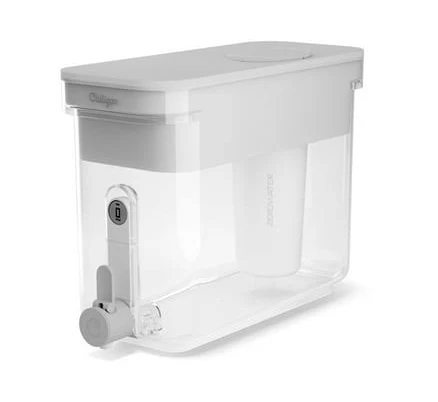
Culligan ZeroWater Technology 33-Cup Water Filter Dispenser
Lower PFAS concern than treated textiles/cookware, but plastic/filter material disclosure gaps limit confidence.
ZeroWater's core filtration technology uses carbon and ion-exchange resins with lower inherent PFAS risk than Teflon-family coating coatings. Culligan provides no public statement on PFAS presence or absence in the plastic reservoir or proprietary filter matrix.
We flunk more products than we pass. This one earned its grade. How we grade
Material
plastic reservoir, carbon/ion-exchange filter media
Lab data
No public lab test
You may also be interested in
Top-graded picks in the categories readers replace first, every one scored on the same rubric.

Aqua Pure
3M Aqua-Pure AP802B Whole House Filter Housing
- polypropylene filter housing, carbon/sediment cartridge
- We found no PFAS statement from the brand
- Bacterial growth in spent cartridges
3 hazards checked on this product. See all of them.

Aquasure
Premier Series 75 GPD Under Sink Reverse Osmosis Water Filtration System
- RO membrane, carbon filters, stainless steel housing
- We found no PFAS statement from the brand
- Bacterial and microbial growth in housing and filters
4 hazards checked on this product. See all of them.

Avocado
Vegan Mattress
- organic cotton, natural latex, coconut coir, recycled steel coils
- The brand calls it PFAS-free, which we have not verified
- Heavy metals
2 hazards checked on this product. See all of them.
What Culligan ZeroWater Technology 33-Cup is made of, ingredients and materials
The ZeroWater dispenser uses a plastic reservoir (material type not specified by Culligan in public documentation, typical of this category) paired with a multi-stage filter cartridge combining activated carbon and ion-exchange resin. The plastic housing is not heated during use, which eliminates the primary risk vector for BPA or other plasticizer leaching. The filter media itself is solid granular material and not designed to shed microplastics into filtered water under normal conditions.
What’s concerning
No PFAS disclosure
No public statement from the brand about PFAS in this product.
Bacterial biofilm growth in filter cartridge and housing
Any pitcher filter with standing water risks stagnation and microbial colonization if not maintained regularly. This is a use-dependent hazard, not a manufacturing defect. Proper cartridge replacement and reservoir cleaning eliminate it.
Activated carbon dust or fines in first-use water
A small amount of carbon dust may release during initial cartridge installation or first pour. Running water through a new cartridge for 30-60 seconds before drinking water is standard practice and mitigates this minor issue.
What’s reassuring
Base material not linked to PFAS
The main material recorded for this product is not one associated with PFAS.
BPA & bisphenols
No heating of the reservoir occurs during normal use, and plastic composition is not disclosed as problematic by regulatory bodies. Risk is lower than for hot-beverage pitchers, but material identity is not publicly specified by Culligan, limiting confident assessment.
Source, FDA ↗Ion-exchange resin degradation and shedding
Ion-exchange resin is chemically stable when used within design parameters (room temperature, neutral pH water). No public data indicates shedding of resin particles into the filtered water under normal conditions.
Cartridge disposal (environmental, not personal health)
Spent cartridges contain saturated ion-exchange resin and carbon; they are not hazardous waste in most jurisdictions but are rarely recyclable. This is an environmental, not consumer safety, concern.
The full breakdown
The brand's record and disclosure
Culligan provides minimal transparency on plastic composition and cartridge material sourcing. The company does not publish third-party safety certifications (NSF, WQA) for this specific model on standard retail listings, though some ZeroWater products carry NSF marks elsewhere. No documented recalls or contamination incidents involving this dispenser have been publicly recorded. Culligan's parent company (Culliverse AB) has not issued formal PFAS-reduction commitments.
How it compares in its category
Pitcher filters like this occupy the middle ground, lower concern than unfiltered tap (no added chemical risk) but dependent on cartridge replacement compliance and water source quality. Compared to reverse-osmosis systems, pitcher filters generate less wastewater but offer less contaminant removal. Ion-exchange resin is a standard, well-established filtration medium with no known health risks when used in closed systems. The 33-cup size is larger than typical pitchers, reducing replacement frequency and user handling of cartridges.
If you buy it
Replace cartridges every 2-3 months or when flow slows visibly; unused cartridges stored in dry conditions have lower microbial concern than water-soaked ones sitting in warm kitchens (which can harbor bacterial biofilm). Do not leave standing water in the reservoir overnight without use; empty and air-dry weekly if the dispenser sits idle. Ensure tap water is reasonably clean before filtering (sediment-heavy sources may clog resin faster). Store the dispenser away from direct sunlight and heat sources to minimize any potential low-level plastic off-gassing.
What we don’t know
- Basis
- Model estimate, 62% confidence, not a lab result
- Lab test
- None on record for this exact product
- Brand statement
- Culligan has made a specific claim
Formulations change between production runs, so check the current label. How we grade.
Better-graded alternatives in Water Filters

Aquamira
Water Storage Treatment 2 oz Glass Bottles 60 gallons Purification
- glass bottles, sodium dichloroisocyanurate treatment chemical
- We found no PFAS statement from the brand
- Chemical overdose or misuse
5 hazards checked on this product. See all of them.

Big Berkey
Empty Housing with NO Filters Included
- Stainless steel housing and spigot
- We found no PFAS statement from the brand
- Bacterial growth and biofilm if filters not replaced
5 hazards checked on this product. See all of them.

LifeStraw
Home Glass Water Filter Pitcher
- Borosilicate glass pitcher, replaceable activated-carbon filter cartridge
- Bacterial growth in filter cartridge if unmaintained
5 hazards checked on this product. See all of them.
More water filters grades
How we score, every product runs through the same public 0-100 rubric based on materials, coatings, brand disclosure, lab findings, and recalls. See the full methodology → Spotted a mistake? Report an error.