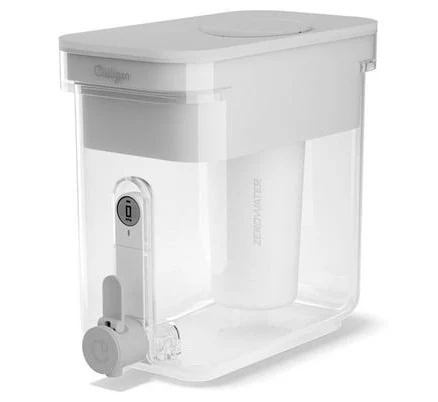
Culligan ZeroWater Technology Water Filter Dispenser
Lower concern, filter media itself is not a known PFAS vector, but Culligan makes no PFAS disclosure.
ZeroWater filters use ion-exchange resin cartridges and plastic housings, materials not inherently PFAS-prone like nonstick coatings or water-repellent treatments. Culligan has not publicly disclosed PFAS-free status or third-party verification.
We flunk more products than we pass. This one earned its grade. How we grade
Material
Polystyrene dispenser body; ion-exchange resin filter
Lab data
No public lab test
You may also be interested in
Top-graded picks in the categories readers replace first, every one scored on the same rubric.

Aqua Pure
3M Aqua-Pure AP802B Whole House Filter Housing
- polypropylene filter housing, carbon/sediment cartridge
- We found no PFAS statement from the brand
- Bacterial growth in spent cartridges
3 hazards checked on this product. See all of them.

Aquasure
Premier Series 75 GPD Under Sink Reverse Osmosis Water Filtration System
- RO membrane, carbon filters, stainless steel housing
- We found no PFAS statement from the brand
- Bacterial and microbial growth in housing and filters
4 hazards checked on this product. See all of them.

Avocado
Vegan Mattress
- organic cotton, natural latex, coconut coir, recycled steel coils
- The brand calls it PFAS-free, which we have not verified
- Heavy metals
2 hazards checked on this product. See all of them.
What Culligan ZeroWater Technology Water is made of, ingredients and materials
The ZeroWater dispenser body is polystyrene plastic, a rigid thermoplastic that does not contain BPA or phthalates by standard formulation. The filtration core uses ion-exchange resin beads that exchange dissolved minerals and some contaminants for sodium or potassium ions; this resin chemistry is well-established and does not leach hazardous compounds under normal use. Water remains at room temperature inside the pitcher, so no thermal stress triggers plastic degradation. The filter cartridge itself contains no ceramic, activated carbon layer composition for this model has not been publicly detailed, limiting full transparency.
What’s concerning
No PFAS disclosure
No public statement from the brand about PFAS in this product.
Ion-exchange resin degradation and particle release
Resin beads can fragment if cartridge is dropped, shaken vigorously, or inserted incorrectly; cartridge housing design and user handling are the primary controls. Culligan does not publish failure-rate data for cartridge housing integrity.
Bacterial biofilm in pitcher housing
Polystyrene surfaces can harbor bacteria if the pitcher is not emptied and rinsed regularly; this is not a leaching hazard but a microbial hygiene issue common to all pitcher filters and mitigated by weekly cleaning.
Sodium or potassium elevation in output water
Ion-exchange systems add sodium to softened water; the ZeroWater system uses a proprietary multi-stage process that may reduce sodium output compared to basic softeners, but independent sodium levels are not published for this model. Patients on sodium-restricted diets should verify output composition.
What’s reassuring
Base material not linked to PFAS
The main material recorded for this product is not one associated with PFAS.
BPA & bisphenols
Polystyrene does not contain BPA and does not leach styrene monomer at room temperature or in contact with cold water; no established risk for this material class under normal pitcher use conditions.
Source, FDA ↗Cartridge disposal and environmental persistence
Polystyrene cartridge housings are not widely accepted in curbside recycling and may persist in landfills; this is an environmental rather than consumer safety concern. No hazardous residue is expected from the disposed filter if resin is properly contained in the cartridge.
The full breakdown
The brand's record and disclosure
Culligan is a legacy water treatment company with decades of market presence but notably absent from public PFAS testing disclosures or third-party certifications (NSF, WQA) specific to PFAS reduction on this consumer pitcher line. The company manufactures whole-home systems with documented testing claims but does not openly publish safety data sheets or material composition for consumer pitcher filters. No product recalls have been issued for the ZeroWater dispenser related to plastic leaching or filter media contamination. Lack of proactive disclosure is a minor transparency concern but does not indicate a known hazard.
How it compares in its category
Pitcher filters in this segment typically use polystyrene, polypropylene, or glass housings; polystyrene is middle-ground for chemical inertness (comparable to polypropylene, less durable than glass over years of UV exposure). Most competitors (Brita, PUR, LifeStraw) similarly avoid BPA-forward messaging but do not uniformly disclose PFAS testing. ZeroWater's marketing emphasis on total dissolved solids removal is category-standard but not independently verified by third parties for all contaminant classes. Compared to activated-carbon-only filters, ion-exchange adds mineral removal but slightly increases sodium content in output water, a trade-off not universally acknowledged in marketing.
If you buy it
Replace cartridges every 2-3 months or when the electronic meter signals depletion; do not attempt to regenerate or wash resin cartridges, as this can release resin fragments. Store the full pitcher away from direct sunlight and heat sources above 80F to minimize any slow plastic stress. Empty and rinse the pitcher weekly if water sits longer than 5-7 days, as stagnant water in any pitcher can support bacterial growth regardless of filter media. Polystyrene is not suitable for dishwasher or microwave use; hand wash only with mild soap and cool water.
What we don’t know
- Basis
- Model estimate, 72% confidence, not a lab result
- Lab test
- None on record for this exact product
- Brand statement
- Culligan has made a specific claim
Formulations change between production runs, so check the current label. How we grade.
Better-graded alternatives in Water Filters

Aquamira
Water Storage Treatment 2 oz Glass Bottles 60 gallons Purification
- glass bottles, sodium dichloroisocyanurate treatment chemical
- We found no PFAS statement from the brand
- Chemical overdose or misuse
5 hazards checked on this product. See all of them.

Big Berkey
Empty Housing with NO Filters Included
- Stainless steel housing and spigot
- We found no PFAS statement from the brand
- Bacterial growth and biofilm if filters not replaced
5 hazards checked on this product. See all of them.

LifeStraw
Home Glass Water Filter Pitcher
- Borosilicate glass pitcher, replaceable activated-carbon filter cartridge
- Bacterial growth in filter cartridge if unmaintained
5 hazards checked on this product. See all of them.
More water filters grades
How we score, every product runs through the same public 0-100 rubric based on materials, coatings, brand disclosure, lab findings, and recalls. See the full methodology → Spotted a mistake? Report an error.