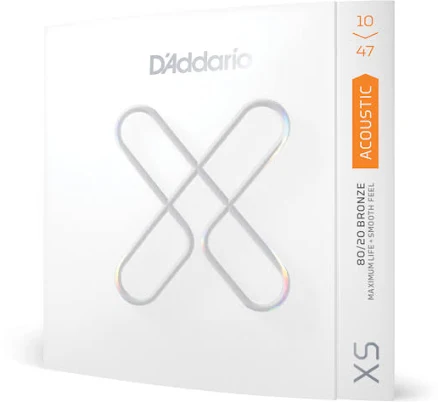
D'Addario Acoustic Bronze Guitar Strings
Lower PFAS concern; standard string material composition poses minimal exposure risk.
D'Addario Acoustic Bronze strings use phosphor bronze winding and steel core, neither typically associated with intentional PFAS use. No water-repellency or stain-resistant treatment is disclosed or expected for guitar strings.
We flunk more products than we pass. This one earned its grade. How we grade
Material
Phosphor bronze wound over steel hex core
Brand disclosure
Brand is silent on PFAS
Lab data
No public lab test
You may also be interested in
Top-graded picks in the categories readers replace first, every one scored on the same rubric.

- polypropylene filter housing, carbon/sediment cartridge
- We found no PFAS statement from the brand
- Bacterial growth in spent cartridges
3 hazards checked on this product, all on its full breakdown.

Aquasure
Premier Series 75 GPD Under Sink Reverse Osmosis Water Filtration System
- RO membrane, carbon filters, stainless steel housing
- We found no PFAS statement from the brand
- Bacterial and microbial growth in housing and filters
4 hazards checked on this product, all on its full breakdown.

Avocado
Vegan Mattress
- organic cotton, natural latex, coconut coir, recycled steel coils
- The brand calls it PFAS-free, which we have not verified
- Heavy metals
2 hazards checked on this product, all on its full breakdown.
What D'Addario Acoustic Bronze Guitar Strings is made of, ingredients and materials
D'Addario Acoustic Bronze strings use phosphor bronze wire wound around a hex steel core. Phosphor bronze is an alloy of copper, tin, and small amounts of phosphorus, chosen for acoustic instruments because it produces warm tone and resists corrosion better than plain bronze. The steel hex core provides structural integrity and tuning stability. This material composition is inert under normal playing conditions and does not leach into skin or saliva during use.
What’s concerning
Category baseline
The starting point for this type of product, before anything specific to this product is counted.
No PFAS disclosure
No public statement from the brand about PFAS in this product.
Manufacturing residue or contaminants (oils, lubricants, solder flux)
New strings may carry light machine oils, drawing lubricants, or manufacturing dust; D'Addario does not disclose cleaning protocols. Rinsing new strings briefly with water or wiping with a cloth before use is a common precaution but not required for safety.
Nickel exposure from steel core (for nickel-sensitive individuals)
Steel hex cores typically contain nickel as a hardening agent. Contact with strings is brief and dermally absorbed nickel is minimal, but individuals with severe nickel dermatitis may experience mild skin irritation on fingertips; alternative materials (pure copper core, nylon) are available from other brands if needed.
What’s reassuring
Base material not linked to PFAS
The main material recorded for this product is not one associated with PFAS.
Heavy metals
Phosphor bronze is inert in the presence of skin oils and saliva during normal playing. No documented cases of copper or tin toxicity from acoustic string use exist; the contact duration and surface area are minimal compared to ingestion or chronic occupational exposure.
Source, FDA ↗Steel core rust or corrosion byproducts
The hex steel core is sealed by the wound bronze layer and is not exposed to skin or mouth during play. Rust forms only when strings are stored in high humidity or after extended use; this degrades tone but does not create an acute chemical hazard.
Volatile organic compounds (VOC) off-gassing
Uncoated strings such as D'Addario's standard bronze line do not employ polymer coatings that off-gas; some competitor brands (Elixir, coated lines) use polymer wraps that may emit minimal VOCs, but this product avoids that concern.
How is this PFAS grade calculated?
The brand's record and disclosure
D'Addario is a long-established string manufacturer (founded 1974) with no documented safety recalls, contamination incidents, or regulatory warnings specific to their acoustic bronze line. The company does not publish detailed chemical composition disclosures or third-party safety certifications for strings, which is typical for the instrument accessory industry. No controversies regarding heavy metals, coatings, or manufacturing practices are on record for this product line.
How it compares in its category
Phosphor bronze is the industry standard for acoustic guitar strings and is chemically similar across major brands (Elixir, Martin, GHS, Fender). D'Addario's formulation is conventional; the main material-safety variable across brands is the type of core coating (some use polymer coatings that may off-gas), but D'Addario's uncoated hex core avoids that concern. Nylon or steel-only alternatives pose their own trade-offs (tone, durability) rather than safety advantages.
If you buy it
No special precautions are required during normal playing. Store strings in a cool, dry place to slow oxidation and corrosion; humidity accelerates darkening but does not create a safety hazard. Replace strings every 1-3 months depending on playing frequency and climate; worn strings sound dull and may break unexpectedly, not because of chemical degradation but mechanical fatigue. Wash hands after playing if you have sensitive skin, as new strings can leave fine metal particles on fingertips.
What is not known about PFAS in this product?
- Basis
- Model estimate, 78% confidence, not a lab result
- Lab test
- None on record for this exact product
- Brand statement
- D'Addario has made none
Formulations change between production runs, so check the current label. How we grade.
More guitar strings grades
How we score, every product runs through the same public 0-100 rubric based on materials, coatings, brand disclosure, lab findings, and recalls. See the full methodology → Spotted a mistake? Report an error.