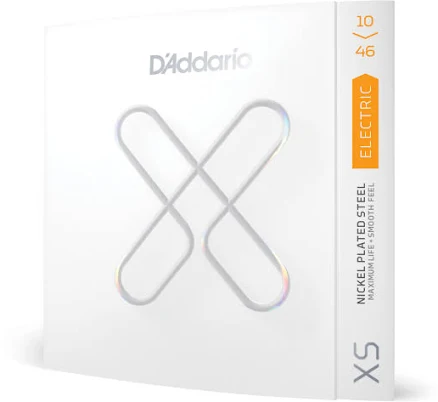
D'Addario Electric Guitar Strings Nickel
Lower PFAS concern; traditional guitar strings use established metallic coatings, not Teflon-family coating.
D'Addario electric strings use nickel-brass winding, a conventional material used in strings for decades. No PFAS-containing coatings apply to this product category, and the material composition carries lower risk than coated items.
We flunk more products than we pass. This one earned its grade. How we grade
Material
Nickel-plated steel core with nickel-brass wound exterior
Brand disclosure
Brand is silent on PFAS
Lab data
No public lab test
You may also be interested in
Top-graded picks in the categories readers replace first, every one scored on the same rubric.

- polypropylene filter housing, carbon/sediment cartridge
- We found no PFAS statement from the brand
- Bacterial growth in spent cartridges
3 hazards checked on this product, all on its full breakdown.

Aquasure
Premier Series 75 GPD Under Sink Reverse Osmosis Water Filtration System
- RO membrane, carbon filters, stainless steel housing
- We found no PFAS statement from the brand
- Bacterial and microbial growth in housing and filters
4 hazards checked on this product, all on its full breakdown.

Avocado
Vegan Mattress
- organic cotton, natural latex, coconut coir, recycled steel coils
- The brand calls it PFAS-free, which we have not verified
- Heavy metals
2 hazards checked on this product, all on its full breakdown.
What D'Addario Electric Guitar Strings Nickel is made of, ingredients and materials
D'Addario Electric Nickel strings use a steel core wound with nickel-brass (a copper-nickel alloy), a standard construction for electric guitar strings for over 50 years. The nickel plating serves as a corrosion barrier and tonal modifier. This is a mature, well-understood material system with no known leaching or degradation hazards under normal playing conditions, since the strings remain external to food/water systems and contact skin only briefly during handling and play.
What’s concerning
Category baseline
The starting point for this type of product, before anything specific to this product is counted.
No PFAS disclosure
No public statement from the brand about PFAS in this product.
Nickel skin contact sensitivity
Nickel is a known contact allergen. Players with nickel hypersensitivity may experience dermatitis on fingertips and palm area during extended play. This is a user-dependent reaction, not a defect in D'Addario's product, and affects only a small percentage of musicians.
Coating degradation and core exposure
Over time, the nickel plating wears through normal play, exposing the steel core underneath. Once exposed, the steel oxidizes visibly (rust spots), reducing playability and tone but posing no ingestion risk since strings remain outside the body.
What’s reassuring
Base material not linked to PFAS
The main material recorded for this product is not one associated with PFAS.
Heavy metals
No evidence that D'Addario strings leach detectable nickel or copper into food, water, or skin under normal use. Strings do not contact food or drink, and brief skin contact during play does not constitute meaningful metal transfer.
Source, FDA ↗Microplastic or polymer shedding
D'Addario Nickel strings are metal-only (no polymer wrap or synthetic coating), so there is no plastic shedding risk. Coated string variants would introduce a minor microplastic question, but this standard product avoids that.
Corrosion byproducts inhalation
Nickel strings do not produce airborne particles or fumes during normal playing. Corrosion is surface-level and does not generate volatile compounds or respirable dust.
How is this PFAS grade calculated?
The brand's record and disclosure
D'Addario is a major, publicly traded instrument manufacturer (acquired by Berklee College parent entity in 2014) with general ISO 9001 quality certification and music-industry reputation for consistency. The company does not publish dedicated PFAS or hazardous substance disclosures for strings, which is typical for the instrument accessory category. No recalls, safety controversies, or regulatory actions specific to their nickel string formulation are on record.
How it compares in its category
D'Addario Nickel strings are among the most widely used electric strings globally and represent the baseline commodity product. Alternatives include stainless steel (slightly different corrosion/tone profile), coated strings (polymer wrap adds complexity but no established safety advantage), and pure nickel (vintage tone, higher cost). D'Addario Nickel occupies the sweet spot of affordability, availability, and proven long-term use without documented hazards.
If you buy it
Replace strings when they lose brightness, feel rough, or show visible corrosion spots; typical lifespan is 1-3 months with heavy play. Wash hands after playing to remove residual sweat, which accelerates corrosion. Store in a dry environment to minimize rust on the core before installation. No special disposal precautions are needed; strings are non-hazardous waste.
What is not known about PFAS in this product?
- Basis
- Model estimate, 82% confidence, not a lab result
- Lab test
- None on record for this exact product
- Brand statement
- D'Addario has made none
Formulations change between production runs, so check the current label. How we grade.
More guitar strings grades
How we score, every product runs through the same public 0-100 rubric based on materials, coatings, brand disclosure, lab findings, and recalls. See the full methodology → Spotted a mistake? Report an error.