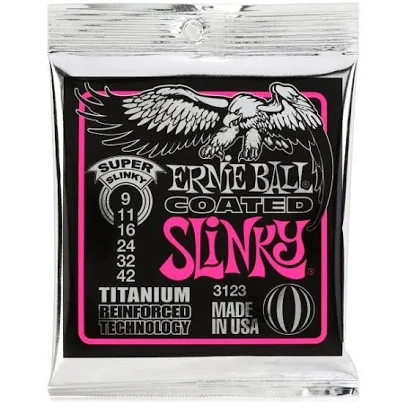
Ernie Ball Super Slinky Electric Guitar Strings
Low concern; traditional metal guitar strings carry no known PFAS risk profile.
Steel and nickel-plated construction used here has no established PFAS connection in guitar string making. The brand offers no PFAS disclosure, and no recalls or public testing exist.
We flunk more products than we pass. This one earned its grade. How we grade
Material
Steel core with nickel-plated wound strings
Brand disclosure
Brand is silent on PFAS
Lab data
No public lab test
You may also be interested in
Top-graded picks in the categories readers replace first, every one scored on the same rubric.

- polypropylene filter housing, carbon/sediment cartridge
- We found no PFAS statement from the brand
- Bacterial growth in spent cartridges
3 hazards checked on this product, all on its full breakdown.

Aquasure
Premier Series 75 GPD Under Sink Reverse Osmosis Water Filtration System
- RO membrane, carbon filters, stainless steel housing
- We found no PFAS statement from the brand
- Bacterial and microbial growth in housing and filters
4 hazards checked on this product, all on its full breakdown.

Avocado
Vegan Mattress
- organic cotton, natural latex, coconut coir, recycled steel coils
- The brand calls it PFAS-free, which we have not verified
- Heavy metals
2 hazards checked on this product, all on its full breakdown.
What Ernie Ball Super Slinky Guitar Strings is made of, ingredients and materials
Ernie Ball Super Slinky strings use a steel core wound with nickel-plated steel. Nickel plating is the industry standard for electric guitar strings because it resists corrosion and provides tone brightness and durability. The steel core itself is inert under normal playing conditions. No chemical treatments, resins, or coatings beyond the nickel plating are applied, which keeps the hazard profile straightforward.
What’s concerning
Category baseline
The starting point for this type of product, before anything specific to this product is counted.
No PFAS disclosure
No public statement from the brand about PFAS in this product.
Nickel skin contact / allergy
Nickel-plated strings can trigger contact dermatitis in individuals with nickel sensitivity, especially during long playing sessions. This is a known and accepted trade-off in the electric string industry; users with known nickel allergy may opt for stainless-steel alternatives, though Super Slinky itself does not disclose the nickel content or thickness of its plating.
What’s reassuring
Base material not linked to PFAS
The main material recorded for this product is not one associated with PFAS.
Metal corrosion and oxidation residue
As strings age and the nickel plating wears, exposed steel oxidizes. Rust particles and corroded metal residue can accumulate on fingers and fretboard but pose no documented systemic health risk. This is cosmetic and tonal degradation, not a toxicological hazard.
Packaging and storage leachables
Strings ship in paper and plastic wrapping. No documented hazards from packaging materials in contact with nickel-plated steel strings; the strings themselves do not absorb or release chemicals in storage.
Lead
No recalls, testing, or public allegations of lead or cadmium contamination in Ernie Ball strings exist. Industry standard is nickel plating without prohibited heavy metals, though the company does not independently verify this in marketing materials.
Source, ATSDR ↗How is this PFAS grade calculated?
The brand's record and disclosure
Ernie Ball is a long-established manufacturer (founded 1962) with no documented product recalls, safety violations, or material transparency controversies specific to guitar strings. The company does not publish detailed material safety data sheets or third-party test reports for consumer strings. No certifications or independent audits are on record for this product line.
How it compares in its category
Super Slinky is a mid-range gauge set using conventional nickel-plating, identical in construction to most mass-market electric strings from D'Addario, Fender, and GHS. Premium alternatives sometimes use coated strings (adding polymer layers that can degrade over time) or exotic core materials, which introduce no safety advantage but add cost. Super Slinky sits in the standard, well-proven material tier.
If you buy it
Replace strings every 3 months or when tone dullness or corrosion becomes visible; nickel plating can wear and expose steel underneath. Store in a cool, dry place to slow oxidation. Wash hands before playing to reduce salt and oil buildup that accelerates corrosion. No special handling needed; nickel-plated steel does not leach or off-gas under normal string tension and body heat.
What is not known about PFAS in this product?
- Basis
- Model estimate, 78% confidence, not a lab result
- Lab test
- None on record for this exact product
- Brand statement
- Ernie Ball has made none
Formulations change between production runs, so check the current label. How we grade.
More guitar strings grades
How we score, every product runs through the same public 0-100 rubric based on materials, coatings, brand disclosure, lab findings, and recalls. See the full methodology → Spotted a mistake? Report an error.