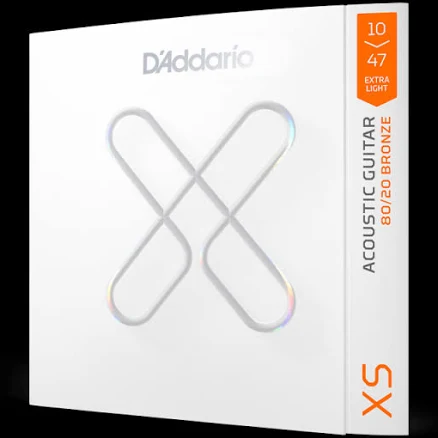
D'Addario Acoustic Guitar Strings XS 80/20 Bronze Coated
Lower concern; acoustic guitar strings composed of well-established metals with no known PFAS use.
D'Addario XS strings are bronze-core wire with bronze coating. No established reason PFAS chemicals would be used in acoustic guitar string manufacture, and the material composition carries minimal PFAS risk.
We flunk more products than we pass. This one earned its grade. How we grade
Material
80/20 Bronze (copper-tin alloy) with phosphor-bronze coating
Brand disclosure
Brand is silent on PFAS
Lab data
No public lab test
You may also be interested in
Top-graded picks in the categories readers replace first, every one scored on the same rubric.

- polypropylene filter housing, carbon/sediment cartridge
- We found no PFAS statement from the brand
- Bacterial growth in spent cartridges
3 hazards checked on this product, all on its full breakdown.

Aquasure
Premier Series 75 GPD Under Sink Reverse Osmosis Water Filtration System
- RO membrane, carbon filters, stainless steel housing
- We found no PFAS statement from the brand
- Bacterial and microbial growth in housing and filters
4 hazards checked on this product, all on its full breakdown.

Avocado
Vegan Mattress
- organic cotton, natural latex, coconut coir, recycled steel coils
- The brand calls it PFAS-free, which we have not verified
- Heavy metals
2 hazards checked on this product, all on its full breakdown.
What D'Addario Acoustic Guitar Bronze Coated is made of, ingredients and materials
D'Addario XS strings use an 80/20 bronze core (copper-tin alloy) with a phosphor-bronze coating. These are metals with decades of use in stringed instruments; neither copper nor tin leaches into food or skin under normal playing conditions, and both are essential dietary minerals in trace amounts. The coating protects the core from corrosion and extends string life without introducing synthetic polymers or adhesives that would off-gas or degrade.
What’s concerning
Category baseline
The starting point for this type of product, before anything specific to this product is counted.
No PFAS disclosure
No public statement from the brand about PFAS in this product.
Coating degradation and particulate release
The phosphor-bronze coating may chip or flake with heavy use or storage in humid conditions. Any released metal particles are inert and pose no inhalation risk at typical exposure levels, but worn strings are replaced for tone quality, not safety.
Allergic contact dermatitis (copper sensitivity)
Individuals with documented copper allergy or hypersensitivity may experience localized skin irritation from prolonged string contact on fingertips. This is rare and would be evident within the first few hours of playing; switching to nickel-plated or nylon-core strings would resolve it.
What’s reassuring
Base material not linked to PFAS
The main material recorded for this product is not one associated with PFAS.
Metal leaching (copper/tin)
Guitar strings do not contact food or prolonged skin surfaces under normal use. Copper and tin are not classified as food contaminants in this application; no reported incidents of toxicity from acoustic string contact.
Microbial contamination from storage
Metal strings do not support bacterial growth. Risk only applies if strings are stored in waterlogged or visibly moldy conditions, which users would immediately recognize and discard.
Heavy metals
80/20 bronze and phosphor bronze alloys meet industry standards and contain no lead, cadmium, or other restricted heavy metals. D'Addario strings are used by professional musicians and educators with no documented health alerts.
Source, FDA ↗How is this PFAS grade calculated?
The brand's record and disclosure
D'Addario is a privately held American manufacturer with no major product safety recalls related to acoustic strings on public record. The company does not prominently advertise material safety certifications (ISO, OEKO-TEX, or similar), but this is typical across the guitar string industry, where regulatory oversight is minimal. No established environmental or labor controversies specific to this product line are documented in consumer safety databases.
How it compares in its category
Acoustic guitar strings vary primarily in core alloy (80/20 bronze, phosphor bronze, or nickel-plated steel) and winding material. The 80/20 bronze choice in this product is one of the most traditional and least chemically complex options available, with a longer track record of use than modern polymer-coated or synthetic-core alternatives. D'Addario is a category leader; competing premium brands (Elixir, Martin, GHS) use similar metallurgies or add polymer coatings that introduce low-level off-gassing risks.
If you buy it
Store strings in a cool, dry place; humidity and salt air accelerate oxidation but do not pose health risks. Replace strings every 1-3 months depending on playing frequency and sound quality preferences, not on safety grounds. Wash hands after playing if you have sensitive skin, as trace copper exposure can rarely trigger contact dermatitis. No special disposal precautions are needed; bronze strings are recyclable as mixed metals.
What is not known about PFAS in this product?
- Basis
- Model estimate, 82% confidence, not a lab result
- Lab test
- None on record for this exact product
- Brand statement
- D'Addario has made none
Formulations change between production runs, so check the current label. How we grade.
More guitar strings grades
How we score, every product runs through the same public 0-100 rubric based on materials, coatings, brand disclosure, lab findings, and recalls. See the full methodology → Spotted a mistake? Report an error.