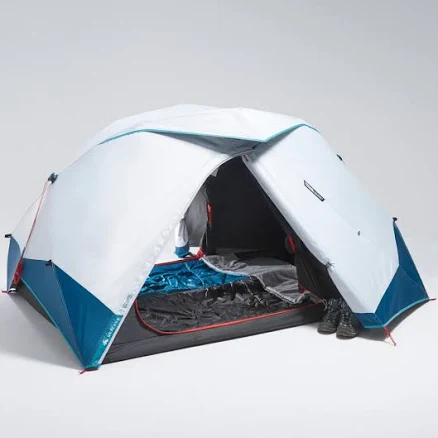
Quechua · Camping Tents & Tarps
Quechua 2 Second Easy Fresh & Black Waterproof Pop Up Camping Tent
Skip until the brand clarifies waterproof treatment chemistry.
This pop-up tent uses a waterproof coating to meet weather claims, but the brand won't disclose coating chemistry or PFAS status. Waterproof textiles commonly use fluorinated water-repellent coating treatments.
Still want this one anyway? Check the price on Amazon. We’d swap it.
Material
Polyester with waterproof coating (composition unspecified)
Brand disclosure
Brand is silent on PFAS
Lab data
No public lab test
You may also be interested in
Top-graded picks in the categories readers replace first, every one scored on the same rubric.

Aqua Pure
3M Aqua-Pure AP802B Whole House Filter Housing
- polypropylene filter housing, carbon/sediment cartridge
- We found no PFAS statement from the brand
- Bacterial growth in spent cartridges
3 hazards checked on this product. See all of them.

Aquasure
Premier Series 75 GPD Under Sink Reverse Osmosis Water Filtration System
- RO membrane, carbon filters, stainless steel housing
- We found no PFAS statement from the brand
- Bacterial and microbial growth in housing and filters
4 hazards checked on this product. See all of them.

Avocado
Vegan Mattress
- organic cotton, natural latex, coconut coir, recycled steel coils
- The brand calls it PFAS-free, which we have not verified
- Heavy metals
2 hazards checked on this product. See all of them.
What Quechua 2 Second Easy Fresh & Black is made of, ingredients and materials
This tent is polyester fabric with an applied waterproof coating whose chemical composition Decathlon has not publicly disclosed. Polyester itself is inert under normal conditions, but the waterproof treatment is the unknown element. Coatings on camping textiles are historically either water-repellent coating (water-repellent coating) finishes containing PFAS compounds, or polyurethane/silicone-based alternatives. Without transparency, you cannot rule out fluorinated treatments.
What’s concerning
Category baseline
The starting point for this type of product, before anything specific to this product is counted.
No PFAS disclosure
No public statement from the brand about PFAS in this product.
Waterproof / stain-resistant treatment
Water-repellent coating treatments have historically used PFAS.
Waterproof coating composition undisclosed
Polyester tent coatings are frequently fluorinated (PFAS-based water-repellent coating). Decathlon provides no public chemistry data. Risk cannot be quantified without disclosure; likelihood depends on whether Decathlon has voluntarily phased out PFAS or continues industry-standard treatments.
Volatile organic compound (VOC) off-gassing from coating
New polyester camping tents with waterproof finishes can emit odors and low levels of volatile compounds, especially if coatings contain polyurethane, silicone, or PFAS solvents. This is typically mild and temporary in outdoor use but may be noticeable on first deployment.
Mold and bacterial growth if stored wet
Polyester does not inherently promote mold, but improper storage (wet, unventilated) can allow fungal growth on the fabric and coating, creating musty odors and potential mildew. This is user-maintenance related, not a manufacturing defect.
What’s reassuring
Coating degradation and microfiber release
No specific defects reported for the Quechua 2 Second. However, polyester tents with failing coatings can shed microfiber fragments. This is primarily an environmental concern; inhalation risk during normal camping is negligible.
Heavy metals
No recalls or test reports document heavy metals (lead, cadmium, antimony) in Quechua tent materials. Decathlon's general sourcing practices are not flagged for this risk category, but independent third-party testing data is not publicly available.
Source, FDA ↗The full breakdown
The brand's record and disclosure
Decathlon (Quechua) has not issued public statements about PFAS use in their tent coatings or broader chemical management policies for outdoor textiles. The brand does not list waterproof coating chemistry on product datasheets or labels. This silence is notable because major outdoor brands (e.g., Patagonia, Arc'teryx) now disclose PFAS-free or PFAS-containing formulations. Lack of transparency makes informed choice difficult.
How it compares in its category
Budget pop-up camping tents typically use the cheapest durable waterproofing available, which has historically been PFAS-based water-repellent coating. Mid-range competitors (Coleman, REI Co-op) increasingly label PFAS-free coatings. Premium brands have largely moved to polyurethane or silicone alternatives. The Quechua 2 Second's low price point and silence suggest conventional (possibly PFAS) treatment, not a premium eco-conscious choice.
If you buy it
Use the tent in well-ventilated outdoor conditions only; do not store it sealed in unventilated spaces for extended periods, as any volatile residues from the coating could off-gas into confined air. Wash with plain water, not hot water or solvents, to avoid accelerating coating degradation. Replace the tent if the waterproof layer begins to peel, crack, or show white residue (potential coating breakdown). Before purchase, contact Decathlon directly to request the coating MSDS or composition statement.
What we don’t know
- Basis
- Model estimate, 42% confidence, not a lab result
- Lab test
- None on record for this exact product
- Brand statement
- Quechua has made none
Formulations change between production runs, so check the current label. How we grade.
More camping tents & tarps grades
How we score, every product runs through the same public 0-100 rubric based on materials, coatings, brand disclosure, lab findings, and recalls. See the full methodology → Spotted a mistake? Report an error.