Quechua · Camping Tents & Tarps
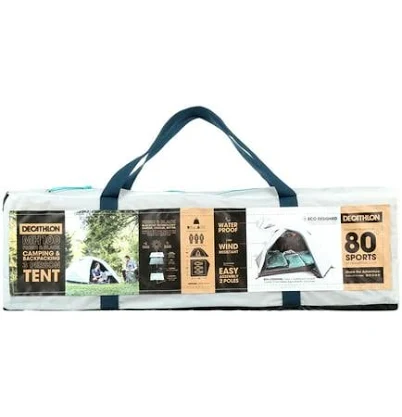
Quechua MH100, Outdoor, Waterproof Family Camping Tent, 3 Person
Skip until the brand discloses waterproof treatment chemistry.
This budget camping tent has waterproof fabric, but the brand won't disclose what water-repellent coating is used. Waterproof tent fabrics commonly contain PFAS-based treatments.
Still want this one anyway? Check the price on Amazon. We’d swap it.
Material
polyester fabric with waterproof coating (type unspecified)
Brand disclosure
Brand is silent on PFAS
Lab data
No public lab test
You may also be interested in
Top-graded picks in the categories readers replace first, every one scored on the same rubric.

Aqua Pure
3M Aqua-Pure AP802B Whole House Filter Housing
- polypropylene filter housing, carbon/sediment cartridge
- We found no PFAS statement from the brand
- Bacterial growth in spent cartridges
3 hazards checked on this product. See all of them.

Aquasure
Premier Series 75 GPD Under Sink Reverse Osmosis Water Filtration System
- RO membrane, carbon filters, stainless steel housing
- We found no PFAS statement from the brand
- Bacterial and microbial growth in housing and filters
4 hazards checked on this product. See all of them.

Avocado
Vegan Mattress
- organic cotton, natural latex, coconut coir, recycled steel coils
- The brand calls it PFAS-free, which we have not verified
- Heavy metals
2 hazards checked on this product. See all of them.
What Quechua MH100, Outdoor, Waterproof Family is made of, ingredients and materials
The MH100 uses polyester fabric with an applied waterproof coating whose exact chemistry Decathlon has not publicly specified. Polyester itself is stable and non-toxic, but the durability and leaching potential of the waterproof treatment depends entirely on whether it uses PFAS (fluorochemicals), silicone, or other binders. The unspecified coating is the primary unknown in this product's safety profile. Polyester does not off-gas formaldehyde under normal outdoor conditions, unlike some treated textiles.
What’s concerning
Category baseline
The starting point for this type of product, before anything specific to this product is counted.
No PFAS disclosure
No public statement from the brand about PFAS in this product.
Waterproof / stain-resistant treatment
Water-repellent coating treatments have historically used PFAS.
Waterproof coating composition (unspecified chemistry)
Decathlon has not disclosed whether the MH100's waterproof treatment uses PFAS, silicone, or wax-based compounds. Without public testing or certification, PFAS exposure risk during setup, storage, or breakdown cannot be ruled out, especially if the coating is handled during repairs.
Coating degradation and microparticle shedding
Polyester tents with applied coatings shed microscopic particles as the binder breaks down under UV and weathering. No specific data exists for the MH100, but this is a known issue with budget polyester tents; particles may be inhaled during packing or contact bare skin during use.
Vinyl or phthalate-containing seam tape
Seam tape on budget tents may use PVC or phthalate-based adhesives to bond waterproof backing. Decathlon does not specify tape composition for the MH100; direct skin contact is minimal during normal use but possible during assembly and repair.
What’s reassuring
Formaldehyde / VOCs
Modern polyester fabrics rarely use formaldehyde-based wrinkle treatments, and Decathlon's manufacturing suggests industrial standards that avoid this. No evidence of formaldehyde in this product line has been reported, though manufacturers do not routinely disclose this.
Source, ATSDR ↗Heavy metals
Polyester is typically dyed with azo dyes or reactive dyes; lead and cadmium contamination is rare in polyester textiles but more common in cotton. Decathlon's supply chain has not been flagged for dye-related contamination in camping textiles, though independent testing is limited.
Source, FDA ↗The full breakdown
The brand's record and disclosure
Decathlon has not made public commitments to PFAS-free waterproofing across its textile lines, nor has it disclosed the chemistry of coatings on this specific model. The brand markets sustainability but remains silent on fluorochemical use in outdoor gear. No major recalls or documented safety incidents have been linked to this tent model. Decathlon's transparency on chemical inputs lags behind competitors like REI and The North Face, which have begun phasing PFAS from select products.
How it compares in its category
Budget camping tents from major retailers typically use unspecified waterproof coatings, so the MH100 is not uniquely opaque. Premium brands (Arc'teryx, Nemo) often disclose water-repellent coating (water-repellent coating) formulations and increasingly avoid PFAS. Mid-market competitors like Coleman and Ozark Trail similarly withhold coating chemistry. The MH100 is priced aggressively and reflects industry-standard lack of transparency at this price point, though this does not guarantee PFAS presence.
If you buy it
Store the tent dry and unfolded when not in use to prevent mildew and coating degradation. Avoid machine washing; clean with a soft brush and mild soap by hand. Do not apply heat sources (fires, heaters) close to the fabric, as high temperatures can accelerate off-gassing of any coating components. Inspect seams and fabric annually for cracks, peeling, or wear; replace the tent if the waterproof layer visibly deteriorates, as this signals coating breakdown and potential contaminant leaching into soil or water.
What we don’t know
- Basis
- Model estimate, 35% confidence, not a lab result
- Lab test
- None on record for this exact product
- Brand statement
- Quechua has made none
Formulations change between production runs, so check the current label. How we grade.
More camping tents & tarps grades
How we score, every product runs through the same public 0-100 rubric based on materials, coatings, brand disclosure, lab findings, and recalls. See the full methodology → Spotted a mistake? Report an error.