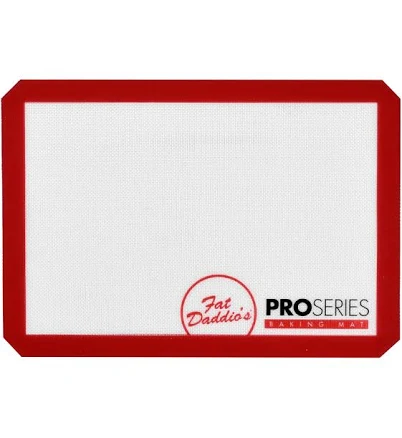
Fat Daddio's · Parchment Paper & Baking Liners
Fat Daddio's ProSeries Silicone Baking Mat
Silicone baking mats are lower concern; no PFAS expected.
Silicone rubber isn't a Teflon-family coating and doesn't naturally contain PFAS. No brand statement exists, but material type suggests lower concern than coated nonstick cookware.
The better-graded swap
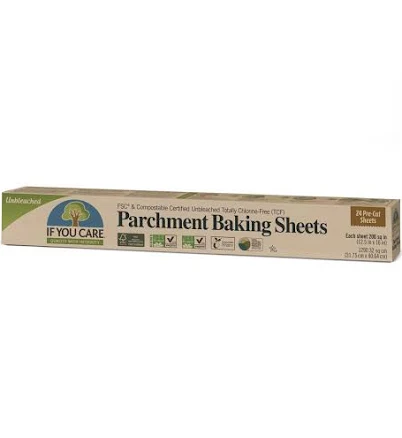
If You Care
If You Care Parchment Baking Sheets
90/100 safety
Same rubric that flunked this product. The swap earned Excellent.
Still want this one anyway? Check the price on Amazon. We’d swap it.
Material
Silicone rubber
Brand disclosure
Brand is silent on PFAS
Lab data
No public lab test
You may also be interested in
Top-graded picks in the categories readers replace first, every one scored on the same rubric.

- polypropylene filter housing, carbon/sediment cartridge
- We found no PFAS statement from the brand
- Bacterial growth in spent cartridges
3 hazards checked on this product, all on its full breakdown.

Aquasure
Premier Series 75 GPD Under Sink Reverse Osmosis Water Filtration System
- RO membrane, carbon filters, stainless steel housing
- We found no PFAS statement from the brand
- Bacterial and microbial growth in housing and filters
4 hazards checked on this product, all on its full breakdown.

Avocado
Vegan Mattress
- organic cotton, natural latex, coconut coir, recycled steel coils
- The brand calls it PFAS-free, which we have not verified
- Heavy metals
2 hazards checked on this product, all on its full breakdown.
What Fat Daddio's ProSeries Silicone Baking Mat is made of, ingredients and materials
Fat Daddio's ProSeries mats are food-grade silicone rubber, a synthetic polymer with cross-linked chains that resist breakdown during normal kitchen use. Silicone does not leach BPA, phthalates, or heavy metals under standard baking conditions (up to 400-500 degrees F), making it chemically more stable than plastic or coated metal alternatives. The material is non-porous and does not absorb food odors or flavors, and it resists degradation from repeated heating and cooling cycles better than nonstick coatings on traditional cookware.
What’s concerning
Category baseline
The starting point for this type of product, before anything specific to this product is counted.
No PFAS disclosure
No public statement from the brand about PFAS in this product.
Bacterial or mold growth in crevices
If the mat develops tears, wrinkles, or surface damage, food particles and moisture can accumulate in crevices where cleaning is difficult. This is a maintenance issue rather than a material hazard, but compromised mats should be discarded.
Surface adhesion of food residues or oils
Over time, silicone mats can absorb oils and food odors, particularly if used at high heat. This does not pose a direct health hazard but may reduce non-stick performance and require occasional vinegar or baking soda soaks to refresh.
What’s reassuring
Base material not linked to PFAS
The main material recorded for this product is not one associated with PFAS.
Silicone leaching or degradation under heat
Food-grade silicone is chemically inert and does not leach monomers or oligomers into food at standard baking temperatures (up to 450 degrees F). No established recall or safety data suggests leaching at normal use.
Flame retardants
Food-grade silicone does not require or typically contain brominated flame retardants or antimicrobial additives. No evidence suggests Fat Daddio's ProSeries mats include these additives.
Source, EPA ↗Lead
Silicone rubber does not contain glazes, enamels, or ceramic coatings that could harbor lead or cadmium. This hazard is not relevant to silicone baking mats.
Source, ATSDR ↗How is this PFAS grade calculated?
The brand's record and disclosure
Dough Box (Fat Daddio's parent) does not publish detailed material safety documentation or third-party certifications for this product on readily available channels. The brand has no documented recalls or safety controversies specific to this silicone mat line. Without active disclosure of manufacturing standards or independent food-contact certification (such as FDA compliance statements or NSF marking), the safety profile relies on the inherent stability of food-grade silicone rather than brand transparency.
How it compares in its category
Silicone baking mats are a non-stick alternative to traditional Teflon-type coating-coated pans or metal cookware with ceramic glazes, with lower concern regarding some fluorinated compounds. Unlike Teflon-type coating nonstick, silicone does not release fumes at high heat or degrade into particulates. Unlike unglazed ceramic or glazed stoneware, there is no risk of lead or cadmium leaching. The main trade-off is durability, silicone mats are more prone to surface tearing and staining than metal pans, but chemical safety is superior.
If you buy it
Use the mat on clean baking sheets and avoid temperatures above 500 degrees F, as even food-grade silicone can soften at extreme heat. Do not cut or scrape the mat vigorously; small tears can harbor bacteria and reduce performance. Hand wash with mild soap or place in the dishwasher on low heat; harsh scouring or bleach is unnecessary and may degrade the surface. Replace if discoloration, warping, or tears appear, typically after 2 to 3 years of regular use.
What is not known about PFAS in this product?
- Basis
- Model estimate, 78% confidence, not a lab result
- Lab test
- None on record for this exact product
- Brand statement
- Fat Daddio's has made none
Formulations change between production runs, so check the current label. How we grade.
What are the PFAS-free alternatives to Fat Daddio's ProSeries Silicone Baking Mat?
- silicone-coated parchment paper
- The brand calls it PFAS-free, which we have not verified
- Paper degradation and particulate shedding
- unbleached paper with silicone coating
- The brand calls it PFAS-free, which we have not verified
- Silicone coating degradation at high heat
- bleached paper with silicone coating
- The brand calls it PFAS-free, which we have not verified
- Paper degradation and fragmentation
More parchment paper & baking liners grades
How we score, every product runs through the same public 0-100 rubric based on materials, coatings, brand disclosure, lab findings, and recalls. See the full methodology → Spotted a mistake? Report an error.