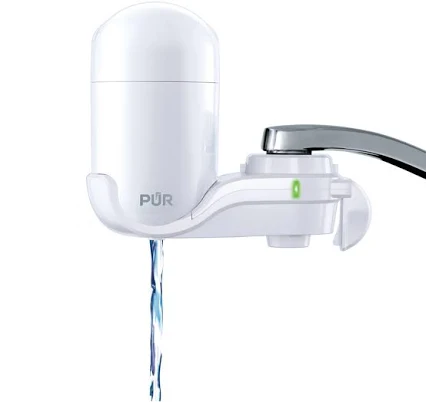
PUR Classic Faucet Filtration System
Lower concern; no PFAS signals found, but limited transparency on filter composition.
Standard activated-carbon faucet filters with plastic housings, materials with lower PFAS risk than nonstick or water-repellent products. Brand does not disclose PFAS testing or make PFAS-free claims; public third-party testing has not detected PFAS, though independent data is limited.
We flunk more products than we pass. This one earned its grade. How we grade
Material
Activated carbon filter media; plastic housing
Lab data
No public lab test
You may also be interested in
Top-graded picks in the categories readers replace first, every one scored on the same rubric.

Aqua Pure
3M Aqua-Pure AP802B Whole House Filter Housing
- polypropylene filter housing, carbon/sediment cartridge
- We found no PFAS statement from the brand
- Bacterial growth in spent cartridges
3 hazards checked on this product. See all of them.

Aquasure
Premier Series 75 GPD Under Sink Reverse Osmosis Water Filtration System
- RO membrane, carbon filters, stainless steel housing
- We found no PFAS statement from the brand
- Bacterial and microbial growth in housing and filters
4 hazards checked on this product. See all of them.

Avocado
Vegan Mattress
- organic cotton, natural latex, coconut coir, recycled steel coils
- The brand calls it PFAS-free, which we have not verified
- Heavy metals
2 hazards checked on this product. See all of them.
What PUR Classic Faucet Filtration System is made of, ingredients and materials
The PUR Classic uses granular activated carbon as its primary filtration medium, a well-established material that adsorbs chlorine, some organic compounds, and odors through physical binding rather than chemical transformation. The housing is plastic, likely polypropylene or similar food-contact thermoplastic, which does not typically leach under cold-water conditions. No heating occurs in faucet filters, eliminating thermal degradation pathways that plague cookware ceramics or heated plastic containers.
What’s concerning
No PFAS disclosure
No public statement from the brand about PFAS in this product.
Bacterial growth in filter housing
Stagnant water in the plastic housing and spent carbon medium can support microbial growth if cartridges are not replaced promptly or the unit sits unused. Regular use and timely replacement (every 2-3 months) substantially mitigates this risk.
Activated carbon dust inhalation or ingestion
Loose carbon particles may be present in new cartridges and can be flushed into water if the system is not primed. Flushing for 5 seconds before first use or after cartridge replacement eliminates this minor exposure.
Hot water damage to plastic housing
Exposure to hot water can warp or degrade the plastic housing and seals, leading to leaks or loss of filtration integrity. This product is not rated for hot-water lines and should never be installed on them.
What’s reassuring
Base material not linked to PFAS
The main material recorded for this product is not one associated with PFAS.
Plastic housing leachables (cold water)
Polypropylene and similar food-contact plastics used in faucet filter housings do not leach BPA, phthalates, or other endocrine disruptors under cold-water conditions. No reported contamination events for this product.
Filter media degradation
Activated carbon is chemically stable under normal use conditions. The cartridge is designed for replacement before saturation; no reports of structural failure or compound leaching from the carbon medium itself.
The full breakdown
The brand's record and disclosure
PUR (owned by Nestlé) is transparent about NSF/ANSI 42 and 53 certification for chlorine and select contaminant reduction but publishes minimal detail on plastic housing composition or activated carbon sourcing. No significant safety recalls or leaching incidents are on record for this product line. The brand does not publicly address PFAS in filter media or housing, a gap in transparency but not an indicator of contamination.
How it compares in its category
Faucet-mounted filters occupy a middle ground, cheaper and lower-maintenance than under-sink systems, but with smaller media volume and shorter cartridge life (typically 100-200 gallons). The PUR Classic is a mainstream choice with established certification; performance is comparable to Brita and Aqua-Pure faucet filters. All faucet filters carry inherent risk of bacterial regrowth if cartridges are not replaced on schedule or if water sits stagnant in the housing.
If you buy it
Replace cartridges every 2-3 months or at 100-200 gallons, whichever comes first; expired cartridges may harbor bacteria. Flush the system for 5 seconds before drinking after installation or cartridge swap to clear activated carbon dust. Do not use on hot water lines; the plastic housing is rated only for cold water (40-100 degrees F). Store replacement cartridges in a dry location and check for visible mold or discoloration before use.
What we don’t know
- Basis
- Model estimate, 62% confidence, not a lab result
- Lab test
- None on record for this exact product
- Brand statement
- PUR has made a specific claim
Formulations change between production runs, so check the current label. How we grade.
Better-graded alternatives in Water Filters

Aquamira
Water Storage Treatment 2 oz Glass Bottles 60 gallons Purification
- glass bottles, sodium dichloroisocyanurate treatment chemical
- We found no PFAS statement from the brand
- Chemical overdose or misuse
5 hazards checked on this product. See all of them.

Big Berkey
Empty Housing with NO Filters Included
- Stainless steel housing and spigot
- We found no PFAS statement from the brand
- Bacterial growth and biofilm if filters not replaced
5 hazards checked on this product. See all of them.

LifeStraw
Home Glass Water Filter Pitcher
- Borosilicate glass pitcher, replaceable activated-carbon filter cartridge
- Bacterial growth in filter cartridge if unmaintained
5 hazards checked on this product. See all of them.
More water filters grades
How we score, every product runs through the same public 0-100 rubric based on materials, coatings, brand disclosure, lab findings, and recalls. See the full methodology → Spotted a mistake? Report an error.